


- Nationalising Mines Will Not Automatically Raise State Revenue – Mineral Economist
A mineral economist at the Minerals Commission has cautioned that nationalising mines will not automatically increase Ghana’s revenue from the extractive sector, warning that state control without adequate capital and operational capacity could weaken rather than strengthen public finances.
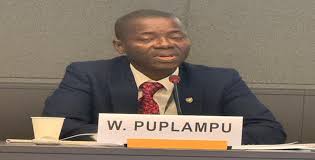
Speaking during a JoyBusiness Roundtable discussion on rethinking Ghana’s approach to gold mining, oil and critical minerals, Wisdom Puplampu said the country’s mining debate should move beyond ownership slogans and focus instead on financing, profitability, tax contribution, local participation and long-term value creation.
His comments come at a time when Ghana’s mining sector is facing renewed scrutiny over resource nationalism, lease renewals, local participation requirements and whether the state should take a more aggressive role in controlling strategic mineral assets.
Mr Puplampu argued that while greater Ghanaian participation in mining is necessary, full state control is not necessarily the most effective route to increasing revenue.
He said local content rules already create opportunities for mining companies to list on the Ghana Stock Exchange and raise capital but warned that the domestic capital market alone cannot provide the scale of financing required to operate large mining assets.
“The stock exchange cannot give us the required capital we need to operate. So we need a hybrid approach,” he said.
According to him, Ghana should pursue a blended financing model that combines debt from banks with equity raised through the stock market. Such a model, he argued, would allow local investors to participate in mining while also providing companies with stronger capital structures.
He also urged the National Pensions Regulatory Authority to consider relaxing investment rules to allow a portion of pension funds to be invested in the equity market. Pension funds, he said, represent “patient capital” that could support long-term investment in mining and deepen local ownership.
“And if we adopt the hybrid approach, we’ll be able to make some significant impact,” Mr Puplampu added.
The argument speaks directly to one of Ghana’s biggest mining policy dilemmas: how to increase domestic participation in a sector that requires large capital commitments, advanced technology, geological expertise, operational discipline and long investment horizons.
Mining is not only about ownership of licences. It is also about the ability to finance exploration, develop mines, manage production risk, absorb commodity price volatility and meet environmental and social obligations.
That is why Mr Puplampu cautioned that nationalisation could send the wrong signal to investors if it is interpreted as a policy shift away from private capital.
“So if we nationalise the mines, when we are telling investors that we are closing our mines, which is not government policy, it creates concerns,” he noted.
His warning aligns with the position taken by several industry players who argue that Ghana must avoid creating uncertainty at a time when the country needs new investment in exploration, mine life extension, infrastructure and value addition.
Mr Puplampu further argued that nationalisation alone would not necessarily increase state revenue because local mining companies are already making meaningful contributions through corporate income tax.
Citing Ghana Revenue Authority data, he said local mining firms had performed strongly in profitability and tax payments.
“Our local companies have done well when it comes to corporate income tax, which is a measure of how well the companies are doing in terms of profitability,” he said.
He warned that if the state assumes control of mining operations without the capacity to manage them efficiently, the government may lose significant corporate income tax currently generated by private operators.
“What that means is that the government or the state will not be able to capitalise but will be losing out on corporate income tax, which is a significant contributor when it comes to revenue streams from the mining industry,” he explained.
The point is important. State ownership may increase direct control, but it can also shift operational risk, capital expenditure requirements and management responsibility onto government. Where state entities lack the financial and technical capacity to operate efficiently, revenues may decline through lower output, weaker profitability and reduced tax flows.
For Ghana, the better policy question may therefore not be whether the state should own more mines but how the country can capture more value from mining without undermining investment confidence.
That could include stronger royalty enforcement, improved tax compliance, local listing rules, pension fund participation, supplier development, mineral value addition, better community revenue sharing and transparent state equity participation where commercially justified.
The broader mining debate is also taking place at a time of elevated gold prices, rising pressure from mining communities for greater benefits, and growing public concern over illegal mining and environmental destruction.
Mr Puplampu’s intervention suggests that Ghana’s approach must be strategic rather than populist. The country may need more local ownership, but that ownership must be properly financed. It may need more state participation, but that participation must be commercially disciplined. It may need more revenue, but revenue will come from productive, profitable and well-regulated mines, not merely from changing ownership labels.
In short, nationalisation may sound politically attractive. But without capital, capacity and credible governance, it may not deliver the revenue gains Ghana expects.

