

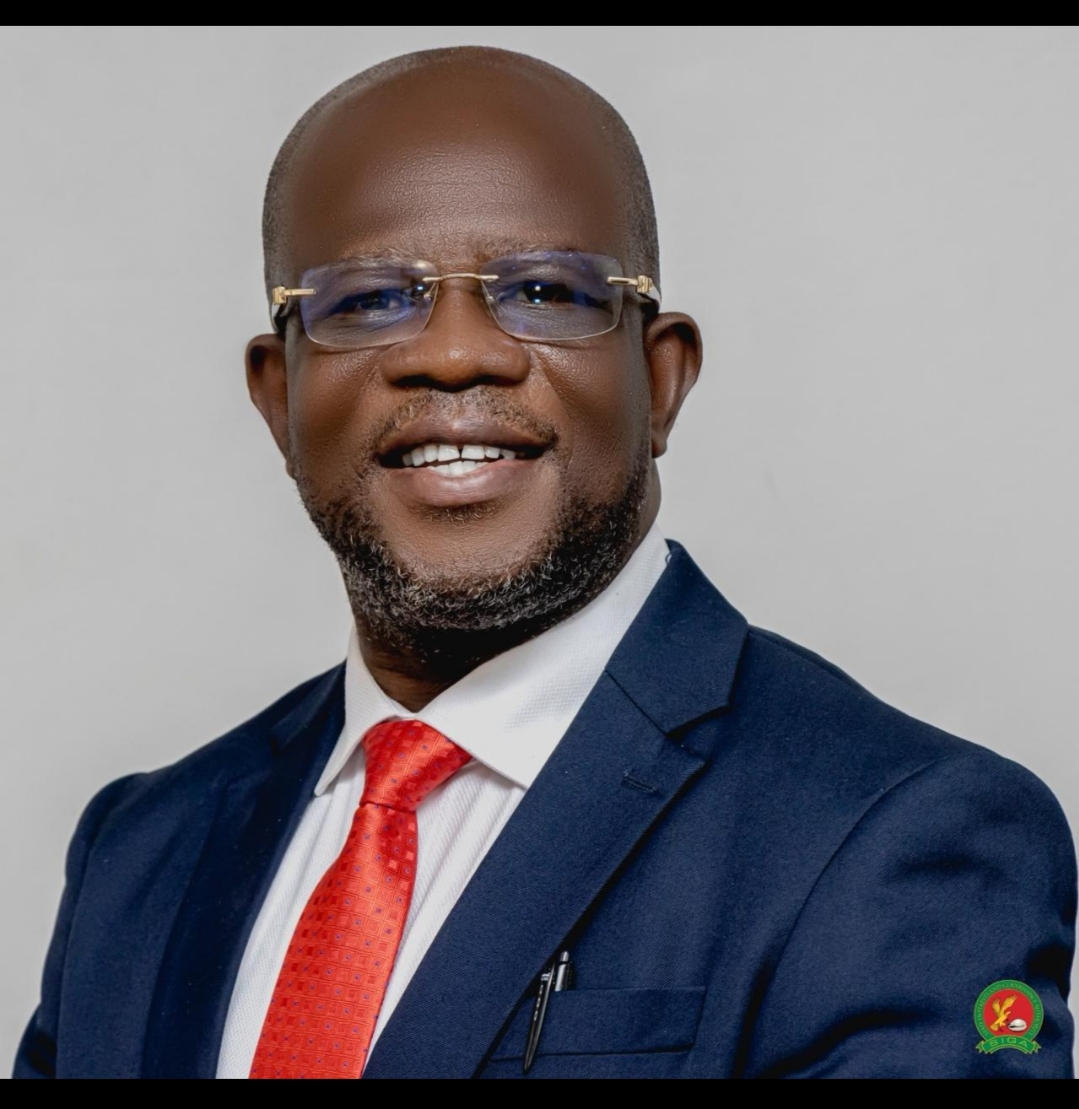

- Next Budget Must Connect Fiscal Discipline with Human Development – Says Kpessa-Whyte
As Ghana prepares its nation wide nations budget, Michael Kpessa-Whyte is challenging a familiar division at the heart of public finance: the idea that the finance ministry protects the economy while health, education and social protection ministries compete for scarce funds.
In an essay titled Before the Budget Speech, Remember This. Social Spending Is Economic Policy, the Associate Professor of Public Policy and Governance at the University of Ghana argues that social spending should be assessed as part of the country’s economic strategy. The classroom, he writes, “is part of the economy”.
The distinction between “investment” and “spending” shapes budget decisions, Kpessa-Whyte argues. Roads, dams and power plants are commonly classed as capital investment, while teachers’ salaries, nurses’ wages and cash transfers are classified as recurrent costs.
That language can make social programmes appear to be costs to contain, even when they build the skills, health and security on which economic activity depends.
“A road without trained engineers, healthy workers and literate traders produces far less than its builders promise,” he writes.
The argument does not dismiss the finance ministry’s responsibility to manage debt, revenue and deficit targets. Kpessa-Whyte acknowledges that fiscal crises hurt poorer households first, and that poorly targeted programmes or inefficient spending should face scrutiny.
His contention is that fiscal analysis is incomplete if it counts the immediate cost of social programmes but ignores the longer-term cost of underinvesting in people.
That tension is partly a matter of time horizons. Finance ministries work to annual budgets and medium-term targets, while the economic returns from education, health and early childhood support may take years to emerge.
A scholarship that helps a child complete school, for example, may later contribute to higher earnings and productivity, but those gains are unlikely to appear in the fiscal year in which the money was spent.
Kpessa-Whyte points to research tracking young Ghanaians who won secondary-school scholarships through a lottery in 2008. He says scholarship recipients were more likely to complete school and adopt healthier habits, while women among the winners recorded more years of earnings later in life.
The example, he argues, illustrates how a programme categorised as social support can also strengthen productivity, incomes and future tax receipts.
He makes a similar case for social protection. Ghana’s Livelihood Empowerment Against Poverty programme was designed to support poor households, but its impact evaluation found beneficiaries saved more, lent more and became more creditworthy, he writes.
In South Africa, an old-age pension was found to help younger household members find work by supporting job search, migration and childcare.
These examples complicate the idea that transfers are simply consumption. For some households, income support can help people take steps toward employment, manage care responsibilities or participate more fully in the economy.
The relevant budget question, then, is not only how much a programme costs, but what it enables and whether it is designed to reach the intended beneficiaries.
Kpessa-Whyte also describes the National Health Insurance Scheme as an example of fiscal and social policy working together. Funded largely through a levy on goods and services, the scheme uses a fiscal instrument to support access to health care.
A healthier workforce, in turn, helps sustain the economic activity on which public revenue depends. In this account, the health and finance ministries are not managing separate policy domains; their decisions affect the same economic system.
History, too, offers examples of social programmes serving development goals. Kpessa-Whyte notes that Ghana’s provident fund, established after independence to provide retirement income for formal-sector workers, accumulated savings that later became a major source of investment finance. By the mid-1970s, he writes, it had helped finance roads, schools and water systems.
The essay also warns that decisions driven narrowly by immediate savings can create costs elsewhere. Kpessa-Whyte cites teacher-training admission quotas that were imposed to contain the cost of trainee allowances. The savings, he argues, came alongside a persistent shortage of trained basic-school teachers. When the allowance was replaced by student loans, the measure provoked opposition from trainees and teacher unions and became an election issue; the allowance was restored in 2017.
The episode, as presented in the essay, illustrates the risks of treating social provision as a line item that can be reduced without considering effects on staffing, service quality or political trust. Fiscal savings may be real in the short term, but a policy can fail to deliver durable savings if it worsens shortages or has to be reversed.
Kpessa-Whyte also invokes the “cash and carry” system introduced in public health facilities in the 1980s, arguing that user fees reduced poorer households’ access to care. Savings recorded in government accounts, he writes, reappeared as illness, lost workdays and weakened trust in the state.
Ghana’s 2023 Extended Credit Facility programme with the International Monetary Fund included a floor on social spending, a recognition in Kpessa-Whyte’s view that social sectors cannot simply absorb the burden of fiscal adjustment.
But he argues that a minimum floor is not enough if social programmes are treated only as costs to be protected, rather than investments whose results should inform economic planning.
His proposed changes begin with how budgets are classified and assessed. Governments, he argues, should evaluate spending by its contribution to development, appraise major programmes jointly across finance and sector ministries, and extend budget horizons to capture the long-term returns from education, health and social protection.
Fiscal risk assessments should account for the cost of underinvestment as well as the cost of spending.
He also advocates building shared capacity between ministries, including placing economists in social-sector ministries and social policy analysts in finance ministries. In adjustment programmes, he says, governments should seek protection for programmes with demonstrated returns, rather than relying only on minimum spending floors.
The argument offers a demanding test for the coming budget debate: can government connect fiscal discipline with the development outcomes it is expected to deliver? Social spending cannot be exempt from scrutiny, and its returns cannot simply be assumed.
But neither should the label “recurrent” settle the question of whether an expense contributes to economic capacity.
“The finance minister sees deficits, debt and revenue. The minister of education sees children, teachers and classrooms,” Kpessa-Whyte writes. “Both are looking at the same national future.”
The budget contest between the treasury and the classroom will remain, he argues, but it can become a negotiation between partners rather than a fight between competing claims. That shift would require government to assess not only what social programmes cost now, but what the country may lose if it fails to invest in people.

