

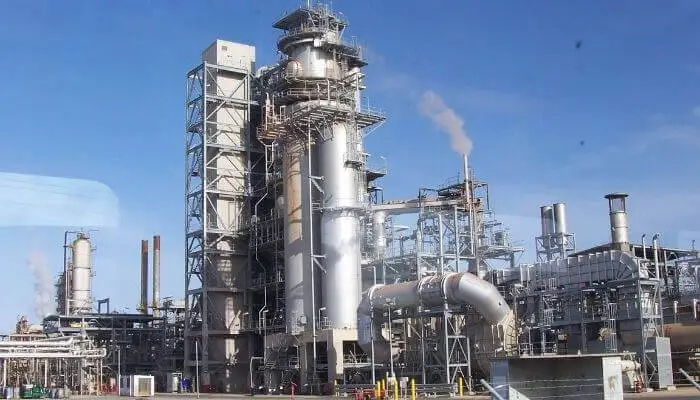

- Nigeria Exceeds OPEC Quota in Major Turnaround for Africa’s Top Oil Producer
Nigeria’s crude oil production has climbed to its highest level in more than six years, breaching the country’s OPEC production ceiling and signalling a major turnaround for Africa’s largest oil producer after years of theft, vandalism, underinvestment and pipeline disruptions.
New data from the Nigerian Upstream Petroleum Regulatory Commission show that the country produced an average of 1.56 million barrels per day of crude oil in June 2026, exceeding its OPEC quota of 1.50 million barrels per day by about 4.00%. Including condensates, total output reached 1.735 million barrels per day, the highest level since April 2020 and the fourth consecutive month of production growth.
The June performance marks a sharp recovery for a country whose oil sector has repeatedly fallen short of its production potential. Nigeria has for years struggled with crude theft, ageing infrastructure, pipeline vandalism, weak investment and operational instability, all of which limited output and weakened government revenue at a time of severe fiscal and foreign exchange pressure.
According to the regulator, the improvement was supported by stable production operations across most producing assets and the absence of major pipeline outages during the month. The stronger operating environment improved production uptime and crude evacuation efficiency, helping operators sustain higher output levels.
The data also show that Nigeria’s combined crude and condensate output peaked at 1.89 million barrels per day during June, while the lowest daily production level for the month was 1.57 million barrels per day. That range suggests that Nigeria is gradually rebuilding operational capacity and moving closer to the federal government’s long-standing ambition of reaching 2.00 million barrels per day.
For Abuja, the production rebound carries immediate fiscal and macroeconomic significance. Oil remains central to government revenue, export earnings and foreign exchange supply. Sustained output above previous levels could improve dollar inflows, support budget execution and ease pressure on the naira, particularly if global prices remain supportive.
The gains also come at a time when Nigeria is seeking to attract fresh upstream investment. Reuters reported last week that ExxonMobil and partners plan to invest US$1 billion in the Usan Infill Project, an offshore oilfield development expected to add about 40,000 barrels per day to output. The regulator described the project as a renewed drilling effort by ExxonMobil’s affiliate, Esso Exploration and Production Nigeria.
That investment signal is important. Nigeria’s oil recovery cannot depend only on restoring shut-in production or preventing pipeline outages. To sustain higher output, the country will need new drilling, improved security, better fiscal terms, faster approvals and greater investor confidence in the upstream regulatory environment.
But the breach of the OPEC quota also introduces a different kind of policy dilemma. For Nigeria, producing above quota is fiscally attractive because every additional barrel can generate more revenue and foreign exchange. For OPEC, however, quota discipline is central to supply management and price stability.
If Nigeria sustains production above its agreed ceiling, it may strengthen the country’s fiscal position but also draw scrutiny from other producers, especially at a time when OPEC and its allies are gradually managing output levels in response to global demand conditions. Business Insider Africa reported that the latest production data strengthen Nigeria’s standing within OPEC as several member countries are unwinding voluntary output cuts.
The 4.00% overshoot is not large in absolute terms, amounting to roughly 60,000 barrels per day above the quota. But symbolically, it matters. Nigeria has often been viewed as a producer unable to meet its allocation because of domestic operational constraints. Crossing the ceiling reverses that narrative, at least for now.
Still, one strong month does not solve the structural problems of Nigeria’s oil industry. The country must prove that the June performance is not temporary. Pipeline security must hold. Theft must remain contained. Operators must keep assets running. Export terminals must avoid disruptions. New investment must move from announcement to production.
The broader economic implications are significant. Higher crude output can improve Nigeria’s external accounts, boost fiscal receipts and support investor sentiment. But the benefits will depend on how efficiently oil revenues are managed. More production does not automatically translate into stronger public finances if subsidies, leakages, arrears or weak fiscal controls absorb the gains.
There is also a lesson for other African oil producers. Nigeria’s recovery shows how much production can be restored when pipeline reliability improves and major outages are avoided. For countries such as Ghana, Angola and others seeking to strengthen upstream output, infrastructure security and investor confidence remain as important as reserves in the ground.
For global oil markets, Nigeria’s rebound adds supply from a producer that has historically struggled to maintain steady output. In isolation, the increase may not transform market balances. But in a volatile environment shaped by geopolitical tensions, OPEC policy shifts and uncertain demand, every sustained recovery from a major producer matters.
The key question is whether Nigeria can turn this output recovery into a durable production cycle.
If it does, the country could rebuild fiscal buffers, improve foreign exchange liquidity and regain some of the credibility lost during years of underperformance. If the recovery falters, June’s 74-month high may be remembered only as a brief relief rather than a structural turnaround.
For now, the message from the data is clear: Nigeria’s oil sector is producing again at levels not seen since 2020. The harder task is keeping it there.

