


- Nigeria Launches US$188 Million Green Finance Facility to Scale Distributed Solar Power
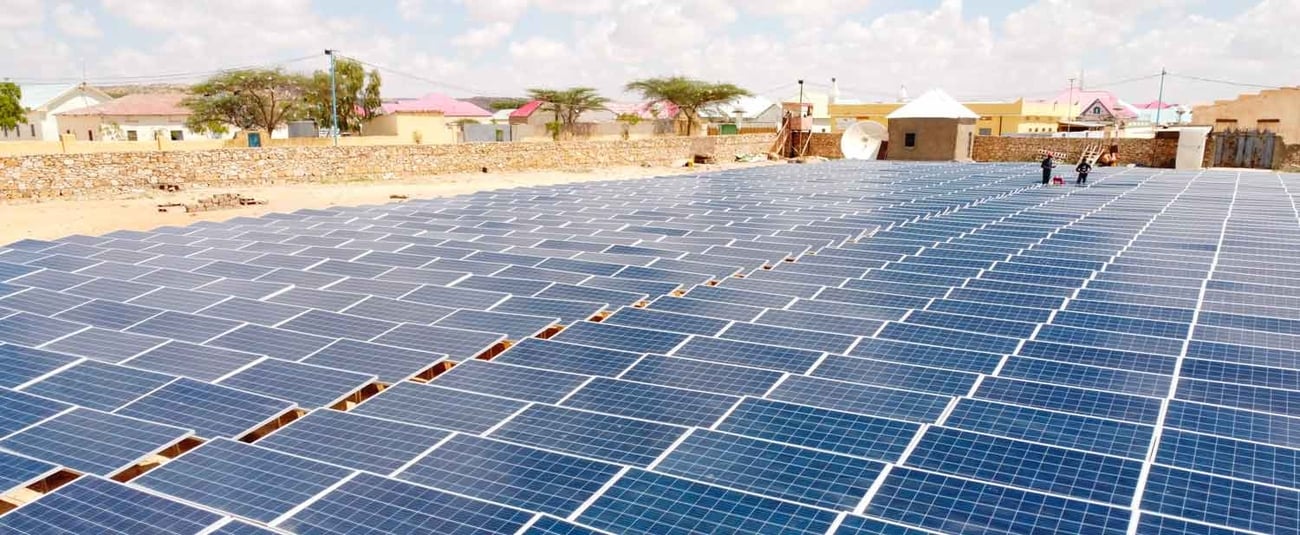
Nigeria’s effort to close its electricity access gap and accelerate clean-energy adoption has received a major boost following the launch of a US$188 million blended finance platform aimed at expanding distributed solar infrastructure across the country. The Green Finance Investment Facility, spearheaded by First City Monument Bank, the Rural Electrification Agency, UK PACT, Barton Heyman Limited and ARM Harith Infrastructure Investment Limited, is expected to finance 191 megawatts of distributed solar capacity for households, businesses and underserved communities.
The facility was launched in Lagos on May 7 and forms part of Nigeria’s broader Distributed Access through Renewable Energy Scale-Up programme, known as DARES, which seeks to improve electricity access through decentralised renewable energy systems.
Stakeholders at the launch said the facility is designed to mobilise large-scale private capital into a sector long constrained by financing bottlenecks, high perceived risks and limited access to long-term funding.
For Nigeria, the financing platform comes at a critical moment. Africa’s largest economy continues to struggle with unreliable grid supply, high self-generation costs and heavy dependence on diesel-powered alternatives by households, small businesses and industrial users.
The case for distributed solar is therefore both developmental and commercial.
Mini-grids, off-grid solar systems and commercial solar installations are increasingly seen as practical routes to expanding electricity access in rural and peri-urban areas where grid reliability remains weak or where grid extension is slow and expensive.
Olumide Lala, Managing Partner at Barton Heyman Limited, described the initiative as a “market-driven” financing model capable of unlocking institutional capital for Nigeria’s energy transition.
According to him, the platform represents the first step in a longer-term ambition to mobilise as much as US$40 billion towards financing 20 gigawatts of distributed renewable energy infrastructure nationwide.
That ambition reflects the scale of Nigeria’s energy deficit. Despite years of reform, the country’s power sector remains unable to deliver reliable electricity at the level required to support industrial growth, small business expansion and job creation.
The Green Finance Investment Facility seeks to address one of the biggest constraints in the renewable energy market: risk.
Its financing structure combines sovereign-backed project pipelines, results-based funding mechanisms and commercial lending frameworks in an attempt to de-risk renewable energy investments and attract broader private-sector participation.
Industry participants say the model could help accelerate the deployment of mini-grids and off-grid solar systems by reducing financing costs, improving project bankability and providing investors with clearer visibility over revenue and performance outcomes.
Business Insider Africa reported that the initiative is expected to directly support more than one million Nigerians through improved access to reliable electricity.
The platform also aligns with Nigeria’s growing emphasis on clean energy infrastructure, as policymakers seek to diversify power generation sources, reduce energy poverty and cut dependence on costly fossil-fuel alternatives.
Executives from First City Monument Bank said the bank has already committed ₦100 billion in debt financing to projects under the DARES programme and is supporting multiple developers involved in isolated mini-grid projects.
The bank also said it has financed more than 42 mini-grid projects and is contributing to efforts aimed at connecting over two million households to electricity.
For investors, the facility speaks to a broader trend across Africa: energy access is increasingly being treated as an investable infrastructure opportunity rather than only a public-sector obligation.
Blended finance is becoming central to that shift. By combining public, concessional and private capital, governments and development partners are attempting to reduce the risk premium that often prevents private investors from funding early-stage or distributed infrastructure projects.
The approach is particularly important in renewable energy, where long payback periods, currency risk, customer affordability and policy uncertainty can discourage commercial lenders.
Nigeria’s new platform may therefore become a test case for whether blended finance can unlock domestic and international capital at scale for decentralised energy.
Reliable electricity remains one of the biggest constraints on productivity in Nigeria. Businesses spend heavily on generators, fuel and backup systems, raising operating costs and weakening competitiveness. For households, unreliable power affects education, health, security and quality of life.
Distributed solar cannot solve Nigeria’s entire power challenge on its own. But it can provide faster, more modular and more targeted access to electricity, especially in communities and business clusters where grid expansion remains limited.
The launch of the Green Finance Investment Facility therefore reflects more than another climate-finance announcement. It signals an attempt to build a commercially viable financing architecture around Nigeria’s energy transition.
The success of the platform will depend on execution: project selection, tariff sustainability, repayment discipline, currency-risk management, developer capacity and the ability to attract institutional investors beyond the first round of commitments.
But if it works, the facility could offer a model for other African economies facing the same dilemma how to close electricity access gaps while building cleaner, more resilient and investment-ready energy systems.

