


- Nigeria Orders Petrol Price Crackdown as Crude Falls from US$120 To US$72
Nigeria has ordered its downstream petroleum regulator to crack down on fuel marketers accused of keeping petrol prices elevated despite a sharp fall in global crude oil prices, testing the limits of market deregulation in Africa’s largest oil producer.
The directive follows a retreat in benchmark crude prices from about US$120 per barrel during heightened geopolitical tensions to around US$72 per barrel last week after tensions in the Middle East eased. Despite the drop, petrol prices at Nigerian filling stations have remained largely unchanged, prompting fresh concern from government.
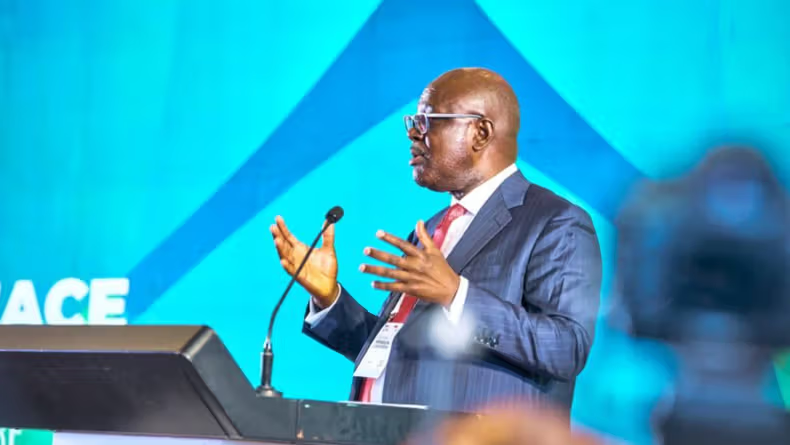
Speaking at the 2026 Nigerian Midstream and Downstream Petroleum Regulatory Authority General Counsel and Legal Advisers Forum in Abuja, Nigeria’s Minister of State for Petroleum Resources, Heineken Lokpobiri, said deregulation should not become an excuse for profiteering.
“Following the de-escalation of tensions between Iran and the United States, we expected to see commensurate downward adjustment in the prices of PMS and other petroleum products. However, that has not yet happened,” he said.
Mr Lokpobiri directed the NMDPRA to use its statutory powers under the Petroleum Industry Act to ensure that market liberalisation does not become “an avenue for profiteering,” while still allowing market forces to operate.
The intervention exposes one of the central tensions in Nigeria’s fuel market reforms. Since the removal of long-standing fuel subsidies, petrol prices have been expected to respond more directly to global oil prices, exchange-rate movements, refining costs, logistics and market competition.
But the political promise of deregulation was not only that prices would rise when costs increased. It was also that consumers would benefit when global prices declined.
The government is now under pressure to show that liberalisation can deliver both market discipline and consumer protection.
Mr Lokpobiri also instructed the regulator to intensify monitoring of filling stations to ensure motorists receive the exact quantity of fuel they pay for.
“When someone pays for 10 litres of Premium Motor Spirit, they should receive exactly 10 litres, not less,” he said.
The warning comes at a sensitive time for Nigerian households and businesses, which have faced higher transport fares, food prices and operating costs since the removal of fuel subsidies and the liberalisation of the exchange rate.
Although deregulation was intended to reduce fiscal pressure on government and attract private investment into the downstream sector, it has also exposed consumers to sharper price movements and weakened the old expectation that government would absorb global oil shocks.
The latest directive suggests that Abuja wants to preserve the benefits of deregulation while preventing fuel marketers from exploiting weak competition, information gaps or regulatory delays to hold prices above fair market levels.
Mr Lokpobiri argued that deregulation had helped strengthen Nigeria’s energy security, noting that the country avoided fuel shortages during recent geopolitical tensions partly because of increased domestic refining capacity.
That point is significant. Nigeria’s downstream market is changing as domestic refining, including increased supply from private refiners, reduces the country’s historical dependence on imported fuel. A more competitive domestic supply base should, in theory, improve availability and gradually support price discipline.
But competition will only work if market participants respond transparently to changes in input costs and if regulators can enforce rules against manipulation, hoarding, inaccurate dispensing and anti-consumer behaviour.
The minister’s comments also placed the fuel-pricing debate within the wider regulatory reform agenda under the Petroleum Industry Act.
“The PIA gave us the architecture. What we must now build is the culture, the institutional habits and the regulatory character that make the law’s objectives real for every investor evaluating Nigeria,” he said.
NMDPRA Chief Executive Rabiu Umar echoed that view, saying the industry’s focus had moved beyond legal compliance to creating a regulatory environment that provides certainty, transparency and investor confidence.
“Compliance remains the foundation. The broader objective is to create a petroleum industry characterised by certainty, predictability, transparency and confidence,” he said.
Mr Umar acknowledged that some parts of the regulatory framework remain open to interpretation and said the authority would continue engaging stakeholders to improve implementation.
For Nigeria, the challenge is to balance three competing objectives: protecting consumers from excessive pricing, preserving the credibility of deregulation, and attracting investment into the oil and gas sector.
Too much price intervention could weaken confidence in market liberalisation. Too little enforcement could allow marketers to capture deregulation gains while consumers bear the cost of every upward price movement.
That balance matters beyond Nigeria. Across Africa, governments are under pressure to reform fuel subsidies, reduce fiscal leakages and attract investment into refining and distribution. But the political cost of higher pump prices remains severe, especially where wages are low and transport costs feed quickly into food inflation.
Nigeria’s latest move therefore carries a wider policy lesson. Deregulation cannot simply mean government withdrawal. It requires a capable regulator, transparent pricing information, competitive supply, consumer protection and credible enforcement.
The fall in crude prices has created a test case. If pump prices adjust downward, the government can argue that deregulation works in both directions. If they do not, public frustration may deepen and pressure could grow for more direct intervention in the market.
For now, Abuja’s message to fuel marketers is clear: market pricing will be allowed, but profiteering will not.

