

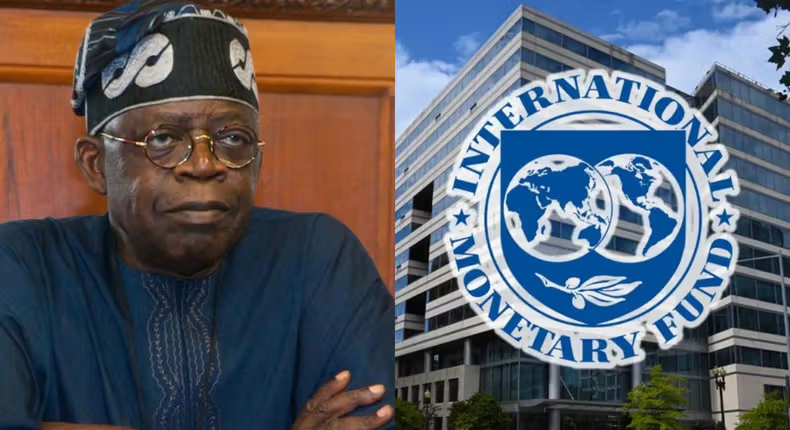

- Nigeria pushes ahead with US$5 billion UAE facility despite IMF warnings
Nigeria has moved ahead with a US$5 billion financing arrangement with the United Arab Emirates despite concerns raised by the International Monetary Fund over the opacity and potential long-term risks of the structure.
The country has drawn US$1.5 billion from the facility arranged with First Abu Dhabi Bank, the UAE’s largest financial institution, according to a Business Insider Africa report.
The drawdown forms the first tranche of a US$5 billion Total Return Swap facility approved by Nigeria’s National Assembly on March 31, 2026.
The proceeds are expected to support Nigeria’s 2026 budget, finance critical infrastructure projects and help restructure existing debt obligations at a time when Africa’s largest economy continues to manage fiscal pressures, external financing needs and investor scrutiny over its borrowing strategy.
The deal has, however, attracted concern from the IMF, which has warned that Total Return Swap structures can be complex, opaque and difficult to assess fully in terms of fiscal exposure and long-term risk.
The Fund has argued that such instruments may reduce transparency around the true cost and obligations attached to sovereign borrowing, particularly where collateral arrangements and future policy constraints are not fully visible to the public.
Christian Ebeke, the IMF’s mission chief for Nigeria, was quoted as saying that transactions of this nature often lack transparency, making it harder for stakeholders to assess their terms and implications.
“Our view is that transactions in these types of structures carry risks. Usually, they are opaque, so the terms are not always very transparent when we review these instruments across countries,” he said.
The IMF also warned that parts of the arrangement could create political constraints on monetary or exchange rate policy.
Nigeria’s lawmakers have defended the facility, describing its terms as competitive. The first tranche is expected to be priced at 395 basis points above the Secured Overnight Financing Rate, while subsequent tranches are expected to be priced at SOFR plus 400 basis points.
The structure also requires Nigeria to provide collateral equivalent to 133.30% of the loan in naira-denominated assets, raising questions about the future implications for domestic assets, fiscal flexibility and policy space.
The financing arrangement further increases Nigeria’s exposure to First Abu Dhabi Bank, which had already provided about US$1.2 billion in loans to support the construction of part of a new expressway.
For Abuja, the facility offers short-term fiscal breathing room. Nigeria has been searching for financing options to support budget implementation, fund infrastructure and manage debt obligations without placing excessive pressure on domestic markets.
But the IMF’s concerns point to a deeper challenge facing many African economies: how to balance urgent financing needs with transparency, debt sustainability and long-term policy autonomy.
Nigeria’s external debt stood at US$51.90 billion as of December 31, according to the latest information available on the country’s Debt Management Office website.
The UAE-backed facility therefore comes at a time when investors and multilateral institutions are watching Nigeria’s debt trajectory closely, particularly as the government attempts to stabilise the naira, improve revenue mobilisation and restore confidence in economic management.
The decision to proceed despite IMF warnings also reflects Nigeria’s willingness to use alternative financing channels as access to cheaper concessional funding remains limited and global borrowing conditions remain tight.
For the government, the immediate priority is liquidity. For the IMF, the central concern is whether the structure adds hidden risks that may only become visible later through collateral calls, refinancing pressure or restrictions on policy choices.
The transaction highlights the growing role of Gulf lenders in African sovereign finance, as countries seek new funding sources outside traditional multilateral and Eurobond markets.
For Nigeria, the US$5 billion facility may help finance near-term needs. But its longer-term value will depend on whether the borrowed funds are used productively, whether the terms remain manageable, and whether the country can avoid turning short-term fiscal relief into another layer of complex sovereign risk.

