


- IMF And Regional Financing Institutions Seek Closer Co-Operation as Global Risks Multiply
The International Monetary Fund and the world’s regional financing arrangements have placed artificial intelligence, cybersecurity and weakened economic buffers at the centre of discussions over the future resilience of the global financial system.
The institutions, meeting in Bangkok on the margins of the 2026 IMF–World Bank Annual Meetings, said technological advances could improve financial-sector efficiency and productivity but could also introduce new operational, market and cyber risks.
Their 11th annual High-Level Regional Financing Arrangements Dialogue brought together institutions responsible for providing emergency liquidity and financial assistance during national or regional economic crises.
The dialogue took place as many governments face reduced fiscal space, elevated debt-service costs and limited capacity to absorb further shocks.
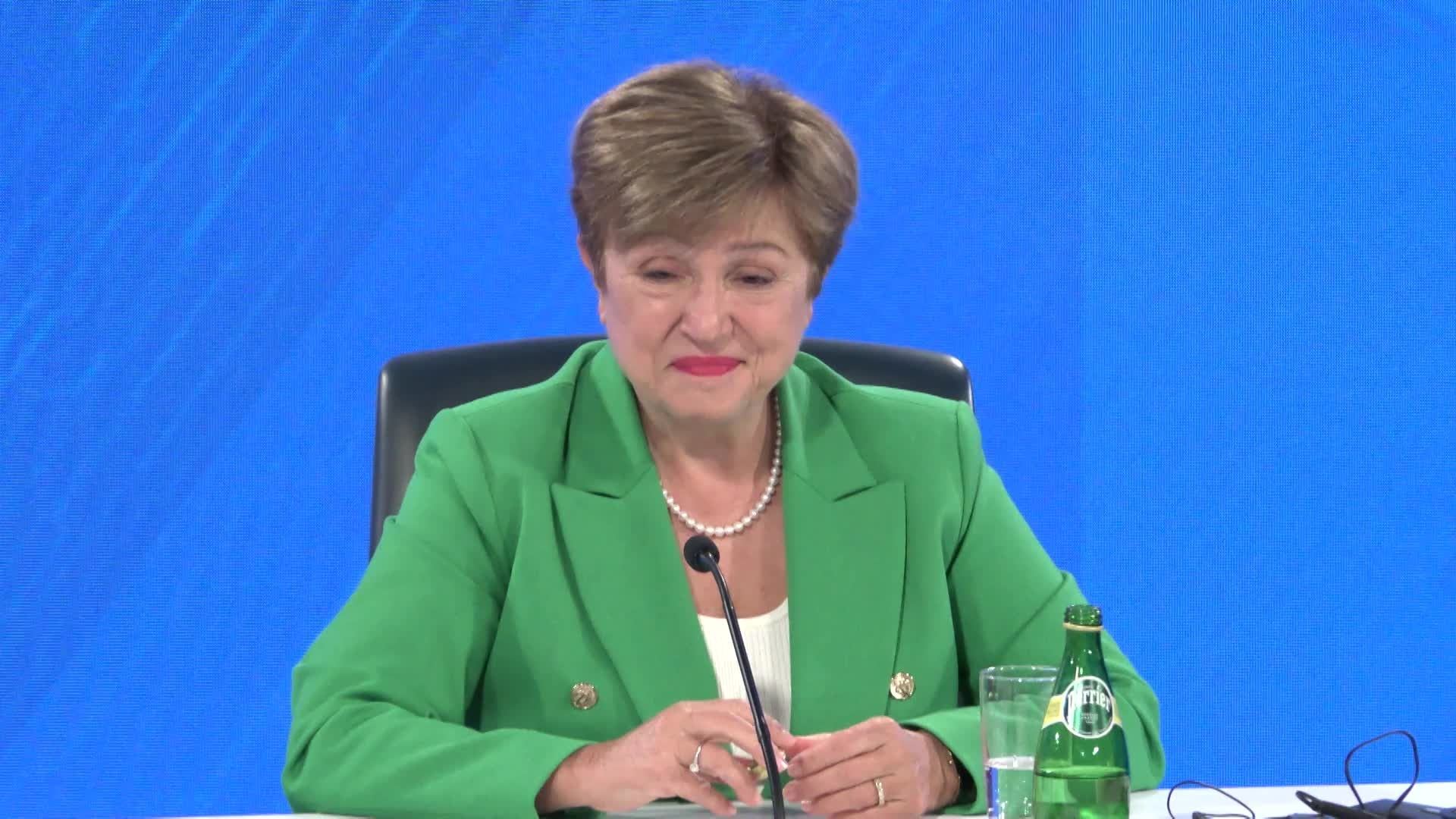
Opening the meeting, IMF Managing Director Kristalina Georgieva provided an assessment of the global economic outlook and the policy challenges created by what the institutions described as an “increasingly complex and uncertain international environment”.
The statement warned that policy space and economic buffers had already been eroded, meaning governments and financial institutions may have less capacity to respond to the next crisis.
Ms Georgieva also highlighted the potential of AI and other technological innovations to raise productivity and economic growth, while stressing the need for timely policies to unlock those gains and manage emerging vulnerabilities.
The discussion reflects an important shift in the global AI debate. Until recently, policymakers largely approached the technology through employment, productivity and industrial competition.
AI is now increasingly being treated as a financial-stability issue.
Banks, asset managers, payment companies and regulators are using AI to process data, detect fraud, assess credit risk and automate customer services.
These applications could lower costs, improve financial inclusion and allow risks to be identified more quickly.
For developing economies with limited supervisory resources, technology could help central banks analyse large volumes of financial data, monitor transactions and identify vulnerabilities across institutions.
But the same systems can create new concentrations of risk.
If several banks use similar AI models, data providers or cloud infrastructure, they may reach the same decisions simultaneously. During periods of stress, that could lead institutions to reduce credit, sell assets or demand additional collateral at the same time.
Such behaviour could intensify market movements rather than stabilise them.
An error in a widely used model could also spread across several financial institutions before supervisors understand what has happened.
The risk is not that AI will independently cause every financial crisis. It is that technology could increase the speed at which a mistake, cyberattack or shift in investor sentiment moves through the financial system.
Traditional financial regulation was developed for decisions made by identifiable institutions and employees. AI complicates accountability because outcomes may be shaped by models developed externally, trained on incomplete data and modified continuously.
When an automated system produces a damaging decision, responsibility may be distributed among the financial institution, technology provider, data supplier and model developer.
Regulators must therefore determine who remains accountable when essential financial decisions are partially automated.
The IMF and the regional financing institutions specifically identified operational and cyber vulnerabilities as part of the emerging risk landscape.
That concern is justified. Financial systems increasingly depend on digital infrastructure connecting banks, payment providers, securities markets and public institutions.
AI can strengthen cybersecurity by detecting suspicious activity more quickly. But it can also help criminals automate attacks, create convincing fraudulent communications and identify system weaknesses at scale.
A successful attack on a major payment platform, cloud provider or central financial-market infrastructure could disrupt several institutions simultaneously.
The distinction between cyber risk and macroeconomic risk is consequently becoming less clear.
A prolonged failure of a national payment system could interrupt salaries, tax collection, retail transactions and business activity. A cyberattack on public debt infrastructure could weaken investor confidence. Manipulated financial data could prompt incorrect policy or trading decisions.
These risks are particularly significant for developing countries whose financial systems may rely on a small number of service providers.
Concentration can improve efficiency during normal periods, but it also creates points of failure. If one provider supports a large share of mobile-money, cloud or payment activity, disruption can quickly become systemic.
The IMF–RFA dialogue therefore called for close monitoring and stronger international co-operation.
Cyber threats do not respect national borders, while the technology supporting financial institutions is frequently provided by multinational companies operating across several jurisdictions.
A central bank can strengthen domestic regulation, but it cannot independently supervise every foreign cloud platform, data centre or software provider on which its financial system depends.
The global financial safety net consists of resources available to countries when they experience balance-of-payments pressures, sudden capital outflows, foreign-exchange shortages or other financial shocks.
It has several layers.
Countries first rely on their own foreign-exchange reserves and domestic policy tools. They may then access bilateral currency-swap arrangements, regional financing mechanisms and, ultimately, IMF support.
Regional Financing Arrangements occupy an important position between national reserves and the IMF.
Because they are closer to their member countries, regional institutions may understand local economic structures and political conditions more closely. They may also provide support faster or combine financing with regionally designed surveillance.
The IMF, by contrast, brings global resources, technical expertise and a broader assessment of international spillovers.
Effective co-operation between these institutions can increase available financing, reduce duplication and prevent countries from receiving conflicting policy advice.
The Bangkok dialogue reaffirmed the High-Level RFA Dialogue as a “trusted platform for strategic engagement and cooperation among institutions responsible for safeguarding regional and global financial stability”.
That language is significant because crisis financing is not simply about the amount of money available.
Institutions must agree on who assesses the crisis, which policy conditions apply, how financing is divided and whose debt-sustainability analysis guides the response.
Without co-ordination, negotiations can be delayed precisely when speed is most important.
The discussion carries particular importance for Africa, where the regional layer of the global financial safety net remains relatively shallow.
African economies have access to continental and subregional financial institutions, but the region does not yet possess a crisis-financing arrangement comparable in scale to the largest mechanisms in Europe or Asia.
This leaves many countries heavily dependent on the IMF when confronted with external financing crises.
Ghana’s recent experience illustrates the limits of national buffers once market access closes, foreign-exchange reserves decline and public debt becomes unsustainable.
Regional trade and monetary institutions can support surveillance and policy co-ordination, but they generally lack the resources required to stabilise a large economy facing a severe balance-of-payments shock.
That dependence creates two problems.
First, countries may delay approaching the IMF because of the political stigma and adjustment conditions associated with a programme.
Second, several African countries could face stress simultaneously during a global commodity, climate or financial shock, increasing pressure on existing international resources.
A stronger African financing arrangement would not replace the IMF. It could provide an additional layer of protection, support earlier intervention and allow crisis programmes to reflect regional economic realities.
Such a mechanism would require credible governance, paid-in capital, surveillance capacity and clear lending rules. It could not become a facility through which governments avoid necessary reforms.
But without deeper regional buffers, African economies will remain more vulnerable to changes in global financial conditions over which they have little control.
Ms Georgieva’s emphasis on AI’s productivity potential also raises a distributional question.
Countries with reliable electricity, affordable connectivity, large datasets and strong technical skills are better positioned to capture the gains from artificial intelligence.
Those without these foundations may incur the costs without receiving equivalent benefits.
African financial institutions may purchase AI services developed and hosted abroad, increasing their dependence on foreign technology providers and creating new payments for software, cloud computing and data processing.
Smaller regulators may also struggle to audit complex models used by multinational financial institutions.
This could widen the information gap between regulated entities and their supervisors.
There is also a risk that credit models trained on data from advanced economies will reproduce inappropriate assumptions when applied to African households and businesses.
Individuals operating informally or without extensive digital histories may be classified as higher risk, even when they are commercially viable.
AI could therefore expand financial inclusion if deployed carefully—or automate exclusion if weak data and biased assumptions are allowed to determine access to credit.
The IMF informed participants that it had undertaken policy reviews covering surveillance, programme design, financial-sector assessments, debt analysis and external-sector assessments.
These reviews matter because the Fund’s traditional surveillance framework must adapt to risks that may not appear immediately in government budgets or commercial bank balance sheets.
Dependence on a single cloud provider, widespread use of a common algorithm or weaknesses in national payment infrastructure may not resemble conventional macroeconomic vulnerabilities.
Yet each could transmit financial stress across institutions and borders.
Financial-sector assessments must therefore examine technology governance, outsourcing arrangements, model concentration and the resilience of digital infrastructure.
Programme design may also need to account for the cost of strengthening cybersecurity and modernising payment systems.
For low-income countries, these investments cannot be treated as optional technology projects. They are becoming part of core financial infrastructure.
The next High-Level RFA Dialogue will take place in Washington in October 2027.
The year before that meeting should be used to move from broad recognition of the risks to practical co-operation.
The IMF and regional arrangements need clear protocols for sharing information during cyber and financial emergencies. Joint crisis simulations could test whether institutions can respond quickly when digital disruption affects several countries.
They should also develop common principles for assessing AI-related concentration and operational risk.
For Africa, the priority should be to deepen regional crisis-financing capacity while ensuring that central banks and financial regulators possess the expertise to supervise increasingly automated institutions.
The central lesson from Bangkok is that technological innovation does not eliminate the need for financial buffers. It makes them more important.
AI may raise productivity, improve supervision and widen access to finance. But it can also accelerate contagion, concentrate operational dependence and expand the consequences of cyber failure.
At a time when public debt is high and policy space has narrowed, governments may encounter the next financial shock with less room to respond.
The strength of the global financial safety net will therefore depend not only on how much money the IMF and regional institutions can mobilise, but also on how quickly they can recognise new forms of risk and act together.
Technology is changing the financial system faster than the institutions designed to protect it. The Bangkok dialogue is an acknowledgement that the safety net must now evolve at the same speed.

