

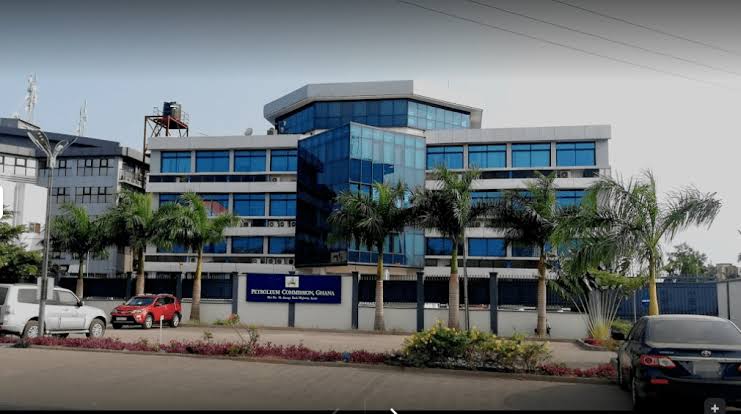

- Petroleum Commission-Kosmos Deal Targets Deeper Skills Transfer in Ghana’s Upstream Industry
Ghana’s effort to build a more technically capable domestic petroleum industry is entering a new phase after the Petroleum Commission and Kosmos Energy signed an agreement to facilitate the secondment of a Ghanaian engineer to the international upstream company.
The arrangement is modest in scale, but it reflects a broader shift in local-content policy from simply increasing Ghanaian participation towards transferring specialised technical knowledge required to regulate and operate complex offshore assets.
For the Petroleum Commission, the programme offers direct exposure to the engineering standards, operational systems and decision-making processes of an experienced international operator.
The significance extends beyond the individual engineer selected for the programme. Ghana’s upstream industry increasingly depends on regulators being able to understand sophisticated production systems, reservoir-management practices, offshore engineering and safety standards well enough to interrogate the technical decisions of international operators.
The Commission’s effectiveness therefore rests not only on legal authority, but on whether its technical personnel possess sufficient expertise to assess field-development proposals, monitor operations and enforce standards credibly.
Secondment provides a form of learning that classroom training alone cannot easily replicate. Working directly inside an operating petroleum company exposes technical staff to live projects, multidisciplinary decision-making, engineering trade-offs and the practical realities of managing offshore assets.
That experience can strengthen a regulator’s ability to distinguish between theoretical compliance and commercially or technically sound field operations.
The model is not entirely new to Ghana. Professionals from the Ghana National Petroleum Corporation and Petroleum Commission have previously participated in secondment programmes with international operators, while Tullow Oil has described such arrangements as mechanisms for transferring technical skills and institutional knowledge.
During the development of the Tweneboa, Enyenra and Ntomme fields, Ghanaian professionals worked with project teams in London, Singapore, Houston and Ghana across areas including subsea engineering, FPSO commissioning and project finance.
The new Kosmos arrangement, however, comes at a different stage in the evolution of Ghana’s petroleum sector.
The country is no longer simply trying to establish itself as an emerging producer; it is seeking to retain more of the expertise, commercial value and institutional capability generated by upstream investment.
That objective has become more urgent as mature oil fields face production challenges while Ghana seeks fresh exploration, redevelopment opportunities and greater utilisation of natural gas.
For the regulator, the required skill set is becoming increasingly demanding. Engineers must be able to interrogate production data, assess engineering designs, understand offshore safety systems, evaluate field-development plans and challenge operators on technically complex decisions.
A regulator that lacks those capabilities risks depending too heavily on information supplied by the very companies it is supposed to supervise.
The economic implications are substantial. Stronger technical oversight can improve the quality of field-development decisions, identify inefficiencies earlier and strengthen monitoring of production, costs and operator obligations.
In a petroleum industry where small differences in recoverable reserves, project costs or production performance can translate into significant fiscal consequences, regulatory capability becomes directly linked to government revenue.
That is why human-capital development should be treated as an economic investment rather than simply a training exercise. Ghana’s petroleum wealth is determined not only by the volume of oil and gas underground but by the country’s ability to regulate, negotiate and manage those resources effectively.
International operators bring capital, technology and global expertise, but the long-term national benefit depends partly on whether some of that expertise remains embedded in Ghanaian institutions after foreign specialists move on.
The most important question is therefore what happens when the secondment ends. The objective should be a multiplier effect in which the returning engineer transfers knowledge to colleagues, contributes to technical procedures and improves the Commission’s institutional ability to supervise future projects.
Without that follow-through, an individual placement can become a successful personal development programme without materially strengthening the regulator itself.
Kosmos brings particular historical relevance to the arrangement because of its role in Ghana’s modern petroleum story.
The company was part of the consortium involved in the discovery and development of Jubilee, Ghana’s first major commercial oil field, and later participated in the TEN development alongside Tullow, GNPC and other partners.
That accumulated operating experience gives Kosmos technical and institutional knowledge that potentially has value to Ghana beyond its direct commercial interests.
The persistent challenge for Ghana has been converting individual exposure into durable institutional capability. Training programmes and secondments can produce highly skilled professionals, but the benefit is diluted if returning staff are not placed in roles where their new knowledge can influence regulatory decisions, internal systems and the development of younger colleagues.
The Petroleum Commission will therefore need to ensure that lessons from the placement are documented, shared and incorporated into its broader supervisory processes.
The arrangement also points to a broader evolution in how local content should be measured. Ghana has traditionally focused on the number of local workers employed and the value of contracts awarded to Ghanaian companies, both important indicators, but neither alone captures whether the country is acquiring the technical capabilities required to control more sophisticated parts of the upstream value chain. The document makes the point directly: “The next frontier of local content is ownership of knowledge.”
That ownership means building a critical mass of Ghanaian engineers, geoscientists, technicians and project managers capable of designing, supervising and ultimately leading complex petroleum operations.
It also means ensuring that public institutions can independently scrutinise international operators rather than relying disproportionately on external technical expertise.
The Petroleum Commission-Kosmos secondment is therefore best understood as one small component of a much larger capability-building agenda.
For Ghana, the ultimate measure of local content will not be how many citizens enter the petroleum industry but how much technical capacity remains in the country when individual projects mature and foreign specialists leave.
An upstream sector that combines international capital with progressively stronger Ghanaian expertise would give the country greater ability to regulate resources, protect revenues and participate in higher-value technical work.
As the document concludes, the real test is whether Ghana can increasingly “possess the expertise required to regulate, manage and eventually lead the most technically demanding parts of the industry.”

