

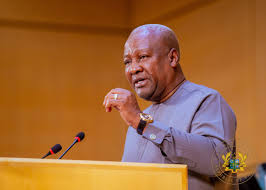

- Presidency Says GH¢248 million Compensation Bill Includes Arrears, Ex Gratia and Staffing Changes
The Presidency has sought to explain a sharp projected rise in compensation expenditure at the Office of the President, saying the increase reflects arrears, ex gratia payments, inherited salary determinations and staffing changes following the 2025 transition.
The clarification follows questions raised over the 2026 Budget projection, which shows compensation at the Office of the President rising from GH¢100 million in 2025 to GH¢248 million in 2026.
The increase represents a jump of about 148.00%, despite publicly available staffing reports showing that political appointees at the Presidency had declined from 357 in 2023 to 233 in 2025, a reduction of 124 positions.
The figures triggered public scrutiny because they appeared, at first glance, to show a smaller Presidency carrying a much larger compensation bill.
But Minister for Government Communications, Felix Kwakye Ofosu, says that interpretation does not reflect the full context behind the 2026 allocation.
Speaking on Joy FM’s Top Story, Mr Kwakye Ofosu said the compensation projection includes obligations beyond current salaries of serving presidential staff.
These, he said, include back pay, salary top-ups and ex gratia payments owed to former presidential appointees whose remuneration was affected by the latest Article 71 salary determination.
“It also includes ex gratia payments to previous government officials and monies owed them,” he said.
According to him, the salaries currently being paid to political appointees at the Presidency were not determined by the Mahama administration, but were approved under the previous Akufo-Addo administration following recommendations of an Article 71 committee.
“Every salary being taken now by political appointees at the Presidency was determined under President Akufo-Addo,” Mr Kwakye Ofosu said.
He argued that the headline figure should not be read as evidence that the current administration has increased salaries for presidential appointees.
Instead, the government’s position is that the 2026 compensation bill captures accumulated obligations, statutory entitlements and staffing adjustments that were not fully reflected in the 2025 expenditure base.
Mr Kwakye Ofosu also explained that the 2025 staffing report reflected the position at the end of that year, but the Presidency did not operate with its full staffing complement for much of 2025 because the new administration was still forming government after the transition.
“In 2025, we were still composing government, so the full complement of government officials had not been effected,” he said.
This means that some appointments and compensation commitments now fully captured in the 2026 Budget were not present for the whole of 2025.
The Presidency’s explanation points to three main drivers of the projected increase: outstanding payments to former office holders, implementation of Article 71 salary determinations approved before the change in government, and the full-year effect of staffing arrangements under the new administration.
However, the explanation has not fully settled the accountability question.
Mr Kwakye Ofosu did not provide a detailed breakdown of the GH¢248 million allocation, including how much relates to arrears, how much represents ex gratia, how much covers salary top-ups and how much is for current staff compensation.
When asked to provide exact figures on arrears owed to former officials, he said the numbers would be made available later.
“I can get you the exact figures,” he said.
That missing breakdown remains important because the controversy is not only about whether the rise can be explained, but whether the public can see clearly what each component of the increase represents.
In a period of tight fiscal consolidation, public sector compensation is a sensitive matter. Citizens are being asked to accept restraint, while government continues to emphasise prudent expenditure management and macroeconomic discipline.
Against that backdrop, a 148.00% projected rise in compensation at the Office of the President naturally attracts scrutiny, especially when it comes after repeated political commitments to run a leaner government.
The Presidency’s response provides context, but it also raises broader questions about how compensation obligations are reported in the budget and how clearly government communicates inherited liabilities, transition-related costs and current payroll commitments.
Analysts say the issue highlights the need for greater transparency in the classification of compensation expenditure across public institutions.
Where a single budget line combines current salaries, arrears, ex gratia and other staff-related obligations, the public may struggle to understand whether spending is rising because of new appointments, past obligations or statutory entitlements.
A clearer breakdown would help reduce speculation and improve trust in public financial reporting.
The controversy also shows the political difficulty of managing Article 71-related compensation in Ghana.
Payments to political office holders, including salary adjustments and end-of-service benefits, have long generated public debate because of concerns over fairness, fiscal burden and the gap between political compensation and conditions facing ordinary workers.
The Presidency is therefore seeking to distance the current administration from the salary determinations that informed the payments, while also acknowledging that the obligations must still be reflected in the budget.
For the government, the challenge will be to provide enough detail to reassure the public that the compensation increase is not the result of uncontrolled spending or salary hikes introduced by the current administration.
For citizens, the key issue is whether the Presidency’s explanation can be supported by verifiable figures.
The Office of the President is one of the most politically visible public institutions, and its expenditure patterns are often used as a measure of government’s commitment to discipline, efficiency and restraint.
That is why the GH¢248 million compensation projection will remain under scrutiny until a full breakdown is provided.
The Presidency has insisted that there is no hidden salary increase and that the projected jump reflects arrears, ex gratia, inherited salary approvals and the transition from a partial-year staffing structure in 2025 to fuller staffing in 2026.
But the burden of proof now lies in the details.
If the government provides a transparent breakdown showing how much of the GH¢148 million increase is linked to each item, the matter could be clarified.
If not, the controversy may continue to feed public suspicion over the cost of running the Presidency.
For now, the explanation has shifted the debate from whether the compensation bill rose to why it rose.
The next question is whether the Presidency will publish the numbers needed to close the gap between explanation and accountability.

