

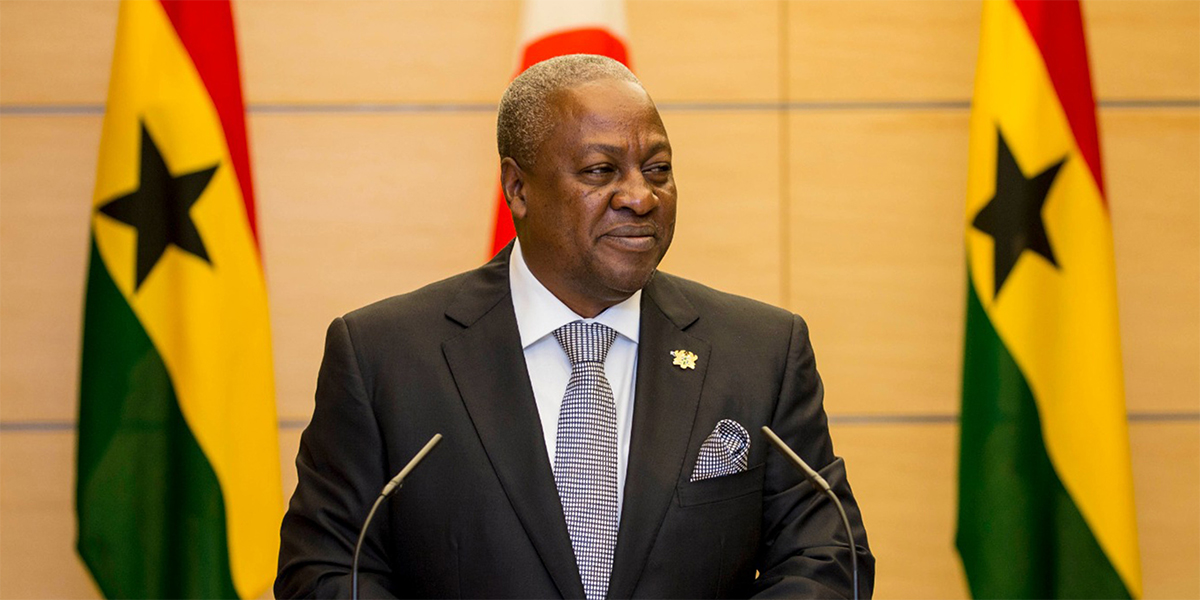

- Prez Mahama Assures Businesses Ghana’s Economic Stability Will Be Sustained
President John Dramani Mahama has reassured investors and corporate leaders that Ghana’s recent macroeconomic stability is not temporary, pledging that the government will sustain fiscal discipline and policy consistency beyond the country’s current IMF programme.
Addressing business executives at the 10th Ghana CEO Summit in Accra, President Mahama said the government is preparing a new post-IMF policy framework aimed at preserving stability, strengthening investor confidence and supporting long-term growth.
According to the President, Ghana intends to transition into a 36-month Policy Coordination Instrument after completing the current Extended Credit Facility arrangement with the International Monetary Fund.
He explained that the proposed framework would help maintain fiscal discipline while reinforcing policy credibility at a time when the economy is showing signs of recovery.
“This decision was taken in order to maintain policy credibility and fiscal discipline over the next 36 months, thereby supporting economic stability and sustainable development,” Mr Mahama stated.
The President further stressed that recent gains in inflation moderation, exchange rate stability and fiscal management should not be dismissed as short-term improvements.
“Captains of industry and businesses can therefore be rest assured that the current stability we are enjoying is not a fluke; it will be sustained into the future,” he added.
His remarks come as Ghana seeks to consolidate its recovery after years of fiscal pressure, debt restructuring, currency volatility and IMF-backed reforms aimed at restoring macroeconomic stability.
The proposed move toward a Policy Coordination Instrument is significant because it would provide a formal framework for continued engagement with the IMF without necessarily involving new financing. It would also send a signal to investors and development partners that Ghana intends to maintain policy discipline after the current programme ends.
For businesses, the assurance is critical. Many firms continue to operate in an environment shaped by high financing costs, energy tariff pressures, tax concerns and cautious consumer demand, even as headline macroeconomic indicators improve.
Sustained stability would therefore be important for investment planning, credit expansion, pricing decisions and long-term business confidence.
But the President’s message also carries a deeper policy challenge. Ghana’s recovery will not be judged only by lower inflation, a more stable cedi or improved fiscal balances. It will be judged by whether these gains translate into jobs, industrial growth, private-sector expansion and improved living standards.
A credible post-IMF framework could help anchor expectations, reduce policy uncertainty and prevent a return to the fiscal slippages that have historically undermined Ghana’s macroeconomic progress.
The proposed 36-month arrangement may also reassure markets that the government is willing to subject its economic management to continued external monitoring, even after the current bailout programme.
For investors, that could strengthen confidence in Ghana’s medium-term outlook, particularly as the country works to rebuild market access after debt restructuring.
Still, sustaining stability will require more than commitments. It will depend on disciplined expenditure management, stronger revenue mobilisation, prudent debt strategy, credible monetary coordination and structural reforms that improve productivity.
President Mahama’s message to business leaders was clear: Ghana’s recovery is not being left to chance.
The next test will be whether the government can convert that assurance into consistent policy execution and whether macroeconomic stability can become the foundation for a stronger, more competitive and more inclusive economy.

