

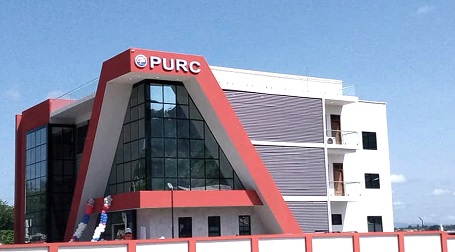

- PURC Warns on Generation Availability as Ghana’s Electricity Demand Continues to Rise
Ghana’s electricity system is entering a more demanding phase as generation weakens in the short term while underlying demand continues to rise, putting fresh focus on fuel security, plant availability and the financial health of the power sector.
Electricity generation declined 3.99% month-on-month in July 2026, according to the Public Utilities Regulatory Commission, although output remained 6.20% higher year-on-year. System peak demand reached 3,968 megawatts, representing a 6.61% increase from July 2025.
The July decline does not by itself point to an immediate electricity crisis, with PURC attributing part of the monthly movement to seasonal factors and improved weather conditions that moderated demand.
The more consequential signal is the longer-term rise in Ghana’s electricity requirements while the generating system remains heavily reliant on thermal plants and dependable fuel supplies. PURC said the “intermittent decline in generation highlights the need to closely monitor generation availability and fuel supply to ensure a reliable electricity supply.”
Thermal plants supplied 74.33% of Ghana’s electricity generation in July, leaving hydro and solar together with 25.67%. That composition matters because thermal generation is only as reliable as the gas and liquid-fuel systems supporting it, meaning an interruption in fuel availability can quickly become an electricity-security problem.
Natural gas has become the backbone of the thermal fleet, providing dispatchable power but exposing the system to infrastructure constraints, fuel shortages and international energy-market conditions.
The Energy Commission’s 2026 outlook reinforces that dependence. It expects thermal plants to account for about 73.00% of national generation during the year, compared with 25.80% for hydro and just 1.20% for non-hydro renewables. Ghana’s electricity system therefore remains overwhelmingly thermal, making security and affordability of fuel central to the reliability of the grid.
Demand, meanwhile, is moving in the opposite direction. July’s 3,968MW system peak was below the annual high recorded in April but still 6.61% above the corresponding level a year earlier, while the Energy Commission expects peak demand to reach 4,581MW in December 2026 under its base case.
That would be approximately 7.00% above the 2025 peak and would place greater pressure on dependable generation during periods of maintenance or unexpected outages.
The Commission estimates dependable installed capacity available to meet peak demand at around 5,455MW, providing what appears on paper to be a reasonable cushion above projected demand.
But it also warns that planned and unplanned outages can reduce reserve margins below the recommended 18.00% planning threshold, highlighting the distinction between installed capacity and electricity that can actually be dispatched when needed. That difference will become increasingly important as demand moves closer to the system’s reliable operating limits.
Fuel supply may prove the more immediate constraint. The Energy Commission projects natural-gas demand for power generation at 185.93 trillion British thermal units in 2026, with electricity production accounting for more than 85.00% of total national gas consumption. Average power-sector gas demand is forecast at about 460 million standard cubic feet per day, rising towards 479MMscfd in December.
The supply-demand balance is nevertheless expected to remain tight. The Commission projects an annual gas deficit under its base case and warns that scheduled maintenance and higher demand could produce more significant shortages in the fourth quarter, with October highlighted as particularly vulnerable.
When gas supply falls short, thermal generators may have to switch to more expensive liquid fuels, increasing generation costs and potentially transferring pressure to electricity tariffs or the public budget.
That makes Ghana’s electricity challenge as much a financial problem as an engineering one. The country already has substantial installed generating capacity, but reliability depends on whether plants can be fuelled, maintained and paid, while transmission and distribution companies must also move electricity efficiently and collect sufficient revenue. Simply adding more generation capacity will not solve those interconnected weaknesses.
PURC’s tariff decisions illustrate the balancing act. Electricity tariffs were increased 3.49% from July 2026, with the regulator citing movements in the exchange rate, inflation, the generation mix and fuel costs.
PURC said quarterly adjustments are designed to “maintain the real value of tariffs and ensure that utility providers remain financially viable while continuing to deliver reliable services to consumers.”
Financial viability, however, comes with an economic cost. Utilities cannot reliably generate and deliver electricity if they consistently fail to recover costs, but tariffs cannot rise indefinitely without squeezing household incomes and weakening businesses that depend heavily on energy.
Manufacturers, mines and other power-intensive operations face particular exposure because expensive or unreliable electricity can erode competitiveness and increase reliance on costly backup generation.
Ghana’s limited non-hydro renewable generation also leaves the system with relatively little diversification. Hydropower offers a valuable lower-cost source but remains vulnerable to rainfall and hydrological conditions, while thermal generation introduces fuel and foreign-exchange risks.
With non-hydro renewables expected to account for only about 1.20% of generation in 2026, solar, storage and demand-management technologies remain underdeveloped as a hedge against disruptions elsewhere in the system.
The stakes extend beyond energy policy because Ghana’s plans for industrialisation, expanded mining, manufacturing and investment in energy-intensive industries all depend on reliable and competitively priced power.
Factories cannot efficiently plan production around uncertain fuel availability, while mining companies and other large users face higher operating costs when grid interruptions force them onto backup generation. Electricity reliability is therefore increasingly a question of national competitiveness rather than merely utility-sector performance.
July’s numbers should consequently be read as a warning rather than evidence of an immediate shortage. Generation remains 6.20% higher than a year earlier, but demand is rising, thermal generation dominates the system, gas supply is tight and outages can narrow reserve margins precisely when electricity requirements are growing.
The challenge is maintaining tariffs that keep utilities financially sustainable while ensuring households and productive businesses can still afford the power being supplied.
The most important question for policymakers is therefore no longer simply whether Ghana has enough generating plants.
It is whether the country can guarantee fuel, financing, maintenance and transmission capacity at the same time as peak demand moves towards the Energy Commission’s projected 4,581MW in December. As the source asks, the more consequential question is “how much reliable electricity can we afford to deliver and for how long?”

