

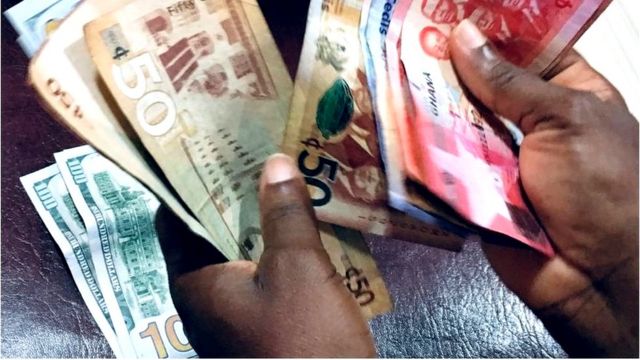

- PwC Sees Stable Cedi Outlook as BoG Supports Forex Market
PwC Ghana says the outlook for the Ghana cedi has improved, with the local currency expected to remain fairly stable in the medium term. The firm says recent actions by the Bank of Ghana to support the foreign exchange market have helped reduce pressure on the cedi.
Speaking on the sidelines of the launch of the PwC Ghana 2026 Banking Survey in Accra, PwC Ghana Country Senior Partner, Vish Ashiagbor, said the cedi has faced some pressure in recent times, but the central bank’s dollar support has helped stabilise the market.
According to him, PwC does not expect any major rise or fall in the value of the cedi in the medium term. He said the local currency is likely to trade within its current range, supported by better dollar supply and improving economic conditions.
“On the cedi, we have seen some pressure recently, but we have also seen the Bank of Ghana inject some dollars into the market to stabilise the currency. From a medium-term perspective, we continue to believe that the cedi will operate within the current band. We do not expect to see any major appreciation or depreciation in either direction,” Mr Ashiagbor said.
The Bank of Ghana injected US$2.01 billion into the foreign exchange market in June 2026 to meet demand and support the stability of the cedi. The amount included US$1.20 billion supplied through the Forex Intermediation Programme and another US$811.00 million through the central bank’s FX Intervention Programme. The intervention came at a time when demand for dollars had increased in the market.
For businesses, a stable cedi is important because it helps them plan better. Importers can estimate costs more clearly, exporters can manage earnings better, and investors can reduce exchange-rate risk. For households, cedi stability can also help reduce pressure on prices, especially for imported goods, fuel and other items affected by the exchange rate.
Ghana’s currency has seen periods of sharp depreciation in recent years, making exchange-rate stability one of the key concerns for businesses and consumers.
PwC’s latest view suggests that market confidence is improving, although the cedi is still likely to face some pressure from demand for foreign currency.
The improved outlook also comes as Ghana records better macroeconomic indicators, including lower inflation, stronger investor confidence and more stable exchange-rate conditions.
PwC expects Ghana’s improved economic conditions to remain broadly sustainable over the medium term.
In its 2026 Ghana Banking Survey, the firm projected that inflation would remain within the Bank of Ghana’s medium-term target range.
It also expects the cedi to depreciate gradually to between GH¢11.50 and GH¢13.00 to the US dollar by the end of the year.
This means PwC does not expect a sudden fall in the cedi, but it also does not expect the currency to strengthen sharply.
The forecast points to a more controlled movement in the exchange rate. Mr Ashiagbor also said the Bank of Ghana is likely to keep its current monetary policy stance at the next Monetary Policy Committee meeting.
He said the inflation risks already mentioned by the central bank were considered when the Bank of Ghana decided to keep the policy rate unchanged at its previous meeting.
According to him, it would not be surprising if the policy rate is held again The policy rate is important because it guides interest rates in the economy.
A hold would mean the central bank wants to remain careful while it studies inflation, exchange-rate stability and general economic conditions. The Bank of Ghana is expected to hold its next Monetary Policy Committee meeting later in July.
A more stable currency can help banks manage foreign currency loans, trade finance, import payments and customer demand for dollars. It can also reduce the risk of sudden losses linked to exchange-rate movements.
However, PwC has also warned that banks must prepare for a changing operating environment as interest rates fall.
The firm said banks will need to depend less on income from high interest rates and focus more on digital services, payments, trade finance and other fee-based businesses. The message from PwC is that Ghana’s economic outlook has improved, but discipline is still needed.
The cedi may remain stable if the Bank of Ghana continues to manage dollar liquidity well, inflation remains low, exports improve and investor confidence is sustained.
But the currency could come under pressure again if dollar demand rises sharply, global conditions worsen or market confidence weakens.
The cedi is not expected to record any major movement in either direction in the medium term.
That should give some comfort to businesses, banks, investors and households.
The key test will be whether Ghana can keep enough foreign exchange in the market while maintaining low inflation and strong policy discipline.

