

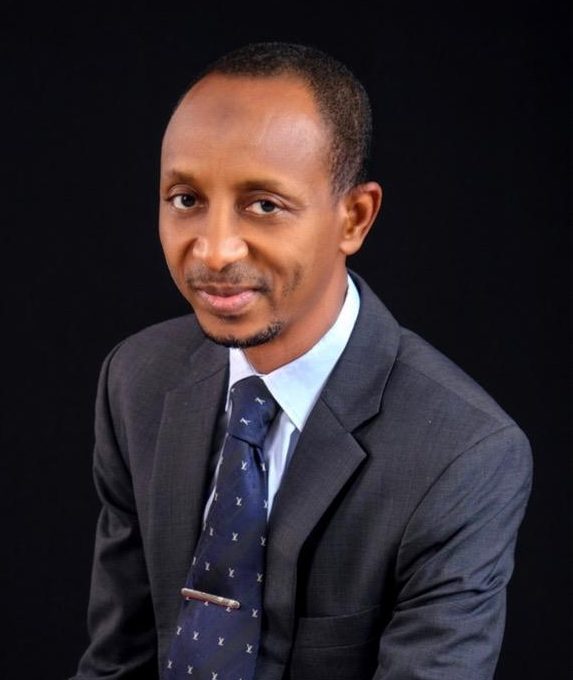

- Fairness, Equity and Risk-Sharing Can Make Non-Interest Finance Mainstream in Ghana — Dr Maccido
Ghana should look beyond the religious origins of non-interest banking and focus instead on its commercial principles of fairness, equity and risk-sharing as the country seeks to widen access to long-term capital for businesses and development projects, according to Dr Attahiru Maccido, Managing Director and Chief Executive Officer of Trustmark Capital Limited.
Speaking at a national dialogue on non-interest banking and finance, Dr Maccido argued that the model should not be regarded as a financial system designed exclusively for Muslims or people belonging to a particular faith, but as an alternative financing architecture capable of attracting a broader pool of investors and customers into Ghana’s financial market.
“Non-interest banking and finance has its roots in Abrahamic commercial principles,” he acknowledged, but said those origins should not obscure the wider economic value of the model.
For investors, entrepreneurs and customers without a religious affiliation, he said the attraction should instead lie in the principles underpinning the transactions.
“With respect to those people that are not actually that probably may be traditionalists, we know the other features of non-interest banking and finance is to make sure that there is fairness to everybody who is actually going to participate into it,” Dr Maccido said.
The distinction is becoming increasingly relevant as Ghana seeks to deepen its financial sector while confronting persistent constraints around the cost and availability of finance. Businesses, particularly smaller enterprises, continue to struggle with collateral requirements and expensive borrowing, while infrastructure and other development projects require substantial pools of patient, long-term capital.
At the heart of non-interest finance is the principle of risk-sharing, which can produce a materially different relationship between financial institutions and their customers.
Dr Maccido explained that some financing structures allow a bank to provide capital while the entrepreneur manages the underlying venture, with the parties sharing returns and losses according to the terms of their partnership.
“There is also risk sharing, where some of the contracts of financing are actually embedded into risk sharing between the parties,” he said.
Under one such arrangement, “the bank will be the financier, while the entrepreneur, who is the customer, will be the manager, and they go into a venture based on the partnership agreement.”
That changes the conventional lender-borrower relationship because financing can be connected more directly to the performance of the underlying economic activity instead of simply advancing funds in exchange for predetermined interest payments.
“They share profit as well as the loss is following the capital contribution,” Dr Maccido said.
For Ghanaian SMEs, such arrangements could provide an additional route to capital where conventional lending structures have proved difficult to access.
The international capital-market opportunity could be even larger.
Dr Maccido pointed to the United Kingdom as evidence that non-interest banking can develop within a predominantly non-Muslim financial system. The Islamic Bank of Britain was established in 2004 and was renamed Al Rayan Bank a decade later while continuing to provide non-interest financial services.
The UK government’s own use of Sukuk, investment certificates structured around non-interest financing principles, provides a further illustration of how such products can attract investors beyond religious constituencies.
“The same UK, they came in 2014 to issue Sukuk by the government of UK, where they came to raise 200 million pounds, and they were able to get over 2.3 billion pounds subscription of that particular Sukuk,” Dr Maccido said.
He said the UK returned to the Sukuk market in 2021 and pointed to Luxembourg, Hong Kong and South Africa as other jurisdictions that have explored non-interest financial instruments despite relatively small Muslim populations.
Hong Kong’s experience was particularly significant to his argument. According to Dr Maccido, the jurisdiction sought US$1 billion through a Sukuk issuance in 2014 but received demand of approximately US$4.7 billion.
“How can they actually be the one that have subscribed this one?” he asked, challenging the notion that such demand could have come entirely from Muslim investors.
The implication for Ghana is that investors may be attracted to non-interest instruments because of their commercial features, asset structures and return profiles rather than the faith tradition from which they originated.
If properly developed, the market could therefore allow Ghana to diversify its investor base rather than compete for virtually all long-term capital through conventional debt instruments.
That could become increasingly important as the country seeks financing for infrastructure, agriculture, housing and private-sector expansion while managing debt sustainability and limiting pressure on traditional sources of government funding.
But Dr Maccido cautioned that Ghana would need more than simply introducing new products.
A viable market would require regulation capable of giving investors confidence, transparent underlying assets and sufficient technical expertise among banks, fund managers, investment advisers and regulators.
Public education would be equally important because misconceptions surrounding the religious origins of non-interest finance could limit participation before potential users have assessed the economics of the products.
“You can see that actually the advantage is for everybody, irrespective of the religion, the region, or the faith that they do actually worship,” Dr Maccido said.
He identified fairness, equity and risk-sharing as principles that could contribute not only to financial inclusion but also to wider economic development.
“Definitely there are other, like fairness, the equity, the risk sharing, the things that can promote actually social unity as well as the developmental aspect are all embedded into non-interest banking and finance,” he said.
For Ghana, the broader policy question is therefore not simply whether non-interest banking belongs within the country’s financial system. It is whether Ghana can afford to overlook a financing architecture that could connect businesses and public-sector projects to a wider pool of domestic and international investors.
“Ghanaians should not let this particular issues of misunderstanding and demystification actually to hide these benefits to the Ghanaians,” Dr Maccido said.
The challenge now is execution. If Ghana can build the regulatory, institutional and technical capacity required, non-interest finance could move from an unfamiliar banking concept into another mainstream channel for mobilising long-term capital, sharing investment risk differently and widening participation in economic growth

