


- Ghana’s 30% Gender Leadership Target Will Not Happen by Accident — BoG Deputy Governor
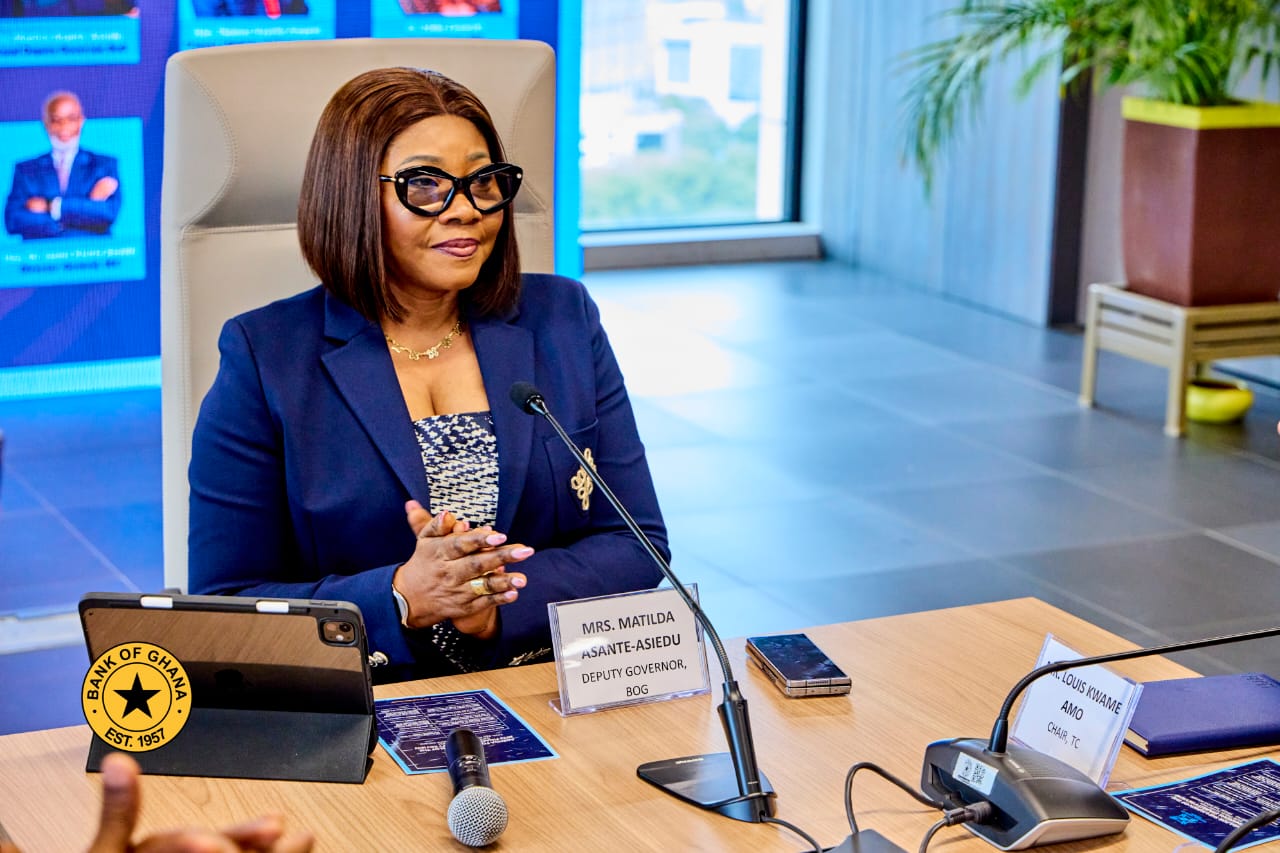
Ghanaian institutions must translate their stated support for women into senior assignments, succession plans and measurable leadership opportunities as the country approaches its first statutory gender-representation target, according to Bank of Ghana Second Deputy Governor Matilda Asante-Asiedu.
Ghana’s Affirmative Action (Gender Equity) Act, 2024 establishes a phased pathway towards equal representation in leadership and decision-making, beginning with a target of 30% in 2026, rising to 35% by 2028 and 50% by 2034.
Mrs Asante-Asiedu said the first milestone would not be achieved through legislation alone. It would require women prepared to assume responsibility, boards willing to provide access and institutions treating inclusion as an economic necessity rather than a public-relations commitment.
“The first milestone falls due this year,” she said. “But that future will not arrive by accident.”
Her remarks, delivered at the Executive Women Network’s 10th anniversary conference in Accra, sharpen the focus on whether Ghana’s public and private institutions have built credible pipelines for meeting the requirements of the new law.
Representation can be increased through appointments, but sustainable gender parity requires a deeper process: identifying talent early, assigning women to commercially significant roles and preparing them to compete for executive and board positions.
The central issue is therefore not simply whether organisations can find women when vacancies arise. It is whether their systems have consistently given women the experience, visibility and sponsorship required to be considered ready.
Mrs Asante-Asiedu said institutional declarations supporting women should be judged by actual decisions about assignments, promotions and succession.
“It is easy for an organisation to say it supports women in leadership,” she said. “The real test comes when opportunities arise: who gets the important assignments, the visibility, a place on the succession plan?”
That distinction goes to the heart of workplace inequality. Training programmes and mentorship networks can improve skills and confidence, but they may not overcome informal power structures that determine who receives high-value clients, manages major projects or gains exposure to boards.
Mrs Asante-Asiedu distinguished between mentorship and sponsorship, arguing that women need leaders willing to advocate for them in rooms where appointments and opportunities are decided.
“Mentors give guidance; sponsors give access, and without access, talent remains unseen,” she said.
“Advice is helpful, but advocacy is transformative.”
The Second Deputy Governor called on both male and female leaders to identify capable women and say: “I have watched her work. She is ready. Give her the chance.”
This form of advocacy carries greater institutional weight than general encouragement. A sponsor attaches personal credibility to another person’s readiness and remains supportive when that individual encounters the inevitable pressures of a new role.
The Executive Women Network was founded a decade ago to provide women in leadership with a community through which they could learn, connect and create opportunities.
Mrs Asante-Asiedu, who was involved in the network’s launch while leading Access Bank’s “W” Initiative, said the organisation’s next decade should be evaluated by its effect on institutions, businesses, younger women and communities.
“The first decade tells the story of what EWN has built,” she said. “The next must tell the story of what EWN has changed.”
She challenged leaders to look beyond titles and ask whether their institutions became stronger, whether younger colleagues gained confidence and whether their influence created opportunities for others.
“A person’s life is not measured by a business card alone,” she said. “Our health, our peace of mind, our financial independence and the people we develop matter just as much.”
The observation challenges a narrow understanding of executive achievement based exclusively on position, income or corporate visibility.
Mrs Asante-Asiedu argued that holistic leadership must include family, relationships, health, financial independence and personal values. Rather than pursuing a perfect balance between these responsibilities, women should recognise that different phases of life require different priorities.
“There are seasons when work demands more, seasons when family needs more, and seasons when we must slow down and reassess,” she said.
The more useful question, she added, was whether leaders were making intentional decisions that remained connected to the people and principles giving success its meaning.
Mrs Asante-Asiedu also warned that artificial intelligence and cybersecurity were changing the skills required in the financial sector and other industries.
She said she had recently engaged the boards of commercial banks on the implications of the two subjects, adding that seniority should not prevent leaders from continuing to learn.
“The skills that brought us this far may not carry us through the next 10 years,” she said.
“Preparation builds confidence, and confidence amplifies voice.”
The warning has particular relevance for women’s representation. Technological change can create new leadership opportunities in data, cybersecurity, digital finance and risk management. But it can also reproduce existing gender inequalities if women have limited access to technical training and emerging assignments.
Institutions seeking to satisfy representation targets will therefore need to look beyond current executive positions and invest in the talent pipelines feeding tomorrow’s leadership.
Women must be present not only in traditional support functions but in technology, operations, finance, revenue generation and enterprise risk — areas from which chief executives and board members are frequently selected.
The Second Deputy Governor urged professional women to think beyond careers and place greater emphasis on asset ownership, investment and wealth creation.
“We speak often about careers, but not enough about assets,” she said.
“Are we investing? Building businesses? Creating financial security? Thinking about what we pass on?”
She argued that financial security gives women greater freedom to make choices, withstand economic shocks and support other people.
This adds another dimension to the gender-parity debate. Representation in senior employment is important, but it does not automatically translate into ownership of businesses, investments or productive assets.
Women may occupy leadership positions while remaining underrepresented among shareholders, entrepreneurs and major investors. Closing the leadership gap without addressing the ownership gap could consequently leave important economic inequalities intact.
Mrs Asante-Asiedu called for women to see themselves as owners, investors, entrepreneurs and creators of wealth.
The Deputy Governor rejected the argument that increasing female representation amounts to tokenism.
“Elevating women is not tokenism. It is an economic imperative,” she said.
Women account for slightly more than half of Ghana’s population, meaning their exclusion from leadership, capital and economic opportunity restricts the productive capacity of the wider economy.
Citing McKinsey research published in 2023, Mrs Asante-Asiedu said companies in the highest quartile for gender diversity on executive teams were 39% more likely to outperform those in the lowest quartile financially.
Such findings do not mean appointing women automatically produces stronger profits. They support the broader proposition that organisations drawing leadership from a wider talent pool may benefit from different experiences, stronger debate and improved decision-making.
The more immediate test for Ghana will be implementation of the Affirmative Action Act. Institutions will need to disclose how representation is measured, which positions count towards the targets and what consequences follow when milestones are missed.
Without transparent reporting, the statutory percentages risk becoming aspirations rather than instruments of accountability.
Mrs Asante-Asiedu ended with a direct challenge to members of the Executive Women Network: identify one woman whose career, business or confidence they could advance and open a door for her within 30 days.
“Make the introduction. Put her name forward. Give her the assignment. Share what you know about investing,” she said.
“One name. One door. Thirty days.”
The simplicity of the challenge is also its strength. National targets can appear distant from individual action, but leadership pipelines are built through specific decisions — a recommendation, assignment, introduction or investment conversation.
“If every woman in this room does that, the next decade will not be measured by how many of us reached the top, but by how many we brought with us,” she said.
Ghana now has a law establishing the destination. The question is whether boards, executives and professional networks will build the pathway required to reach it.

