


- Carrefour’s Arrival Could Widen Retail Competition, But Local Firms Need a Place in Its Supply Chain
Carrefour’s first Ghanaian store opens a new chapter for the country’s formal retail market. But the larger test will be whether the international retailer’s arrival creates durable opportunities for Ghanaian suppliers and businesses or adds another global brand to the supermarket landscape with limited links to domestic production.
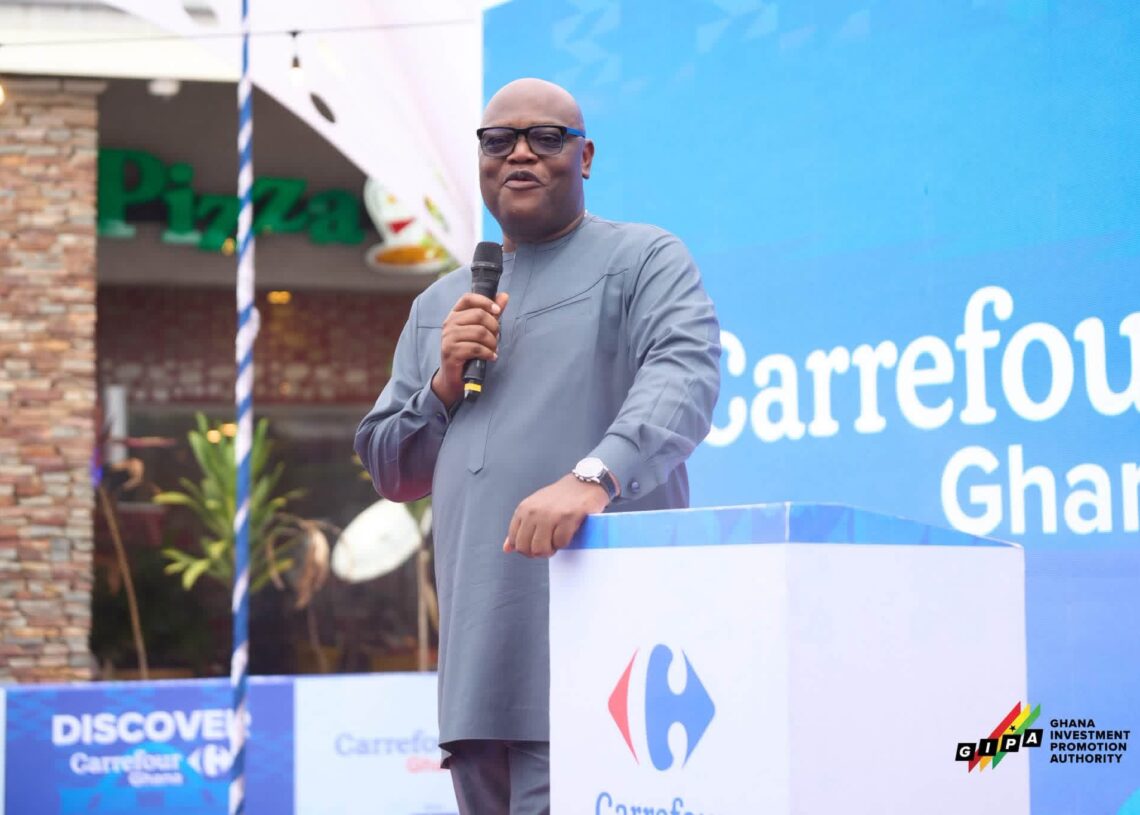
The store, located at Accra Mall, is being welcomed by the Ghana Investment Promotion Authority (GIPA) as an opportunity to attract investment and expand retail activity. GIPA chief executive Simon Madjie has urged Carrefour to deepen local participation by creating opportunities for Ghanaian businesses.
That request captures the policy challenge behind foreign investment. The opening of a store is visible; the economic connections around it are less so.
The broader contribution will depend on how the retailer sources goods, works with local suppliers and connects its operations to Ghanaian agriculture, manufacturing, transport, packaging and distribution.
The opportunity is substantial. A large supermarket network can provide a structured route to consumers for local producers, potentially creating incentives to improve quality, packaging and consistency.
For agricultural businesses, dependable retail demand could help support investment in storage, processing and logistics. For manufacturers, inclusion in a major retailer’s product range could create a platform to reach more customers.
But those benefits are not automatic. Local firms must be able to meet purchasing volumes, quality standards, delivery schedules and other commercial requirements.
Smaller businesses may need support to scale production, secure working capital or improve packaging before they can supply a large retailer consistently.
The key question is whether the commercial relationship will help local firms meet those demands or simply leave them outside the supply chain.
GIPA’s appeal for deeper local content is therefore more than a call for goodwill. It is a request to turn investment into participation.
That could mean identifying Ghanaian products for store shelves, building supplier development arrangements or working with local businesses across services such as logistics, warehousing and packaging.
The announcement, however, does not specify Carrefour’s sourcing targets, procurement plans, job numbers or further expansion schedule.
That missing detail matters because the economic impact of a retailer cannot be assessed solely by its physical presence. The number of local businesses contracted, the value of purchases made from Ghanaian suppliers and the reliability of payments may say more about the depth of local participation than the store’s opening alone.
The arrival also introduces another international name to Ghana’s organised retail sector, potentially intensifying competition for consumers and suppliers. Greater competition can encourage retailers to improve service, product availability and pricing.
But the effects on domestic businesses will depend on whether they can compete for shelf space and contracts, and whether the new entrant expands the market for local products or places greater pressure on existing suppliers and retailers.
The issue sits within a wider debate about the boundaries of foreign investment. GIPA and the Ghana Union of Traders’ Associations agreed in August on measures intended to strengthen compliance with investment rules and protect Ghanaian participation in informal retail.
The distinction described by the Authority is that foreign investment is permitted in formal retail, including supermarkets and shopping malls, while informal activities such as open markets, small shops and kiosks are reserved for Ghanaian citizens.
That distinction makes the regulatory framework important to the way Carrefour operates and to how the arrival is received. Investment promotion and protection of domestic enterprise do not have to be opposing goals.
But confidence depends on clear rules, consistent enforcement and the understanding that a foreign retailer’s contribution should extend into the wider economy.
The broader investment environment is also changing. The Ghana Investment Promotion Authority Act, 2026, has expanded GIPA’s mandate to cover investment promotion and facilitation, technology transfer regulation and investor grievance resolution.
The framework is intended to improve Ghana’s competitiveness and help attract domestic and international investors. The challenge will be to ensure that facilitation also encourages productive connections between investors and local businesses.
For Carrefour, the first Ghanaian store can be an entry point to a market with opportunities across retail and distribution. For Ghana, the store is a test of how investment policy works in practice.
Can a multinational retailer build a supplier base that includes Ghanaian firms? Can domestic producers meet its standards without being priced out by the cost of upgrading? Can the business create commercial relationships that remain valuable beyond the novelty of a new opening?
These questions should guide the assessment of the investment over time. The immediate facts are that Carrefour has opened its first Ghanaian store at Accra Mall and that the facility is being welcomed by GIPA.
The longer-term outcome will depend on the scale of its operations, procurement decisions and the number of local firms incorporated into its network.
If local sourcing grows, the effects could reach beyond the retail floor. More reliable demand can encourage farmers and manufacturers to invest in quality and production capacity. Stronger local supply chains can also create work in transport, storage, processing and packaging.
If those links remain weak, the benefits may be more limited, even as the retail market becomes more international.
The message from GIPA is clear: investment should generate value beyond the establishment of an outlet. Carrefour’s entry gives Ghana an opportunity to test that principle against a real commercial operation.
The measure of success will not simply be that a global retailer has arrived, but whether Ghanaian enterprises can become part of the business it builds.

