

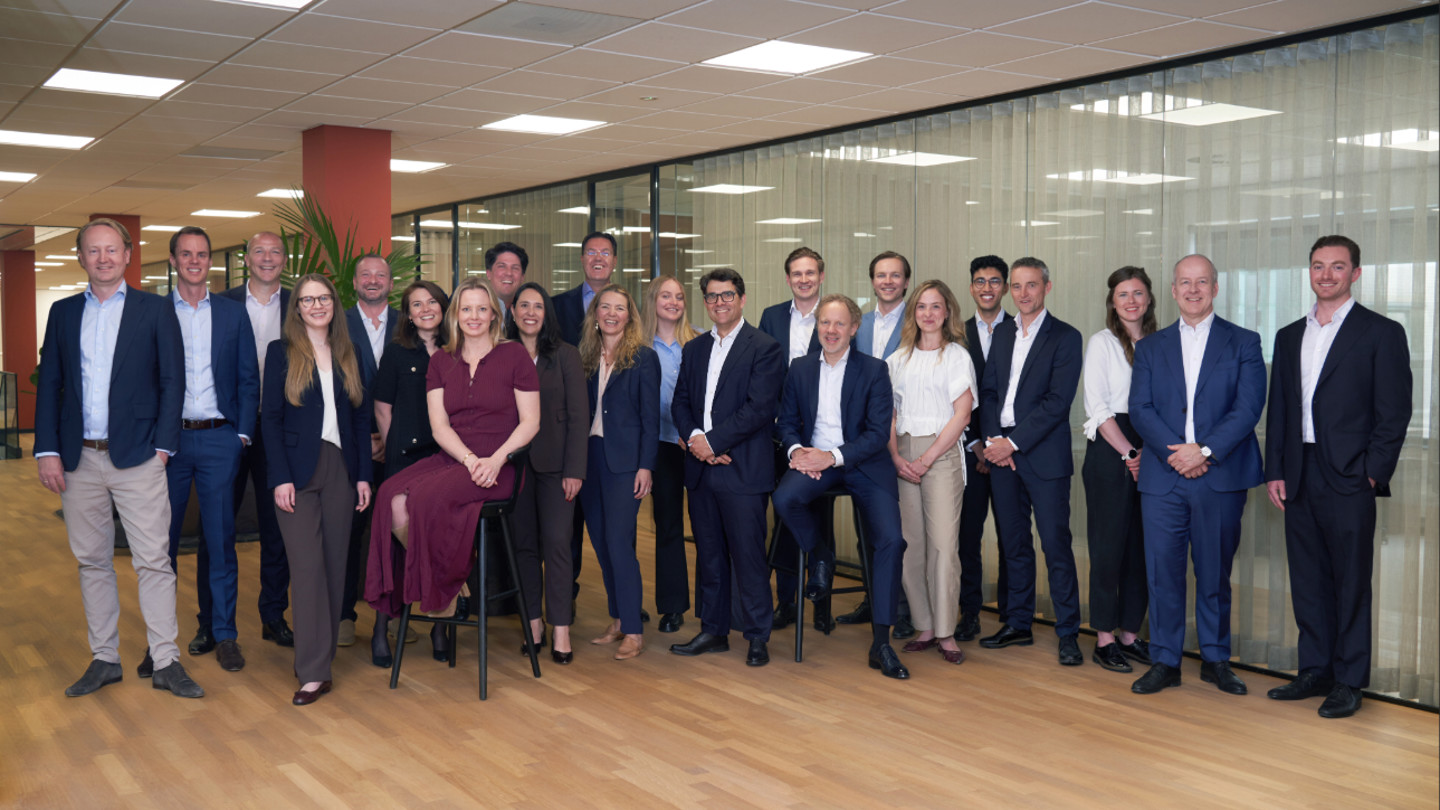

- Redalpine Closes Largest Early-Stage Fund at $250m as Investors Back European Deep Tech
European venture capital firm redalpine has closed its largest early-stage fund at $250 million, signalling continued investor interest in companies developing technologies across artificial intelligence, robotics, biotechnology, climate and frontier science.
The fund, redalpine capital VIII, or RAC VIII, closed oversubscribed, the firm said. It will invest in about 20 early-stage companies across Europe, primarily leading or co-leading Seed and Series A rounds. Initial investments are expected to range from $1 million to $15 million.
The fund’s launch comes as redalpine marks 20 years since its founding in Zurich. The firm says it has backed more than 100 companies, which have created over 10,000 jobs and raised more than $3 billion in subsequent funding.
It now manages more than $1.4 billion in assets and has expanded its presence to Zug, Berlin and London, with a presence in Silicon Valley.
The fund’s focus reflects a view that Europe’s next generation of globally competitive companies will emerge where software meets scientific research. Its first investments include Enact Intelligence, which is developing force-intelligence technology for robotics; Helical, building a virtual artificial intelligence laboratory for drug discovery; and Arlequin AI, developing an AI architecture designed to protect critical systems.
Those areas share a common investment challenge: they may require deep technical expertise, long development periods and substantial capital before commercial returns become clear.
That makes RAC VIII’s emphasis on Seed and Series A financing significant. At these stages, founders often need investors willing to assess complex technology before there is a mature market or a long operating record.
Redalpine says more than half of its investment team are trained scientists, including biologists, physicists and engineers. That technical expertise, it argues, helps the firm evaluate companies whose prospects may depend on scientific breakthroughs or specialised engineering.
The advantage could be important in fields where a conventional assessment of revenue and market size may not capture the quality or difficulty of the underlying technology.
“Twenty years ago, we started redalpine with the conviction that the most important companies would emerge where software and science meet,” said Dr Michael Sidler, founding partner. “That belief hasn’t changed. With RAC VIII, we’re excited to keep backing these founders early, before the opportunity is obvious.”
The strategy also reflects a broader European question: how to turn research and technical talent into companies that can scale globally while retaining more of the resulting economic value in Europe.
Redalpine says its multi-stage investment platform is designed to support founders from Seed through to an initial public offering, rather than limiting backing to a company’s earliest years.
That longer relationship can give investors a greater role in helping start-ups navigate the difficult transition from research and product development to commercial scale. It also requires sustained access to capital and specialist support as companies grow.
The fund’s ability to invest across stages is therefore part of its proposition to founders, though the release does not detail the allocation reserved for follow-on investments.
RAC VIII will select companies from a pipeline of more than 5,000 ventures screened each year. That funnel points to a highly selective strategy, but it also puts pressure on the investment team to distinguish durable technical advantages from crowded themes.
In areas such as AI and climate technology, the challenge is not only identifying a promising idea; it is assessing whether a company can build defensible products, secure customers and compete internationally.
The fund attracted both returning and new limited partners, including Aviva Investors, Flexstone Partners and KfW. Its backers also include entrepreneurs, executives with specialist knowledge and business owners, according to the announcement. The range of investors suggests that the fund is seeking more than capital: experienced partners may offer networks and operational knowledge that early-stage companies need.
Sebastian Becker, general partner, said artificial intelligence was “leveling the playing field” and that the advantage would go to those who understood the underlying science and difficult problems.
The claim captures both the opportunity and the risk. Artificial intelligence may help start-ups move faster, but technical capability alone does not guarantee a viable business. Commercial adoption, regulation, access to customers and the cost of developing products will shape which companies succeed.
Redalpine’s portfolio includes Proxima Fusion, Mistral AI, N26, Basecamp Research and microagi. The firm says 12 portfolio companies have exited since 2023, during a period in which exits across the technology sector have been scarce.
Companies backed by RAC VII, its previous early-stage fund, have raised more than $1.1 billion in total funding since that fund closed in 2024.
Those figures offer evidence of fundraising and exit activity, but they do not reveal investment returns to limited partners. The announcement does not disclose RAC VIII’s target before closing, the extent of oversubscription, or performance data for earlier funds.
The size of the close demonstrates investor commitment to the strategy, while returns over time will determine whether the fund converts that confidence into durable results.
The new fund is closed to further subscriptions. Its next test will be execution: finding companies with credible technical foundations, helping them reach commercial markets and producing exits that reward the investors who supplied early capital.
For redalpine, RAC VIII extends a two-decade bet on European science and software. For Europe’s technology sector, the larger question is whether more early-stage financing can help turn scientific innovation into companies capable of scaling globally.

