


- Telecom Operators Count Cost of 8,000 Fibre Cuts a Year – Chamber
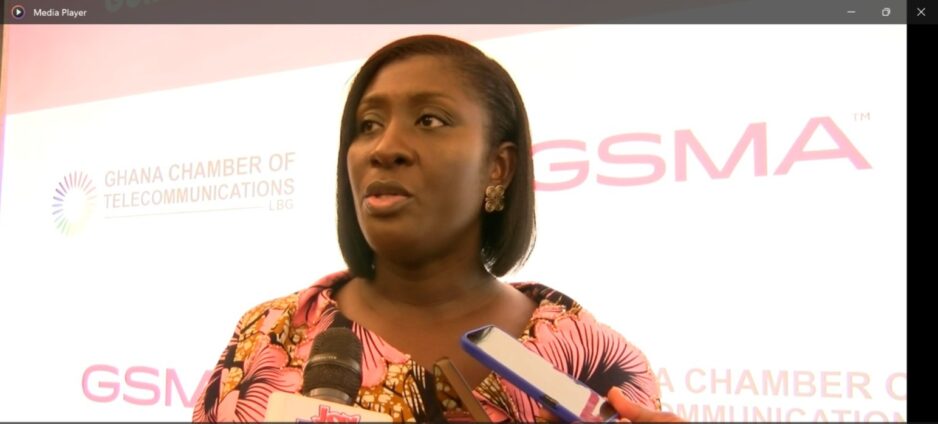
The Ghana Chamber of Telecommunications has raised concerns over the rising number of fibre cuts across the country, warning that the situation is placing severe financial and operational pressure on telecom operators and threatening network reliability. The Chamber’s Chief Executive Officer, Sylvia Owusu-Ankomah, said the industry is now recording more than 8,000 fibre cuts every year, a sharp increase from about 400 annually during the early stages of network deployment in Ghana.
Speaking to journalists on the sidelines of the Chamber’s 15th anniversary soft launch, she said telecom operators are being forced to redirect funds meant for network expansion and service improvements into repairs and maintenance.
“We are experiencing over 8,000 cuts per annum when it comes to fibre cuts, which is increasingly a strain on our operators’ resources. Resources and investments that could have been used for new rollouts are instead being used to repair damaged fibre lines and meet quality service obligations,” she said.
The Chamber said Ghana’s rapid expansion of telecommunications infrastructure had significantly increased the country’s fibre footprint but had also exposed fibre cables to repeated damage during construction and road works. Ms Owusu-Ankomah noted that internet penetration has grown from about 4% to more than 70%, emphasising the necessity of protecting the infrastructure supporting Ghana’s digital economy.
She described fibre cuts as one of the biggest threats to network stability and service reliability in the country. For telecom operators, the challenge is not only technical. It is increasingly financial.
Every fibre cut means emergency repairs, service disruption, customer complaints, quality-of-service pressure and higher operating costs. In a capital-intensive industry where operators are expected to expand 4G and 5G networks, improve broadband quality and support digital services, recurring infrastructure damage diverts scarce investment away from growth.
The Chamber is therefore pushing for the implementation of the proposed “dig once” policy, which would make fibre duct infrastructure mandatory in major road construction projects.
The policy is expected to allow telecom operators to route fibre cables through protected underground ducts, reducing the risk of accidental damage during road works and other civil construction activities.
Ms Owusu-Ankomah said Ghana had matured enough to bring a lasting end to the problem. “This fibre cut issue has plagued the industry for a long time and we believe Ghana has matured enough to put a stop to it. That is why we believe the ‘dig once’ policy must come into effect this year,” she said.
The Chamber said discussions on the proposal are already at Cabinet level, and it remains optimistic that government will support the initiative.
The warning comes at a time when Ghana is seeking to position itself as a regional digital economy hub, with increasing reliance on broadband connectivity, mobile money, e-commerce, digital public services, cloud-based business operations and online education. But that ambition depends heavily on resilient physical infrastructure.
Fibre networks are the backbone of the digital economy. When they are repeatedly cut, the effects are felt across businesses, households, banks, hospitals, schools, government platforms and digital service providers.
For Ghana, the issue raises a broader infrastructure coordination problem. Roads, drains, utilities, power lines and telecom networks are often planned and executed in silos, creating avoidable damage and duplication. A properly implemented “dig once” policy could reduce waste, improve service reliability and lower long-term infrastructure costs.
The Chamber’s concern is therefore more than an industry complaint. It is a warning that Ghana’s digital transformation cannot be sustained if the country keeps destroying the fibre backbone on which that transformation depends.
The test now will be whether the government can move the “dig once” policy from Cabinet discussion to implementation, and whether road contractors, utility providers, local authorities and telecom operators can coordinate around a common infrastructure standard. Without that, Ghana risks building a digital economy on a fragile foundation one fibre cut at a time.

