

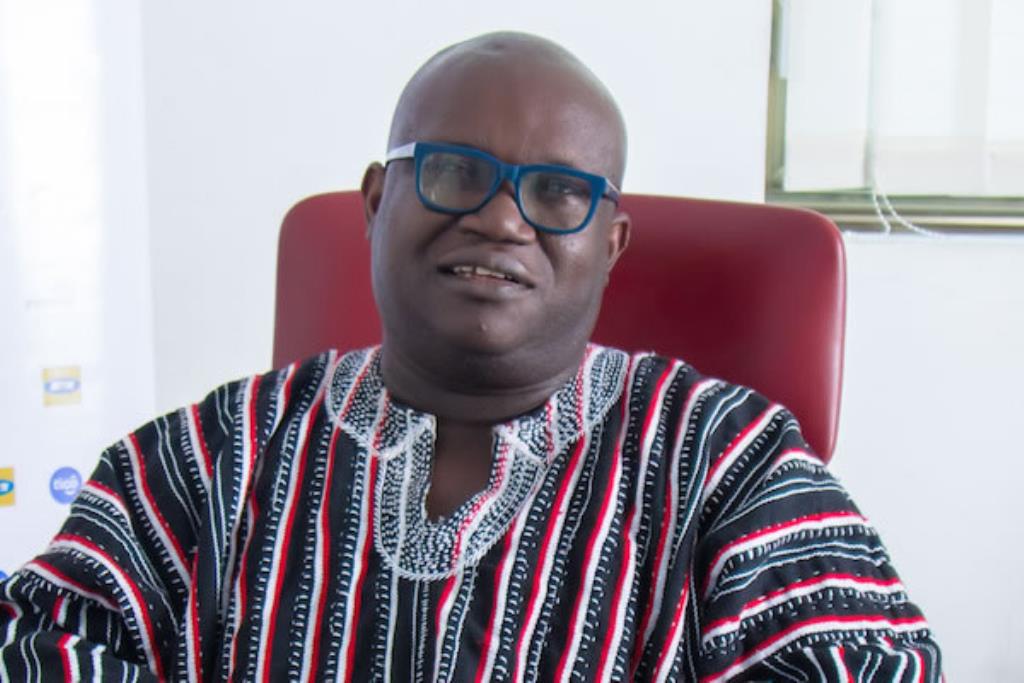

- Ken Ashigbey Welcomes Wontumi Sentence but Asks: What About the Other Kingpins?
The conviction and sentencing of Bernard Antwi-Boasiako, popularly known as Chairman Wontumi, may be the most consequential legal moment yet in Ghana’s long and politically polluted fight against illegal mining. But for anti-galamsey campaigners, the judgment is only the beginning of the real test.
On Monday, July 20, an Accra High Court convicted Chairman Wontumi and his company, Akonta Mining, after finding them guilty of illegal mining offences linked to the company’s Samreboi concession in the Western Region.
The court sentenced the New Patriotic Party’s Ashanti Regional Chairman to 20 years in prison after convicting him on two counts in the Akonta Mining illegal mining case. The sentences are to run concurrently. Akonta Mining Limited was also convicted on separate counts and fined 15,000 penalty units on each count.
For a country where politically exposed persons have long been accused of shielding, financing or benefiting from galamsey, the ruling is symbolically powerful. It sends a message that political influence, party office and business ownership do not automatically place a person beyond criminal accountability.
That is why Dr Ken Ashigbey, Chief Executive Officer of the Ghana Chamber of Mines and a leading anti-galamsey campaigner, welcomed the ruling. Speaking after the judgment, he commended the Attorney-General for seeing the case through and praised the judge for demonstrating courage. He also credited the former Minister for Lands and Natural Resources for publicly stating earlier that Akonta Mining was involved in illegality.
But Dr Ashigbey’s deeper point was not celebration. It was escalation.
“So it is great that we’re dealing with one,” he said, before asking what had happened to the other politically exposed persons named in Professor Kwabena Frimpong-Boateng’s report.
That question is now unavoidable. If Wontumi’s conviction is treated as an isolated victory, the state will have won a case but lost the larger moral argument. If it becomes the start of a wider, consistent and non-partisan accountability campaign, then Ghana may finally be approaching the point where galamsey ceases to be protected by political colour.
The distinction matters because illegal mining has never been merely an environmental crime. It is also a governance crime. It thrives where chiefs, local politicians, security officers, party financiers, equipment owners, regulators and business interests find common cause in silence. The young men in the pits are often the visible labour. The real power usually sits elsewhere.
Dr Ashigbey has made this argument repeatedly. In January, he said the lack of prosecutions had become a major hindrance in the galamsey fight and questioned the status of high-profile cases, including Akonta Mining and matters linked to Professor Frimpong-Boateng’s report. He also called for action involving the Attorney-General, the Inspector-General of Police, the Chief Justice and the President to ensure prosecutions and convictions.
The political context is important. Professor Frimpong-Boateng’s report became one of the most explosive documents in Ghana’s environmental governance debate because of the politically connected names and networks it placed in the public domain. Yet, for many campaigners, the gap between public allegations and courtroom accountability has remained too wide.
The Ghana Coalition Against Galamsey made a similar point in its July 20 statement, arguing that the government could not declare the “era of impunity” over while prosecutions of galamsey kingpins and politically exposed persons remained limited. The Coalition said there had been no prosecution of such persons apart from Chairman Wontumi, while also pointing to outstanding issues around EOCO investigations and action on the Frimpong-Boateng report.
That statement now reads less like criticism and more like a checklist for the next phase of enforcement.
The Wontumi ruling also changes the political risk calculus. Until now, many public officials could speak against galamsey in general terms while avoiding the names, financiers and companies behind the destruction. The conviction shows that a case can be built, pursued and concluded. It also raises the standard by which future inaction will be judged.
The legal outcome may strengthen public confidence in the courts and the Attorney-General’s Department, but only if similar resolve is applied elsewhere. Selective prosecution would weaken the deterrent effect of the judgment. Consistent prosecution would deepen it.
This is why Dr Ashigbey’s reaction is significant. He is not arguing that the sentence is unimportant. He is warning that one high-profile conviction cannot cleanse a system in which illegal mining has become embedded in local economies, party financing networks, regulatory weaknesses and community survival strategies.
The Akonta Mining case also reopens difficult questions about corporate accountability in the extractive sector. Mining rights are state assets. They are not private political property to be assigned, leased or operationalised outside the law. When companies linked to powerful individuals are found to have facilitated illegality, the state must not only punish the individuals involved but also examine the regulatory failures that allowed the conduct to occur.
Who monitored the concession? Who knew illegal activity was taking place? Which district and regional security structures failed to intervene? Were excavators tracked? Were fuel suppliers identified? Were gold buyers and financiers followed? These are the questions that determine whether Ghana is pursuing environmental justice or simply securing headline convictions.
The broader anti-galamsey movement has also called for daily publication of water-quality data at public treatment plants, monthly state-of-rivers and state-of-forests reports, quarterly food-safety research in mining-affected areas and monthly Attorney-General updates on prosecutions. The Coalition argues that transparency of this kind is necessary if future accountability reports are to be judged by evidence rather than assertion.
That demand should now be taken seriously. The public should not have to wait for occasional courtroom drama to know whether the galamsey fight is succeeding. The evidence should be visible in cleaner rivers, safer forests, fewer excavators in protected areas, more prosecutions of financiers and regular disclosure of enforcement outcomes.
The Wontumi sentence therefore places pressure on President John Dramani Mahama’s administration in two ways. First, it gives the government a powerful example to cite in demonstrating seriousness. Second, it removes the excuse that political figures cannot be prosecuted because the process is too sensitive or too difficult.
The next test will be whether the law moves across party lines. Anti-galamsey campaigners have repeatedly insisted that politically exposed persons from both the NPP and NDC must be investigated where credible allegations exist. Dr Ashigbey has previously argued that accountability should not depend on party affiliation and that politically exposed persons involved in galamsey must all be dealt with.
That is the only way the state can avoid turning environmental enforcement into political theatre.
For ordinary Ghanaians, the stakes are practical. Galamsey has contaminated rivers, destroyed farmlands, threatened forest reserves, endangered public health, raised water treatment costs and weakened confidence in public institutions. A 20-year prison sentence may satisfy the demand for punishment, but it does not by itself restore damaged rivers or dismantle the political economy of illegal mining.
The value of the Wontumi judgment will therefore depend on what follows.
If other politically connected financiers, concession holders, equipment owners and facilitators remain untouched, the ruling will be remembered as a dramatic exception. If it becomes the first step in a broader chain of prosecutions, asset seizures and regulatory reforms, it may mark a turning point.
Ghana has had many anti-galamsey campaigns. It has had task forces, operations, ministerial briefings, public pledges and emotional appeals. What it has lacked is sustained accountability that reaches those with money and power.
The court has now shown that political status is not a complete shield.
Dr Ashigbey’s question remains the country’s question: Wontumi has been jailed — what about the others?

