
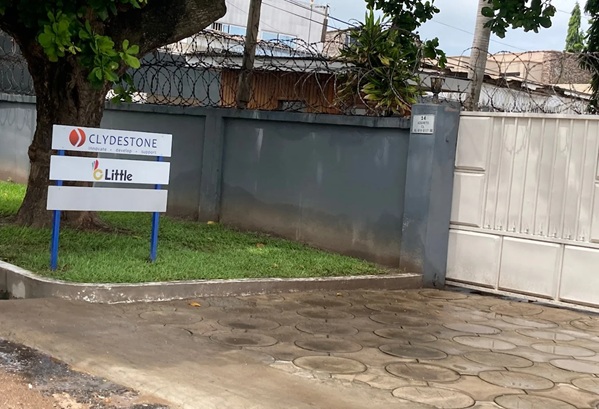

- Clydestone Suspends Dividend as Profit Falls 88% Amid Digital Payments Expansion
Clydestone Ghana PLC has suspended dividend payments for the 2025 financial year after profit fell by 88 per cent, highlighting the near-term cost of the company’s expansion into digital payments infrastructure, UnionPay processing services and new transaction platforms. The listed payment switching and banking technology company posted profit after tax of GH¢463,962 for the year ended December 31, 2025, down sharply from GH¢3.95 million recorded a year earlier, according to audited financial statements released on May 13.
The steep earnings decline means shareholders who received a dividend of GH¢0.032 per share for the 2024 financial year will receive no distribution for 2025, as the company preserves cash to support investments under its new three-year strategic plan.
In a statement accompanying the accounts, the board said the decision not to declare a dividend reflected “the capital requirements of the Company’s Three-Year Strategic Plan” and the need to maintain liquidity while new revenue platforms are brought to market.
The strategy is anchored on banking branch transformation, UnionPay card issuing and processing, digital payment channels, and application programming interface-based transaction infrastructure targeted at fintechs, remittance companies and mobile money operators.
Acting Chairman and Chief Executive Officer Paul Jacquaye said the board would continue to review the company’s dividend policy and expects to resume distributions when profitability improves in line with long-term projections.
The company’s earnings were squeezed by higher executive compensation, increased depreciation linked to fresh capital expenditure, finance lease obligations and rising operating costs.
Directors’ remuneration more than doubled to GH¢2.15 million from GH¢842,670 in 2024. Clydestone described the increase as a correction towards market-rate compensation, reflecting the complexity of operating under Ghana’s Electronic Payment Service Provider licensing regime.
Depreciation charges also rose following investments in motor vehicles, computers and office equipment, as well as the recognition of right-of-use assets tied to operational vehicle lease arrangements. Interest and finance charges increased as the company relied more heavily on overdraft facilities during the year.
Revenue, however, remained broadly resilient. Total revenue declined marginally by 1.2 per cent to GH¢23.64 million, although management said the cedi-denominated performance understated underlying operational growth because of the appreciation of the Ghana cedi against the US dollar during the year.
One of the strongest-performing segments was Smart Source, where revenue surged to GH¢1.1 million from GH¢65,352 a year earlier, reflecting increased uptake of the company’s service offerings.
Clydestone said future growth will be supported by its status as a UnionPay International Principal Acquirer and Third-Party Processor, a position held by only a limited number of institutions in West Africa. The company said mandates from initial partner institutions are expected to be formalised in 2026, creating new recurring income streams from card processing activities.
The company is also developing a third-party payments API platform and inward remittance payout capability, which would allow fintech partners and diaspora remittance providers to access its switching infrastructure programmatically.
Still, the balance sheet points to a tighter liquidity position. Cash reserves fell sharply from GH¢8.74 million at the end of 2024 to GH¢1.08 million by December 2025. After accounting for overdraft obligations, net cash stood at GH¢119,512.
Management said the decline in cash holdings was largely due to the settlement of legacy regulatory and levy-related obligations accumulated in previous years. Trade payables were fully settled during the period, while other accounts payable declined significantly.
External auditors PKF issued an unqualified opinion on the financial statements, affirming that the accounts presented a true and fair view of the company’s financial position as at December 31, 2025.
For investors, the central question is whether Clydestone’s 2025 earnings slump reflects a temporary investment phase or a more prolonged strain on profitability. The company is effectively asking shareholders to accept a dividend pause today in exchange for the prospect of stronger recurring income from digital payments, card processing and remittance infrastructure over the medium term.

