


- Senegal’s IMF Negotiations Enter Crucial Phase with Fresh Two-Week Mission
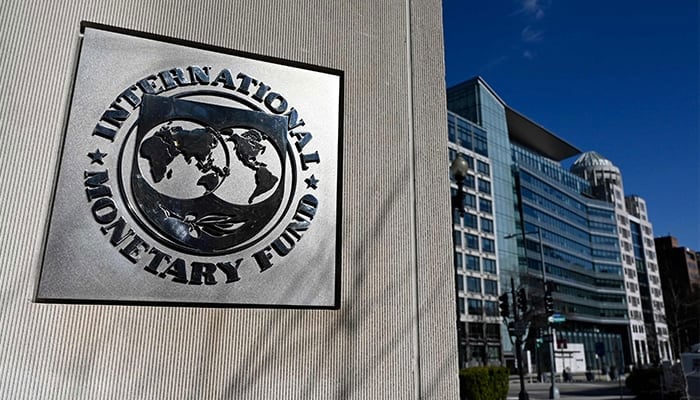
The International Monetary Fund will send a staff team to Senegal from August 19 to September 1, 2026, intensifying negotiations over economic policies and reforms that could underpin a new lending arrangement for the West African country as it continues to confront elevated debt vulnerabilities and the fallout from past fiscal misreporting.
The two-week mission marks another step in a prolonged effort to rebuild the relationship between Dakar and the Fund after previously undisclosed public liabilities disrupted Senegal’s earlier IMF-supported programme.
The IMF said the mission would continue discussions with Senegalese authorities on policies and reforms that could be supported under a new arrangement. The length and scope of the visit suggest negotiations are moving into a more detailed phase, although the announcement does not constitute a staff-level agreement and significant policy issues could still have to be resolved before any programme is submitted to the IMF Executive Board.
The latest engagement builds on a June mission led by IMF Mission Chief Mercedes Vera Martin, during which Fund staff assessed Senegal’s macroeconomic outlook and discussed the authorities’ plans for addressing fiscal and debt pressures. The IMF described those discussions as open and constructive, while welcoming reforms aimed at strengthening public financial management, fiscal governance, transparency and the institutional framework for managing government debt.
Senegal’s economic picture remains complicated because stronger growth has coincided with substantial fiscal vulnerabilities. Real gross domestic product expanded by 6.70% in 2025, supported by growth in the hydrocarbon sector, while the fiscal deficit narrowed from 13.40% of GDP in 2024 to 6.40% in 2025, largely through expenditure rationalisation, according to the IMF.
Those improvements have not eliminated the country’s debt problem, which has become the central constraint on its relationship with the Fund and international investors. The IMF has repeatedly said Senegal continues to face significant debt vulnerabilities and has focused discussions on the government’s financing requirements, fiscal consolidation, debt management, governance and measures capable of supporting more inclusive and sustainable growth.
The crisis emerged after Senegal’s new authorities disclosed substantial previously unreported liabilities accumulated under the former administration. An audit subsequently resulted in major revisions to historical fiscal data, with the IMF saying in March 2025 that the average fiscal deficit for 2019–2023 had been revised upward by 5.60 percentage points of GDP, while central government debt at end-2023 was revised from 74.40% to 99.70% of GDP.
That episode interrupted Senegal’s previous relationship with the Fund and increased the importance of establishing credible debt figures before another programme could proceed. It also damaged access to international financing, increasing Dakar’s dependence on regional capital markets while investors assessed the scale of the government’s liabilities and the possibility that some form of debt treatment could ultimately become necessary.
The August mission will therefore be important not simply because Senegal is seeking new IMF financing, but because any programme would have to demonstrate that the institutional weaknesses behind the previous reporting failures have been addressed. The Fund has highlighted the centralisation of debt-management functions, stronger public financial management, improved fiscal governance and greater transparency as essential components of the corrective agenda.
Those reforms carry wider significance for investor confidence because Senegal must persuade creditors that future budget deficits and debt liabilities can be measured reliably. For a sovereign borrower, weaknesses in fiscal reporting can raise financing costs even after headline economic indicators improve, because investors attach a premium to uncertainty over the true size and structure of government obligations.
The negotiations must also reconcile fiscal consolidation with Senegal’s development and social priorities. A programme designed primarily around rapid expenditure reduction could intensify political and social pressures, while insufficient adjustment could leave debt vulnerabilities unresolved and make it harder for the country to regain sustainable access to international capital.
The hydrocarbon sector adds another dimension to the discussion. Oil and gas production has strengthened growth and improved the current account, but the IMF has warned that higher international oil prices could simultaneously place pressure on public finances because of the budgetary cost of untargeted energy subsidies, demonstrating that becoming a hydrocarbon producer does not automatically remove fiscal exposure to global energy-market movements.
For the IMF, the challenge will be to construct a programme that restores debt sustainability while preserving enough fiscal space for growth-enhancing investment and social protection. For Senegal, securing an arrangement could help restore credibility, strengthen access to external financing and provide an anchor around which other multilateral and bilateral partners may structure their support.
The August 19 mission consequently represents an important milestone rather than the conclusion of negotiations. A staff-level agreement would still require the authorities and IMF staff to reach consensus on the macroeconomic framework, financing needs, fiscal path and reform commitments before any arrangement could advance towards formal Executive Board consideration.
For Senegal, the stakes are high because the country has already demonstrated that strong headline growth can coexist with serious balance-sheet vulnerabilities. The success of the coming talks will therefore depend less on securing IMF financing alone than on whether Dakar can establish a credible policy framework capable of rebuilding confidence in its public finances and putting government debt on a sustainable trajectory.

