


- Africa’s growth to slow in 2026 as IMF and African ministers warn of fresh war-linked pressures
Africa’s economic recovery is set to lose momentum in 2026, with finance ministers, central bank governors, and the International Monetary Fund warning that the war in the Middle East is adding fresh strain to economies already battling debt pressure, tight financing conditions, and fragile policy space.
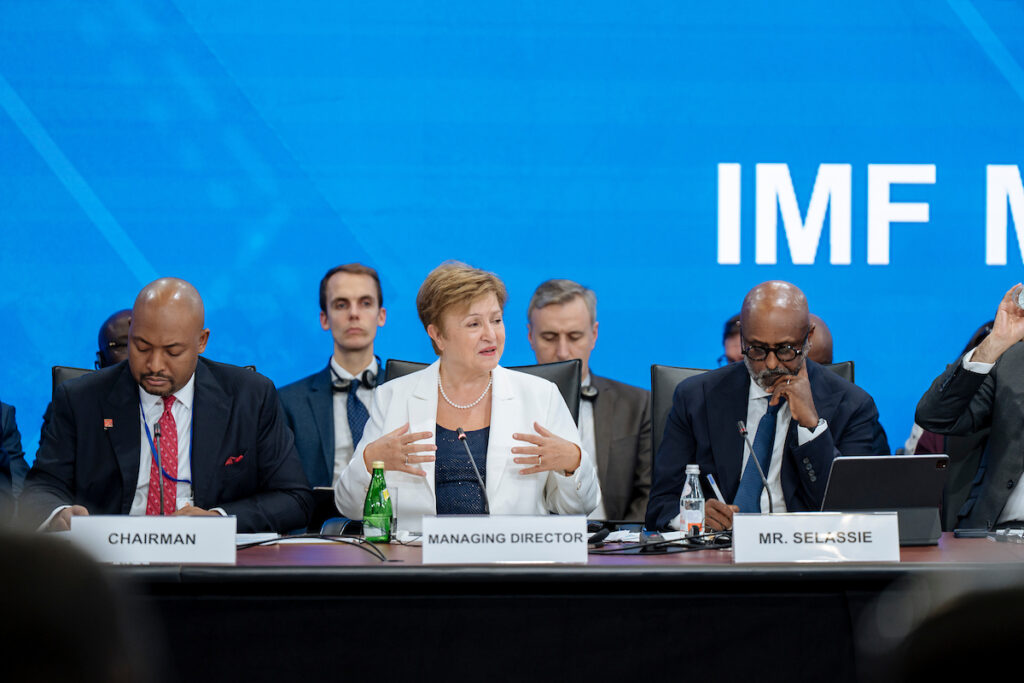
That was the central message from the African Consultative Group meeting held in Washington on April 14, where Seedy Keita, chairman of the African Caucus and finance minister of The Gambia, and IMF managing director Kristalina Georgieva issued a joint statement at the close of discussions.
The statement said ministers and governors met IMF management to assess “the evolving global environment and its implications for African economies”, noting that the talks took place “against the backdrop of the war in the Middle East, which will weigh on growth prospects worldwide, even if the recently announced ceasefire holds”.
Even under a relatively benign scenario, the outlook is softening. According to the statement, “global growth is projected to slow modestly to 3.1 percent in 2026 and 3.2 percent in 2027,” while a prolonged conflict or delayed recovery in production and transport would inflict even greater damage.
For Africa, the outlook is more troubling because the continent’s recent gains are proving vulnerable to renewed external shocks.
“Despite the recent benefits of hard-won stabilisation gains after a strong 2025, growth momentum in Africa is expected to slow down in 2026, contrary to earlier projections,” the statement said. Real GDP growth across the continent is projected to ease from 4.5 per cent in 2025 to 4.2 per cent in 2026, with sub-Saharan Africa slowing to 4.3 per cent and North Africa to 4.1 per cent.
That downgrade is not just a forecast revision. It is a reminder of how narrow Africa’s margin for error remains.
The statement warned that “high debt service burdens, limited access to affordable financing, and growing development needs continue to constrain policy space, particularly in low-income and fragile and conflict-affected countries.” It added that the war “adds another layer of complexity, with the potential for severe scarring, including from the return of inflation, food shortages, as well as other social tensions.”
In response, African policymakers and the IMF set out a near-term and medium-term policy agenda aimed at cushioning the shock while preserving reform momentum.
“The African Consultative Group agreed that policymakers must focus on addressing the shock in the near-term while building resilience over the medium-term,” the statement said. In practical terms, that means keeping inflation expectations anchored, protecting vulnerable households through “targeted, time-bound support,” and maintaining fiscal policy that is “credible yet flexible.”
The group said oil exporters should save temporary windfalls and rebuild buffers, while oil-importing economies should protect priority social and development spending, even as they mobilise more domestic revenue, improve spending efficiency, and strengthen public financial management.
But the statement also made clear that crisis management alone will not be enough. African economies, it said, should “speed up reforms to drive growth and diversification, deepen regional integration and domestic financial markets; and invest in power and digital foundations to harness AI safely and productively.”
One of the more significant signals from the meeting was the strong emphasis on debt diagnostics and surveillance.
The group said the ongoing review of the Low-Income Country Debt Sustainability Framework is “strengthening the Fund–World Bank toolkit for assessing debt risks” and argued that the work has become even more urgent as war-related shocks increase fiscal and external vulnerabilities.
“This work is even more critical in the current environment, as war-related shocks are raising macroeconomic vulnerabilities and intensifying existing debt-service pressures, thereby emphasising the necessity of timely, transparent, and robust assessments of debt sustainability,” the statement said.
It added that refinements to the methodology, including a revised debt-carrying capacity measure, should improve “transparency, comparability, and predictive accuracy” and help governments and their partners better identify vulnerabilities and support sustainable financing decisions, including through clearer treatment of debt coverage and state-owned enterprise obligations.
The group also pressed the IMF to sharpen the quality of its oversight and advice. According to the statement, ministers and governors “underscored the importance of the ongoing Comprehensive Surveillance Review and urged the IMF to deliver tailored advice, strengthen the assessment of imbalances and spillovers, bolster shock management, and prioritise and streamline surveillance activities.”
For its part, the IMF sought to reassure African members that support would remain in place as the region navigates a more hostile global backdrop.
“The IMF reaffirmed its strong commitment to its African members,” the statement said. “The Fund will continue to work closely with African countries to support sound policies, mobilise financing, strengthen resilience, and advance the region’s development objectives in an increasingly complex global environment.”
Beneath the formal language, the message from Washington was unmistakable: Africa may have achieved hard-won stabilisation gains, but those gains are not yet secure. With growth slowing, debt burdens still heavy, and geopolitical shocks once again reshaping the global outlook, policymakers on the continent are being forced to defend stability while also laying the foundations for a more resilient growth model.

