


- Siri Gets Long-Awaited AI Overhaul as Apple Pushes Deeper Into Artificial Intelligence
Apple has unveiled its most ambitious upgrade yet to Siri, introducing a new artificial intelligence-powered version of the voice assistant as it moves to strengthen its position in the increasingly competitive consumer AI market.
The new service, called Siri AI, was announced at Apple’s Worldwide Developers Conference 2026, where the company previewed major software updates across iPhone, iPad, Mac, Apple Watch, Apple Vision Pro and Apple TV.
Apple said Siri AI is powered by the next generation of Apple Intelligence and is designed to be more conversational, more capable and more deeply integrated across its ecosystem of devices.
The upgrade marks a significant shift for Siri, which has often been criticised for lagging behind newer AI assistants and chatbots developed by rivals such as OpenAI, Google, Microsoft and Amazon.
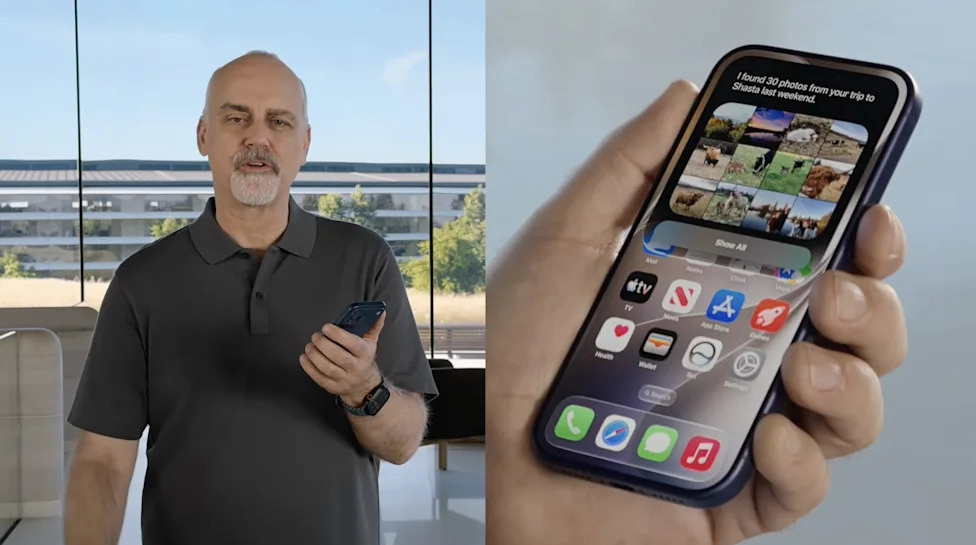
According to Apple, the new Siri will be able to understand personal context, respond to information on a user’s screen, search across messages, emails, photos and other personal content, and take action across apps more naturally.
Craig Federighi, Apple’s Senior Vice President of Software Engineering, said the company is introducing “a profoundly more intelligent, knowledgeable, and capable Siri” as part of a wider expansion of Apple Intelligence across its platforms.
The update is expected to change Siri from a largely command-based assistant into a more conversational digital companion capable of handling complex requests, providing detailed responses and helping users complete tasks across multiple apps.
Apple said Siri AI will be deeply integrated into iPhone, iPad, Mac, Apple Watch and Apple Vision Pro, allowing users to interact with it across devices rather than through a single product interface.
The assistant will also be able to answer questions related to what is on a user’s screen, a feature that could make it more useful for tasks such as summarising information, identifying objects, interpreting documents or helping users act on content already open on their devices.
The company also introduced a dedicated Siri AI app, giving users another interface for voice and typed conversations with the assistant.
The move places Apple more directly into the AI assistant race, where competitors have moved aggressively to integrate generative AI into search, productivity tools, operating systems and consumer devices.
Apple has taken a slower and more cautious approach, repeatedly stressing privacy, on-device processing and user control as central parts of its AI strategy.
The company said Siri AI uses a privacy-focused architecture that combines on-device intelligence with secure cloud processing where necessary.
This reflects Apple’s broader effort to differentiate its AI products from rivals by arguing that advanced AI can be delivered without compromising user privacy.
Beyond Siri, Apple also announced wider Apple Intelligence features across core apps including Photos, Safari, Messages, Mail, Image Playground and Shortcuts.
These updates include AI-assisted image editing, improved writing tools, smarter browsing and automation features, and more creative tools for generating and editing content.
The company also announced software updates across iOS 27, iPadOS 27, macOS 27, watchOS 27, visionOS 27 and tvOS 27, positioning Apple Intelligence as a system-wide layer rather than a standalone feature.
For users, the most important change may be that Siri will now be expected to do more than set alarms, answer simple questions or open apps.
With personal context understanding, the assistant could help find a message, locate a photo, draft an email, interpret what is on screen or complete a task across different apps without requiring the user to manually navigate each step.
The upgrade also has strategic implications for Apple’s hardware business.
As AI features become more central to smartphones, tablets and personal computers, the ability to offer a capable assistant could influence device upgrades and customer retention.
Apple’s challenge will be to deliver the promised functionality reliably and at scale, after previous AI announcements faced criticism over delays and uneven execution.
Industry analysts say the new Siri AI could become one of Apple’s most important software bets in years if it successfully turns the iPhone into a more intelligent personal computing device.
However, the company will face close scrutiny over availability, device compatibility, language support and how quickly the new features reach consumers outside major markets.
Some features are expected to roll out first in beta before wider public availability, suggesting that Apple is still taking a phased approach to deployment.
The unveiling also comes as regulators around the world are paying closer attention to how large technology companies integrate AI into operating systems, app ecosystems and consumer data environments.
For Apple, the balancing act will be to move fast enough to satisfy investors and users demanding stronger AI capabilities, while maintaining its brand positioning around privacy, safety and product reliability.
The new Siri AI therefore represents both an opportunity and a test.
If successful, it could help Apple reposition Siri as a serious AI assistant and strengthen the company’s control over the user experience across its devices.
If execution falls short, the company risks reinforcing the perception that it remains behind rivals in the race to define the next generation of artificial intelligence-powered consumer technology.
For now, Apple’s message is clear: Siri is being rebuilt for the AI era, and the company wants its assistant to become a central interface for how users search, create, communicate and work across its ecosystem.

