

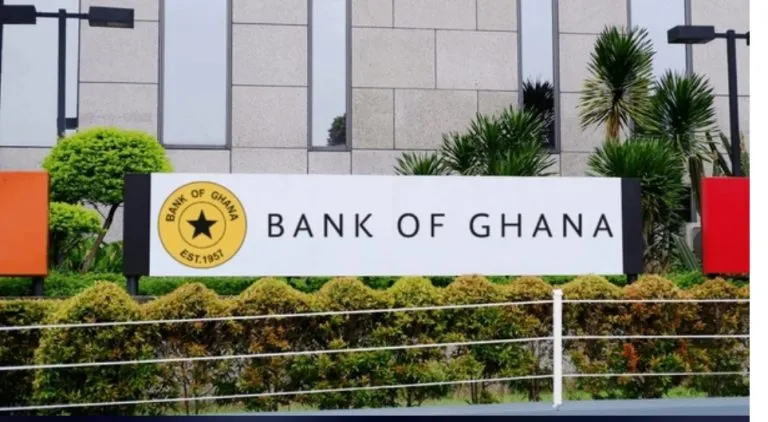

- The Confidence Gap: Strong Activity Readings Meet Softer Sentiment
Ghana’s economic indicators are telling two different stories. The Bank of Ghana’s Composite Index of Economic Activity (CIEA) accelerated sharply through September, while confidence readings among households and businesses fell to their lowest levels in the period covered by the latest data from the Bank of Ghana’s Summary of Economic and Financial Data, released on 17 November 2026.
The real CIEA grew by 17.7% year on year in September, up from 13.1% in August and 8.4% in January. Its nominal growth reached 22.6%. Yet the Bank’s October surveys showed consumer confidence at 109.2, down from 117.7 in February, and business confidence at 107.1, down from 110.1.
The divergence raises a question that matters beyond the indicators themselves: why does measured activity appear to be gathering pace while the outlook among households and firms is becoming less buoyant?
The first answer is that the measures capture different things. The CIEA is a high-frequency activity indicator, designed to provide a more current signal between quarterly GDP releases. It is not GDP growth. Its 17.7% reading should not be reported as evidence that Ghana’s economy grew by 17.7% in September.
The latest quarterly GDP figure in the same data release was 6.0% year-on-year growth in the second quarter of 2026. That is a separate measure, covering a different period and built from national accounts.
The CIEA’s acceleration may signal that activity strengthened after Q2, but it cannot replace the official GDP estimate or be compared with it as if both measured the same thing.
The confidence indices are different again. They are survey readings, not direct measures of the economy’s output, the public’s confidence in the Bank of Ghana, or approval of government policy.
They indicate how consumers and businesses responded to the survey, and should be interpreted within the limits of that information.
Even with those distinctions, the contrast is significant. The CIEA’s real growth reading rose more than nine percentage points between January and September.
Consumer confidence, meanwhile, fell by 8.5 index points between February and October. Business confidence declined by three points over the same period.
Both confidence measures remained above 100 in October. The report’s summary table does not spell out the survey’s reference threshold or explain the detailed composition of the indices, so the readings should not be described as showing outright pessimism.
The more defensible conclusion is that reported confidence weakened from earlier levels, even as the activity indicator strengthened.
That distinction is important for coverage. A rising activity index can coexist with weaker confidence if measured economic transactions are expanding but households and firms remain cautious about what comes next.
Businesses may be producing, trading or investing more than a year earlier while worrying about costs, demand or uncertainty. Consumers may continue to spend while feeling less secure about their finances.
The report does not identify which factors explain the survey declines, so those possibilities require further evidence rather than assumption.
Price data offer one possible part of the context. Headline inflation rose to 5.5% in October from 3.2% in March. Food inflation eased to 2.8% in October, but non-food inflation climbed to 7.9%.
Those figures do not prove that prices caused the fall in confidence. They do illustrate why a low or moderating inflation rate does not necessarily mean households feel that life has become cheaper.
Inflation measures the pace at which prices are rising; it does not reverse earlier increases in the price level. A slowdown in food inflation may provide relief in some areas, while higher non-food inflation continues to affect transport, utilities or other household expenses.
For a consumer, the question is not only whether prices are rising more slowly than before, but whether income can keep up with the cost of essentials.
The business reading also needs to be placed alongside the costs and conditions facing firms. The same report shows that average lending rates had fallen to 15.79% in October from 20.58% in January.
That is a substantial decline, but borrowing costs remain relevant to investment decisions, especially for firms that need working capital or finance for expansion.
Again, the report does not establish that interest rates explain the confidence trend; it shows the economic conditions against which business sentiment is being measured.
The sector composition of GDP also helps frame the activity story. Services grew by 8.0% in Q2, while industry expanded by 4.3% and agriculture by 3.9%. Services remained the strongest of the three sectors, but the quarterly figures showed moderation in industry and slower growth in agriculture.
If the CIEA’s subsequent strength is broad-based, that would be more reassuring than a surge concentrated in a narrow set of activities. The summary release does not provide enough detail to establish the source of September’s acceleration.
That leaves policymakers and businesses with a measurement challenge. The high-frequency index can provide an early signal, but confidence surveys may reveal concerns that production and transaction data do not immediately capture.
Conversely, declining confidence does not necessarily mean activity is about to contract. The indicators point in different directions; they do not resolve the outlook on their own.
For policymakers, the survey results are a reason to examine what is driving the decline rather than rely solely on headline growth signals. If households are less confident because gains in activity are not translating into stronger purchasing power, the response may differ from one needed if uncertainty about prices, employment or credit is the main concern.
If businesses are cautious despite stronger activity, it matters whether the constraint is financing, input costs, weak demand or uncertainty about future conditions.
The Bank’s data release does not provide those answers. It offers a signal: activity, as captured by the CIEA, gained momentum through September; consumer and business confidence moved lower through October.
For NorvanReports readers, the central point is not that one indicator is right and the other wrong. It is that they describe separate parts of the economy. The CIEA suggests that activity was stronger in September than earlier in the year.
The confidence surveys suggest that households and firms were less upbeat in October than they had been several months before.
The difficult question is whether the activity surge will eventually lift confidence—or whether the gap reflects growth that has yet to feel durable for the people and businesses experiencing it.
The answer will depend on the coming data, and on whether stronger measured activity is followed by more secure incomes, sustainable demand and a clearer outlook for firms.

