


- The Hamilton Deal RedBull Rejected Before Mercedes Changed the Sport
Christian Horner’s revelation that Red Bull discussed signing Lewis Hamilton before his move to Mercedes offers more than an intriguing piece of Formula 1 history. It shows how decisions made to protect a winning team can unintentionally create the rival that eventually ends its dominance.
According to Horner, Hamilton’s management explored a move to Red Bull in 2012, when the British driver was becoming frustrated at McLaren and Red Bull possessed Formula 1’s fastest car. Hamilton was represented by Simon Fuller, who told Horner that together they could complete the biggest commercial deal sport had seen.
That decision was understandable. Yet Horner’s next intervention produced an extraordinary consequence. After Red Bull chose not to pursue Hamilton, he says he encouraged Niki Lauda, then Mercedes’ non-executive chairman, to sign him. Lauda succeeded, Hamilton joined Mercedes for 2013 and one of the most consequential driver moves in Formula 1 history was completed.
The episode is a reminder that competitive strategy is rarely confined to the immediate choice. Red Bull believed it was deciding whether Hamilton should partner Vettel. In practice, it was also influencing where an elite driver, already a world champion, would deploy his talent during the sport’s next major regulatory cycle.
At that moment, Mercedes was far from the obvious destination it later became. The manufacturer had bought the championship-winning Brawn operation but had struggled to convert its resources into consistent results with Nico Rosberg and Michael Schumacher. Leaving McLaren for Mercedes looked to many observers like a gamble rather than a guaranteed route to championships.
Horner recalled that Hamilton’s gearbox failure while leading the 2012 Singapore Grand Prix became another decisive moment in the driver’s deteriorating relationship with McLaren. Vettel won that race, while Lauda’s negotiations gained momentum. Horner remembered Lauda removing his familiar cap and giving him an emphatic thumbs-up from below the podium.
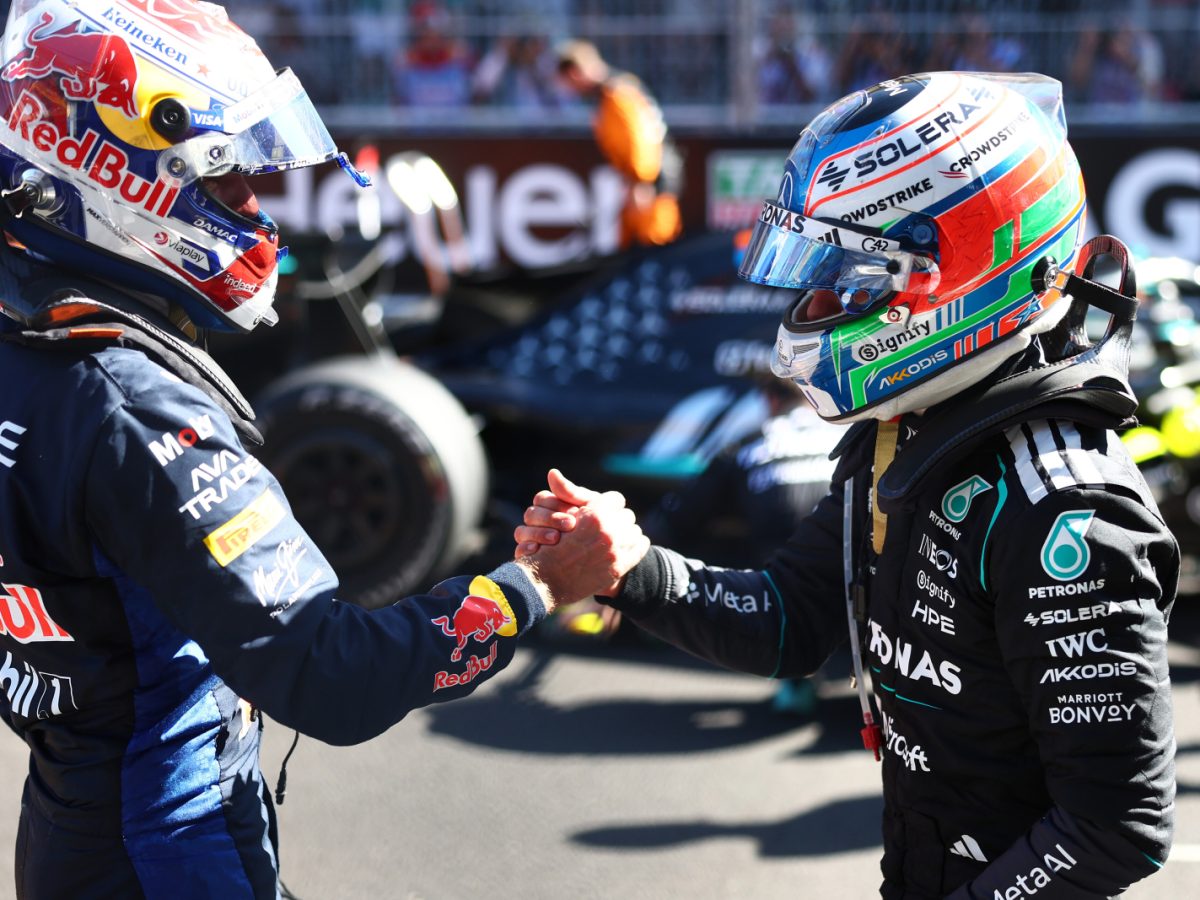
The image neatly captures Formula 1’s interconnected politics. Team principals do not merely manage cars and drivers; they continuously assess rivals, contracts, personalities and future regulations. Conversations that appear casual can redirect championships, corporate investment and sporting legacies.
Horner’s account also reveals why Red Bull resisted Hamilton. Elite driver pairings sound irresistible because they promise maximum speed, publicity and competitive pressure. They can also become destructive. Vettel was the organisation’s established champion, and placing Hamilton beside him could have divided engineering attention, intensified political competition and threatened harmony.
The question was therefore not whether Hamilton possessed sufficient ability. Horner acknowledged that leading drivers naturally wanted Red Bull’s dominant machinery. The calculation concerned whether adding another global star would improve a team already winning, or merely increase cost and internal risk.
Red Bull selected continuity. In the short term, that judgment worked: Vettel secured a fourth consecutive title in 2013. In the longer term, however, Hamilton became the competitive centre of Mercedes’ rise. The lesson is not that Red Bull unquestionably made the wrong choice. Rather, an apparently conservative decision carried consequences beyond those the team could control.
Had Hamilton joined Red Bull, Formula 1 might have witnessed one of its most combustible partnerships. Both he and Vettel were champions entering their prime, capable of demanding strategic priority and building teams around themselves. Their contest could have produced extraordinary racing, but it might also have fractured Red Bull before the regulatory reset of 2014.
There is another possibility: without Hamilton, Mercedes might still have dominated through its engine advantage and technical organisation. Rosberg proved capable of winning a championship, while the foundations for the team’s success extended well beyond one driver. Horner’s recommendation should therefore be treated as an important contribution, not the single cause of Mercedes’ subsequent achievements.
Even so, drivers convert institutional strength into results, and Hamilton delivered the consistency, speed and competitive authority required to turn Mercedes’ potential into sustained supremacy. Red Bull’s refusal did not simply send away a talented applicant; it helped make that talent available to a manufacturer preparing for the hybrid era.
The disclosure also adds complexity to Horner’s legacy. He led Red Bull through championship cycles, fierce political battles and the development of Vettel and Max Verstappen. Yet, by his own telling, he also played an indirect role in strengthening the organisation that became Red Bull’s defining opponent.
Horner, dismissed by Red Bull in July 2025, is now recounting the episode from outside the team. Retrospective stories inevitably benefit from hindsight, and memories of informal discussions can magnify individual influence. Nonetheless, his version is credible as an illustration of how Formula 1’s driver market operates through relationships long before contracts become public.
His comments about Verstappen and Kimi Antonelli extend the same theme across generations. Horner described Verstappen as the greatest talent he had observed, praising his authority, mental strength and ability to understand the car while operating at its limit. He also called Antonelli a special talent after the Mercedes driver’s rapid development and commanding 2026 campaign.
Antonelli’s emergence underlines why driver recruitment remains a strategic investment rather than a simple employment decision. A team that identifies the right talent at the right moment can shape an era. A team that hesitates may protect present stability but surrender future advantage.
For Red Bull in 2012, Hamilton represented both opportunity and disruption. The organisation chose to preserve a proven order around Vettel, while Mercedes accepted the risk of building its future around a frustrated McLaren driver. Both decisions were rational within their immediate circumstances; only time revealed their radically different rewards.
The episode therefore resists a simplistic verdict. Signing Hamilton might have strengthened Red Bull, destabilised it or delayed Mercedes’ ascent. What is undeniable is that Horner’s suggestion to Lauda helped connect one of the sport’s greatest drivers with a team approaching its most successful period.
Formula 1 history often appears inevitable only after it has happened. Championships are later explained through superior engines, exceptional drivers and brilliant management. Horner’s account exposes the uncertainty beneath those narratives: a rejected proposal, a conversation in the paddock and a gearbox failure can alter the direction of the entire sport.

