

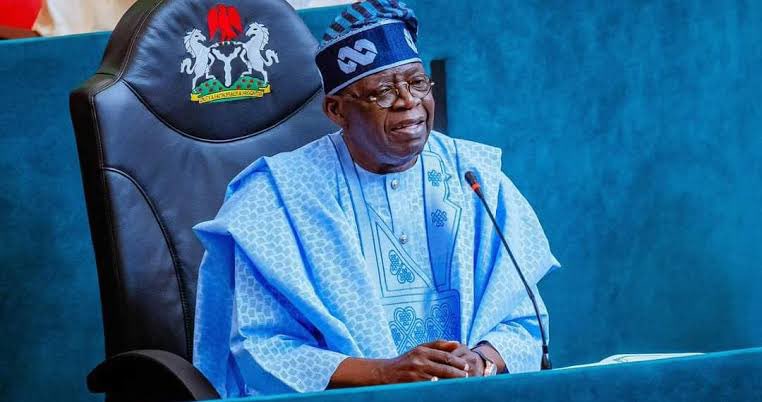

- Tinubu Seeks Approval for $20.52 Billion and €1.05 Billion External Borrowing Plan
Nigeria’s President Bola Tinubu has asked the Senate to approve a supplementary external borrowing plan comprising $20.52 billion and €1.05 billion, opening a fresh debate over whether additional debt can close the country’s infrastructure gap without intensifying its fiscal and foreign-exchange vulnerabilities.
The proposed financing, covering 2026 and 2027, is intended to support projects across power, transportation, healthcare, agriculture, education, water supply, security and employment creation. It would also finance initiatives to strengthen public financial management.
President Tinubu submitted the request in a letter addressed to Senate President Godswill Akpabio and read during the Senate’s plenary session.
The government argues that Nigeria’s infrastructure needs exceed what can presently be financed through domestic revenue. External borrowing is therefore being positioned as a mechanism for closing the gap and accelerating projects considered important to economic and social development.
“In light of the need for significant infrastructure investment,” President Tinubu said, Nigeria must pursue prudent external borrowing to address its financing shortfall.
The borrowing plan is substantial, but its economic significance will ultimately depend less on the headline amount than on the projects financed, the terms secured and the government’s ability to convert borrowed resources into productive assets.
Borrowing for infrastructure can support long-term growth when it expands electricity supply, reduces transportation costs, strengthens agricultural productivity and improves access to water, healthcare and education. Such investments can increase the economy’s productive capacity and, over time, generate revenue needed to service the debt.
The opposite outcome is possible when borrowed funds are delayed, poorly allocated or absorbed by projects with weak commercial and developmental returns. In that situation, Nigeria would inherit the repayment obligation without receiving the economic capacity that was supposed to justify it.
The request therefore places a significant responsibility on the Senate. Legislative approval must go beyond authorising an aggregate borrowing ceiling. Lawmakers must examine the list of projects, financing sources, interest rates, maturities, grace periods and expected disbursement schedules.
The government said the proposed projects were selected after technical and economic assessments and would be implemented across Nigeria’s 36 states and the Federal Capital Territory.
Geographical coverage may help distribute the benefits of borrowing, but it should not become a substitute for project quality. A politically balanced portfolio can still perform poorly if projects are selected primarily to satisfy regional demands rather than economic and social priorities.
Each project should therefore have a clear delivery timetable, measurable outcomes and an accountable implementing institution. The government must also disclose whether individual facilities are concessional, commercial or linked to specific bilateral and multilateral partners.
The distinction matters because not all external borrowing carries the same risk. Concessional loans with long maturities and low interest rates are generally easier to manage than commercial facilities exposed to high refinancing costs.
Currency risk is equally important. The proposed loans are denominated in dollars and euros, but most government revenue is collected in naira. Any significant depreciation of the domestic currency would increase the naira value of future principal and interest payments.
Infrastructure financed with foreign currency should consequently support projects capable of improving productivity, expanding exports, replacing imports or generating dependable economic returns. Otherwise, the country could face higher foreign-currency obligations without creating additional sources of foreign exchange.
The request comes as Nigeria’s public debt continues to rise. Total public debt reached N166.79 trillion at the end of June 2026, increasing from N159.35 trillion three months earlier.
Domestic debt accounted for N91.59 trillion, or 54.91% of the total portfolio. Nigeria’s overall public debt has almost doubled from N87.38 trillion in June 2023, although part of the increase in its naira value may reflect exchange-rate movements affecting external liabilities.
External debt also increased from $42.49 billion in December 2023 to $51.86 billion by December 2025. Domestic debt rose from N59.1 trillion to N89.4 trillion over the same period.
These figures make debt-service capacity more important than the size of debt alone. A country may sustain a relatively large debt portfolio where revenue is strong, maturities are well managed and borrowing finances productive investment. It becomes more vulnerable when public revenue remains weak and interest payments consume resources needed for essential services.
Nigeria’s central fiscal problem is therefore not simply borrowing. It is the relationship among debt, revenue and economic returns.
The borrowing plan must be accompanied by stronger domestic revenue mobilisation, improved expenditure controls and more transparent project management. New loans cannot indefinitely compensate for weak tax collection, revenue leakages or inefficiencies within public institutions.
The Senate President indicated that the proposal formed part of a borrowing programme previously reflected in the federal budget and the 2025–2027 external borrowing plan. He referred it to the Senate Committee on Local and Foreign Debts for examination alongside the Appropriations and Finance committees.
That review creates an opportunity to establish whether the proposed financing remains consistent with Nigeria’s current debt strategy and whether economic conditions have changed since the original programme was prepared.
It should also determine how much of the total request represents newly identified borrowing, previously approved facilities awaiting final authorisation or refinancing of existing commitments.
Transparency will be essential after approval. Nigerians should be able to track each loan from contracting and disbursement to procurement and project completion. Regular publication of financing terms, contractors, implementation milestones and audit findings would strengthen public confidence and make it more difficult for borrowed funds to disappear into unfinished projects.
The country’s infrastructure deficit is real, and refusing all new borrowing would not automatically resolve it. Inadequate electricity, transport, water and social infrastructure already impose significant costs on businesses and households.
But the urgency of development cannot eliminate the need for financial discipline.
President Tinubu’s request should therefore be judged against a simple test: will the projects create economic and social value greater than their total financing and repayment costs?
If the answer is supported by credible project assessments, transparent procurement and disciplined implementation, external borrowing could strengthen Nigeria’s long-term productive capacity.
If those conditions are absent, the plan risks expanding the debt stock while postponing the infrastructure transformation it is supposed to finance.

