
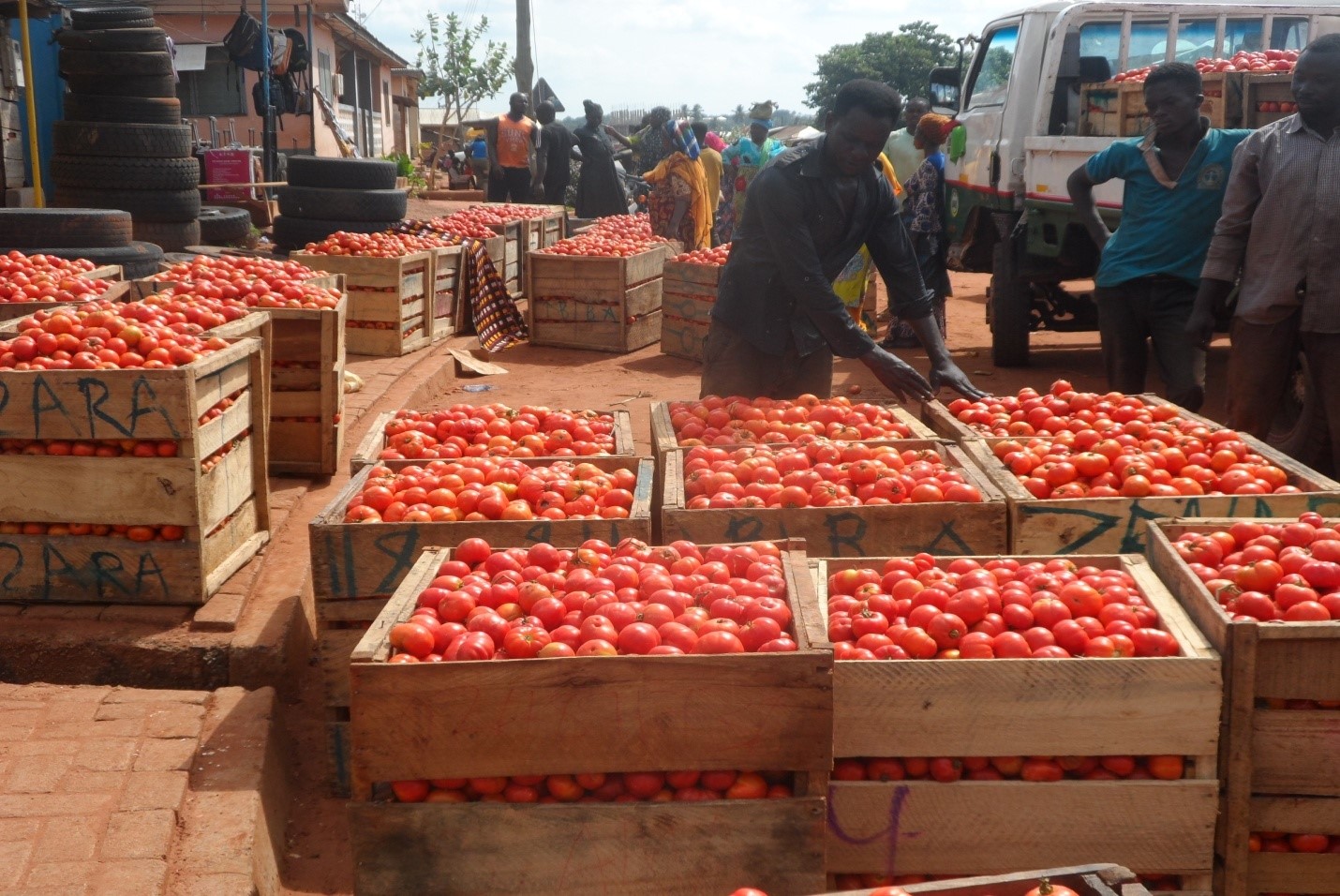

Tomato Trader Killings Expose Ghana’s Food Security and Import Vulnerabilities – PFAG
The Peasant Farmers Association of Ghana (PFAG) has expressed deep concern over the recent killing of Ghanaian tomato traders in Burkina Faso, warning that the incident exposes fundamental weaknesses in Ghana’s food system and threatens the country’s food security.
In a statement signed by its National President, Wepia Addo Awal Adugwala, the Association said while the human tragedy remains the immediate concern, the incident highlights Ghana’s heavy dependence on tomato imports from Burkina Faso—an exposure it described as a national security and economic sovereignty risk.
PFAG cautioned that the disruption of cross-border tomato trade is likely to trigger sharp price increases in Ghana, putting pressure on household food budgets and placing a key nutritional staple out of reach for many families.
“This is not merely a supply chain issue; it is a national security and economic sovereignty issue,” the Association said, urging authorities to use the incident as a catalyst to fundamentally reassess Ghana’s agricultural development path.
Heavy Import Dependence
According to PFAG, Ghana is currently the 43rd largest importer of tomatoes globally, spending more than US$22.3 million on tomato imports in 2024 alone. The Association noted that over 90 percent of these imports originate from Burkina Faso.
Ghana’s annual tomato consumption is estimated at about 800,000 metric tonnes, while domestic production ranges between 370,000 and 420,000 metric tonnes, leaving a significant supply deficit that is filled through imports.
PFAG argued that this gap persists despite Ghana having favourable climatic conditions, arable land, and a large agricultural labour force capable of supporting self-sufficiency and export-oriented production within the West African sub-region.
Structural Constraints
The Association attributed the production shortfall to long-standing policy and structural failures rather than natural limitations.
It cited the country’s over-reliance on rain-fed agriculture, inadequate irrigation infrastructure, low farm productivity, high input costs, and weak agronomic practices as major constraints. Average tomato yields, PFAG noted, remain around 7.5 metric tonnes per hectare, far below the estimated potential of 20 metric tonnes per hectare.
Post-harvest losses were also flagged as a major concern, with PFAG estimating that between 30 and 50 percent of tomato output is lost due to poor storage facilities, weak road infrastructure, and the absence of functional processing plants.
“These persistent bottlenecks continue to trap farmers in a cycle of low productivity and uncompetitiveness,” the Association said, warning that the situation fuels food inflation, increases the national import bill, and undermines food security.
Call for Emergency Action
PFAG called on the Government of Ghana to treat the situation as a national emergency and implement decisive, well-funded, and time-bound interventions.
Key proposals include a renewed push on irrigation development, including a clear roadmap and dedicated funding for the Irrigation for Wealth Programme and the construction of the Pwalugu Multi-Purpose Dam. The Association also urged the expansion of boreholes and access to subsidised solar-powered irrigation pumps to support year-round farming.
The Association further recommended the establishment of strategic agricultural enclaves for commercial vegetable production, equipped with water, power, and road infrastructure to attract private investment.
To reduce production costs, PFAG called for increased funding for agricultural research institutions to develop disease-resistant and market-preferred seed varieties, alongside urgent engagement with input suppliers to address high fertilizer prices.
On post-harvest losses, PFAG proposed a national strategy involving the deployment of extension officers, upgrading of feeder roads, establishment of storage and cold chain facilities, and the rehabilitation or construction of tomato processing factories in major producing zones.
Wider Farmer Distress
Beyond tomatoes, PFAG highlighted growing distress among grain and tuber farmers, citing heavy losses from recent market gluts affecting rice, maize, soya, yam, and cassava producers.
Despite repeated assurances, the Association said many farmers feel abandoned as unsold produce remains on farms or in storage, dampening enthusiasm for the upcoming planting season.
PFAG urged the government to activate emergency support measures, including direct produce purchases and strategic storage, to prevent further losses and restore farmer confidence.
“The resilience of Ghanaian farmers has been stretched to the breaking point,” the statement said, calling for urgent action to build a resilient agricultural system that protects both producers and consumers.

