


- TUC Supports IPEC Transition but Warns Against Piecemeal Public-Sector Pay Reform
Organised Labour has backed Ghana’s proposed Independent Public Emoluments Commission, but warned that the reform risks falling short unless workers are fully involved in designing a broader compensation architecture capable of addressing longstanding distortions in public-sector pay.
The endorsement gives government an important measure of labour support as it seeks to replace the Fair Wages and Salaries Commission with a more independent institution responsible for managing public-sector emoluments.
It also underlines the political and fiscal complexity of reforming a compensation system that sits at the intersection of worker expectations, government finances and Ghana’s wider effort to strengthen fiscal discipline.
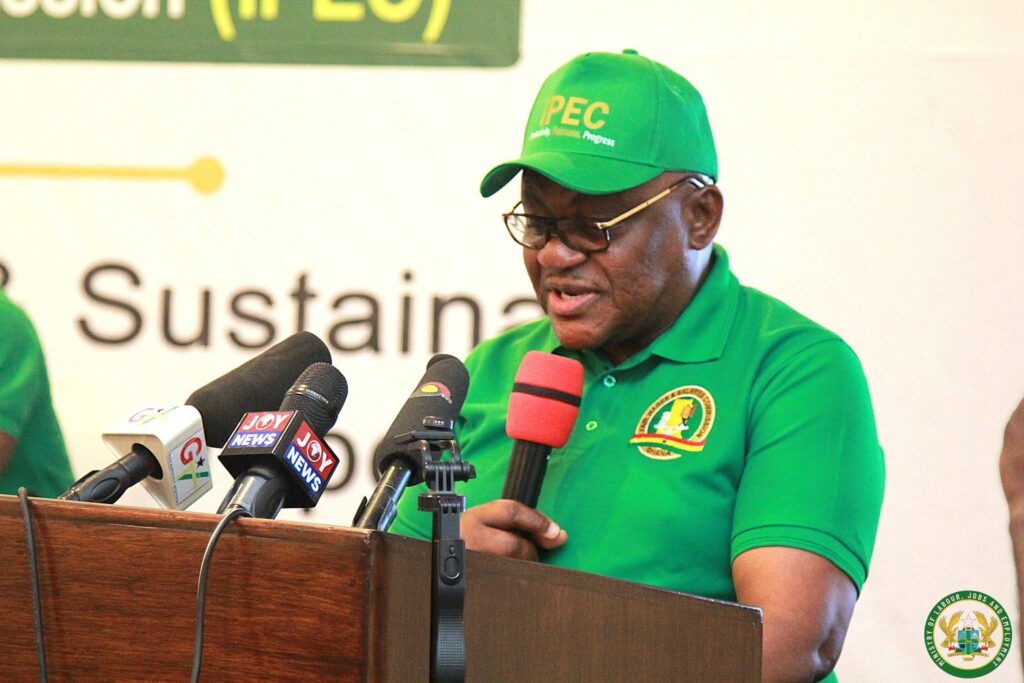
Joshua Ansah, Secretary-General of the Trades Union Congress, said organised labour was prepared to participate actively in the establishment of IPEC and would continue to monitor the process while providing critical input into the proposed framework. His comments came during a two-day stakeholder engagement in Accra organised by the FWSC in collaboration with the Ministry of Labour, Jobs and Employment.
The discussions are intended to brief labour organisations on the proposed transition and gather their views as government develops the draft IPEC Bill. For organised labour, however, participation cannot be limited to consultation at selected stages of the process, with Mr Ansah insisting that workers and their representatives must remain involved from the beginning until the new framework is completed.
“We must have people who start the process from the beginning and end it properly—not start halfway through only to tell a different story. If that happens, our presence here has no meaning,” he said. “We don’t want a piecemeal approach. It should be holistic so that what is good for the goose is also good for the gander.”
The intervention highlights one of the central challenges facing Ghana’s latest attempt at public-sector compensation reform: achieving greater control over the wage bill without creating the perception that fiscal consolidation is being pursued disproportionately at the expense of workers.
Successive governments have struggled to reconcile demands for competitive remuneration with the need to contain recurrent expenditure and preserve fiscal space for infrastructure, social programmes and other development priorities.
Controlling the wage bill, however, is only one side of the problem. Persistent concerns over disparities in salaries, allowances, benefits and conditions of service across different public institutions have created pressure for a compensation system that workers regard as more equitable and transparent.
The proposed IPEC therefore represents more than an institutional name change. Its credibility will depend on whether it can address structural weaknesses in the way compensation is determined, negotiated and administered, while improving consistency across the public service without ignoring legitimate occupational and institutional differences.
Once enacted, the legislation establishing IPEC is expected to repeal the Fair Wages and Salaries Commission Act, 2007 (Act 737). The new commission is intended to address fragmentation in public-sector pay, concerns over the politicisation of salary determination and the growing fiscal pressures associated with government compensation expenditure.
The proposed framework is expected to be anchored on fairness, consistency, accountability and fiscal sustainability, but reconciling those objectives will be difficult. Greater institutional independence could potentially insulate remuneration decisions from short-term political considerations, while also improving predictability in wage negotiations and medium-term expenditure planning.
For government, that predictability would be particularly valuable because compensation commitments are relatively inflexible once agreed. Better visibility over future wage obligations could improve budgeting and reduce the risk that unexpected salary settlements create pressure elsewhere in the fiscal framework.
For workers, however, independence will matter only if the new institution is perceived as genuinely balanced. Organised Labour will want assurance that IPEC does not become a mechanism for imposing expenditure ceilings without meaningful negotiation or addressing longstanding inequities within the compensation structure.
That is why Mr Ansah’s insistence on a holistic approach is significant. Equity in public-sector pay is unlikely to be judged only by headline salary adjustments, but by how the new framework treats allowances, benefits, market premiums, occupational differences and disparities between comparable roles across institutions.
The challenge for IPEC will therefore be to combine fiscal discipline with a transparent methodology capable of commanding confidence across government and labour. That will require clear statutory authority, reliable payroll and employment data and decision-making processes that make the basis for compensation outcomes easier to understand.
The stakeholder engagement brought together leaders from more than 50 labour groups under the theme, “Towards an Independent, Equitable, and Sustainable Compensation System: Stakeholders’ Perspectives on Ghana’s Public Sector Pay Reforms.”
The breadth of participation is important because implementation will depend heavily on whether government can build sufficient consensus before the legislation and institutional framework are finalised.
Organised Labour’s endorsement provides a useful starting point, but the support is clearly conditional. Workers want meaningful participation throughout the transition and a comprehensive reform process capable of dealing with the underlying architecture of public-sector compensation rather than simply transferring responsibilities from the FWSC to a newly created body.
IPEC will therefore face an unusually demanding test from its inception. It must demonstrate independence without becoming detached from the workers whose compensation it regulates, promote fairness without allowing expenditure to become fiscally unsustainable, and pursue consistency without ignoring legitimate differences across the public service.
If those competing objectives can be reconciled, the commission could become an important pillar of Ghana’s fiscal and institutional reform agenda. If the underlying compensation structure remains fragmented, however, replacing the FWSC may amount to little more than changing the institution responsible for managing a longstanding problem.

