


- Two Passport Officials Interdicted as Police Investigate Alleged Service-Passport Scheme
Two officials have been interdicted and referred to the police after the Ministry of Foreign Affairs said preliminary findings identified 10 service passports issued to people who were not eligible.
The investigation now faces a wider test: establishing who was involved, how the system failed and whether its controls can prevent a recurrence.
The Ministry of Foreign Affairs has cancelled 10 service passports it says were issued to people who did not qualify for them, following preliminary investigations into an alleged scheme involving payments to a syndicate within the passport administration system.
The ministry said the passports were issued between 2023 and 2026. It has interdicted Acting Director of Passports Mahama Yahaya Amantana and junior Foreign Service Officer Alhassan Sumani, and referred both to the Ghana Police Service for further investigation and possible prosecution.
Interdiction and referral are administrative and investigative steps; they do not amount to a finding of criminal guilt.
The investigation began after two petitions were received. One petitioner alleged paying US$29,000 in 2023, while another claimed to have paid US$5,000 in 2026 to people involved in the alleged arrangement.
The ministry said the first petition arrived on October 8, and a committee was set up five days later on the instructions of Foreign Affairs Minister Samuel Okudzeto Ablakwa.
The gap between the alleged payments is striking, but the figures remain claims by petitioners. The statement does not establish who received the money, whether the two cases were connected, or whether the amounts reflect the same service or process. Those questions will require evidence from the police investigation and any subsequent proceedings.
The ministry’s preliminary findings identify 10 people who allegedly received service passports despite not qualifying for them. The ministry has cancelled the documents and notified Ghana’s international partners that they can no longer be used.
It is also pursuing the beneficiaries, including two people reported to have travelled with the documents in 2023. The statement does not say whether those journeys were undertaken with the knowledge that the passports had allegedly been irregularly issued.
The ministry’s statement names Sumani as a person cited in the petitions as the alleged chief architect of the scheme. It says he was accused of acting as a middleman, or “goro boy”, in 2023, before joining the Foreign Service on November 29, 2024. These are allegations cited by the ministry, not findings by a court.
The inquiry is also expected to examine the period when former Director of Passports Ambassador Mohammed Habib Idris was in office. He is now retired. The ministry said the security services would investigate his activities during the period under review and that sanctions would follow if he were found culpable.
The emerging details make the inquiry broader than the conduct of two serving officials. If passports were issued over several years, investigators will need to establish how applications moved through the system, which officials had authority at each stage, whether records were altered or bypassed, and whether any warning signs were missed.
The ministry’s preliminary findings have identified documents and alleged payments; determining responsibility will require a chain of evidence.
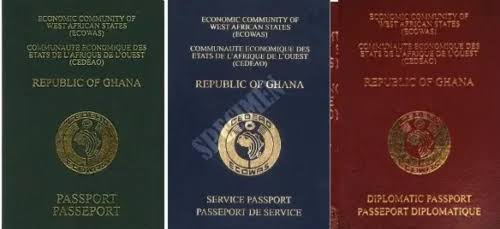
The distinction between service and diplomatic passports is also important. The ministry says the investigation concerns service passports and that, so far, it has found no evidence that Ghana’s diplomatic passports are being sold. That clarification limits the scope of the allegations and should remain clear in public discussion.
The case arrives as the government promotes changes to passport administration. The ministry says Ghana has introduced chip-embedded passports, established Passport Application Centres in all 16 regions, begun 24-hour operations, provided free courier delivery and introduced electronic tracking. It also says the application fee was reduced from GH¢500 to GH¢350 to improve affordability.
Those measures address access, convenience and document security. The alleged scheme, however, points to a different test: whether eligibility rules and internal controls are consistently enforced by the people responsible for processing and approving applications.
Digital tracking and chip technology can make documents harder to misuse, but they cannot by themselves prevent improper decisions at the point of issuance.
The ministry says the passport system is governed by the Passports and Travel Certificates Decree, 1967 (NLCD 155), as amended by the Passports and Travel Certificates (Amendment) Law, 1993 (PNDCL 310).
It describes its responsibility as issuing ordinary, service and diplomatic passports. The investigation will therefore have to clarify not only whether individuals were eligible, but how the rules were applied and where oversight may have failed.
For the public, the credibility of the response will depend on more than the cancellation of 10 passports. It will depend on whether investigators establish the alleged payment trail, identify anyone else involved, determine whether the documents were used to obtain travel or other benefits, and explain what corrective measures follow.
The ministry has pledged transparency and said anyone found culpable will be brought to justice; that commitment now needs to be matched by a clear account of the investigation’s outcome.
The case also presents a challenge for the reforms the ministry says it has introduced. A passport system can be faster, more accessible and more secure in design, but public confidence ultimately rests on fair, consistent administration.
If eligibility can be bypassed through personal connections or payments, improvements to technology and service delivery will not be enough to protect the integrity of the document.
The police referral marks the beginning of a process, not its conclusion. The ministry’s findings are preliminary, and the officials named have not been convicted. The next steps must establish the facts through due process while protecting the distinction between allegations and proven wrongdoing.
The central question is now whether the investigation can show how the alleged arrangement operated and what safeguards will stop a similar breach. That answer will determine whether the passport reforms amount to a stronger system or a more modern one still vulnerable to failures of accountability.

