

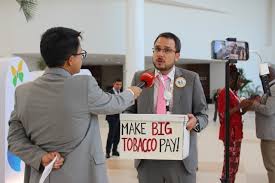

- “Make Big Tobacco Pay”: Ghana joins global campaign for tobacco industry accountability
Governments are being urged to adopt stronger legal and administrative measures to hold tobacco companies financially accountable for the health, environmental and economic damage caused by their products, as Ghana joins a global campaign pushing for tougher corporate liability in the tobacco industry.
The call was made by Daniel Dorado Torres, Tobacco Campaign Director at Corporate Accountability, during the launch of the “Make Big Tobacco Pay” campaign organised by Vision for Accelerated Sustainable Development Ghana (VAST Ghana) in Accra on Friday, June 12, 2026.
The event was held under the theme “Advancing the Implementation of WHO FCTC Article 19 & Article 5.3 in Ghana” and formed part of a global week of action calling for stronger implementation of Article 19 of the World Health Organization Framework Convention on Tobacco Control.
Article 19 of the WHO FCTC focuses on liability and compensation for tobacco-related harm, while Article 5.3 seeks to protect public health policies from interference by the tobacco industry.
Mr Torres said tobacco corporations continue to generate substantial profits while governments, health systems, families and communities bear the cost of tobacco-related disease, pollution and environmental degradation.
According to campaign materials presented at the conference, tobacco use contributes to more than eight million deaths annually worldwide and creates significant environmental damage through pollution, deforestation, toxic waste and cigarette butt litter.
“The time is now to make big tobacco pay,” one of the campaign slides stated, calling for the financial burden of tobacco-related harm to be shifted “from people and communities to the tobacco industry.”
Campaigners argued that the current global tobacco control debate must move beyond taxation, advertising restrictions and public education to include direct accountability for the costs imposed on society.
The presentations highlighted recent international developments under the WHO FCTC, particularly decisions adopted during the 11th Session of the Conference of the Parties, which encouraged countries to strengthen implementation of Article 19 liability measures.
Mr Torres explained that liability mechanisms could include civil, criminal and administrative actions against tobacco companies, depending on the legal framework of each country.
Examples presented included lawsuits seeking compensation for public healthcare costs, environmental liability claims linked to cigarette waste, and regulatory sanctions imposed under consumer protection and environmental laws.
The campaign materials referenced accountability actions and legal developments in countries including Nigeria, Brazil, India, South Korea and the United States.
One example cited was Nigeria’s lawsuit against major tobacco firms over smoking-related healthcare expenses, while another highlighted administrative action in India against tobacco companies over the use of prohibited plastics in product packaging.
The presentations also drew attention to growing global concern over cigarette butt pollution, describing it as a major environmental challenge affecting water bodies, drainage systems, beaches, communities and ecosystems.
Mr Torres said governments already possess several tools that can be used to hold tobacco companies accountable beyond traditional tobacco control regulation.
These include litigation, environmental protection laws, administrative penalties, consumer protection frameworks and other public-interest legal mechanisms.
Campaigners said stronger implementation of Article 19 could help governments recover healthcare costs associated with tobacco-related diseases, support environmental clean-up efforts and discourage harmful industry practices.
For Ghana, advocates said the campaign provides an opportunity to strengthen domestic policy discussions around corporate accountability, public health financing and environmental protection.
They argued that as the country continues to address pressures on the health system, tobacco-related harm must be treated not only as a public health issue, but also as a fiscal and environmental liability that should not be carried by taxpayers alone.
The “Make Big Tobacco Pay” campaign is being coordinated globally by Corporate Accountability alongside a coalition of public health organisations and civil society groups advocating stronger accountability within the tobacco industry.
Organisers say the initiative seeks to ensure that tobacco companies bear responsibility for the full social, economic and environmental costs created by their business operations.
The Accra launch adds Ghana to a growing international movement pressing governments to use existing legal tools more assertively to recover costs, deter harmful conduct and protect public policy from tobacco industry influence.
For campaigners, the message is clear: tobacco control must now include a stronger liability framework that makes corporations pay for the damage their products impose on individuals, communities and the state.

