


- Reserve Decline Forces Ghana to Reshape Gold and Foreign-Exchange Arrangements – IMF
Ghana has moved foreign-exchange intermediation from the Bank of Ghana to GoldBod and increased the gold-sale requirement for large-scale miners after foreign reserves declined in recent months, the International Monetary Fund has disclosed.
The corrective measures come as the Fund reviews Ghana’s first programme under its 36-month, non-financing Policy Coordination Instrument (PCI).
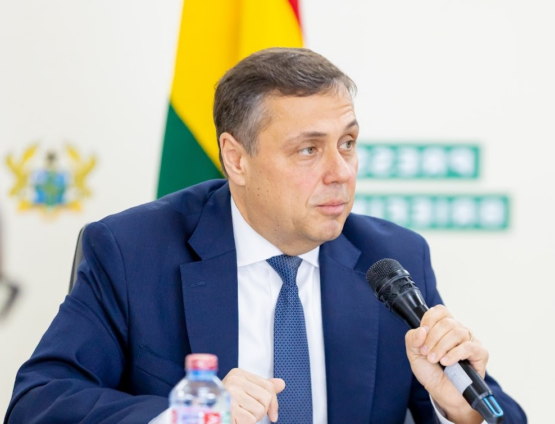
IMF mission chief Ruben Atoyan said staff and the authorities had reached a staff-level agreement on the review, which still requires approval from IMF Management and the Executive Board.
The Fund said sustained implementation of the changes, alongside greater exchange-rate flexibility, will be essential to rebuilding reserves.
The disclosure sets up a contrast in Ghana’s current economic picture. Growth remains strong, inflation has eased and the primary fiscal surplus is on track to meet its year-end target.
Yet the reserve decline has been serious enough to prompt a change in how foreign exchange is channelled into the market and a higher gold-sale requirement for mining companies.
The IMF did not disclose the size of the reserve fall, its timing or the new gold-sale quota. It also did not provide a detailed breakdown of the pressures behind the decline. Those omissions leave an important question unanswered: how much of the adjustment is a short-term response to specific outflows, and how much reflects a more persistent weakness in the flow of foreign exchange into the country’s reserves?
The changes shift the institutional route through which foreign exchange is intermediated. Under the new arrangement described by the Fund, GoldBod takes on that role from the central bank.
The higher gold-sale requirement for large-scale miners is intended to increase the volume of gold entering the country’s formal arrangements. Together with more exchange-rate flexibility, these actions are meant to help rebuild the reserve buffer.
The policy adjustment is significant because reserve accumulation and foreign-exchange supply are related but distinct objectives. Dollars supplied to the market can support businesses and reduce shortages, while dollars retained by the central bank add to its external buffer.
When both objectives compete for the same inflows, authorities must decide how much foreign exchange to sell and how much to preserve.
The move to GoldBod places greater weight on the institution’s ability to manage those flows transparently and predictably. The Fund’s call for sustained implementation makes clear that a change in institutional responsibility alone will not guarantee reserve recovery.
The mechanics of the system how gold is purchased and sold, how foreign exchange is allocated, and how much is retained will matter.
Greater exchange-rate flexibility is another part of the adjustment. A more flexible rate can help the market respond to changes in supply and demand, reducing pressure for the central bank to meet every demand for foreign exchange.
But flexibility can also mean that currency prices respond more visibly to shortages or shifts in investor and business demand. The IMF’s message is that reserve protection and market adjustment must move together.
That message arrives against a backdrop of relatively strong headline indicators. Real GDP expanded by 6.20% year on year in the first half of 2026, and the IMF projects full-year growth of 5.70%.
Inflation stood at 5.50% in October, below the Bank of Ghana’s 6.00% lower boundary of its 8.00% ±2.00% target band.
The primary surplus is also on course to meet the programme’s year-end target. The IMF described programme performance as broadly satisfactory, with most quantitative targets met.
Those gains matter, but they do not remove external vulnerability. The Fund says Ghana remains exposed to volatility in gold, cocoa and oil prices, as well as geopolitical tensions and tighter global financial conditions.
A country can record solid growth and low inflation while still facing pressure on reserves if foreign-exchange inflows weaken, outflows rise or the central bank sells more currency than it can replace.
The IMF also points to domestic pressures that complicate the outlook: substantial refinancing needs for domestic debt, fiscal risks in the energy, cocoa and gold sectors, and remaining weaknesses in the financial sector.
It has called for a sinking fund to help repay maturing debt. Reserve policy, therefore, cannot be considered in isolation from the demands on public finances and the wider financial system.
The PCI’s non-financing nature sharpens the challenge. Unlike Ghana’s previous Extended Credit Facility arrangement, the instrument does not provide loan disbursements. It is designed to support reforms and policy credibility through monitoring.
Ghana must therefore rebuild its reserves through its own external earnings, investment flows and policy choices rather than through fresh IMF financing under the PCI. The staff-level agreement is a programme milestone, not a source of new foreign exchange.
The greater gold-sale requirement raises questions about how the policy will work in practice. The IMF statement does not specify how much more gold large-scale miners must sell, whether the requirement applies through GoldBod or another channel, or how the purchases will be priced and settled.
Those details will be important for assessing whether the policy increases usable foreign exchange without creating new costs or distortions.
The same transparency test applies to the transfer of intermediation. Market participants will need clear information on the division of responsibilities between GoldBod and the Bank of Ghana, the rules governing allocation to banks, and the volume of foreign exchange sold or retained.
Without regular reporting, it will be difficult to determine whether the revised arrangement is rebuilding reserves, supplying the market or balancing both goals.
The latest review thus puts reserve management back at the centre of Ghana’s recovery story. The economy’s growth and inflation figures show real progress, but reserves are a separate test of resilience: they determine the country’s capacity to meet external obligations and withstand shocks. The IMF has identified the policy changes; the size of the reserve decline and the measurable results of those changes remain to be disclosed.
For Ghana, the immediate test is whether the new arrangements can produce a durable increase in reserves while preserving orderly access to foreign exchange.
That will depend not only on how much gold miners sell, but also on the transparency of GoldBod’s operations, the Bank of Ghana’s intervention choices and the exchange rate’s ability to reflect market conditions. The IMF’s warning is clear: the recovery has advanced, but the external buffer needs rebuilding.

