


- UK-Ghana Trade Resource Centre Launched to Turn £1.6bn Relationship into Export Growth
The UK-Ghana Chamber of Commerce has launched a Trade Resource Centre intended to help Ghanaian and British companies navigate export requirements, identify commercial opportunities and secure partners in each other’s markets.
Developed in partnership with the UK-Ghana Jobs and Economic Transformation Programme, the centre will provide market intelligence, business matchmaking, technical referrals and trade-facilitation support.
Its creation reflects an effort to move the bilateral trade relationship beyond diplomatic commitments and preferential agreements towards measurable transactions by private companies.
Trade between Ghana and the United Kingdom reached approximately £1.6bn in the year to the first quarter of 2026. Yet businesses continue to encounter information gaps, product-standard requirements, complex export procedures and difficulties identifying credible buyers and local partners.
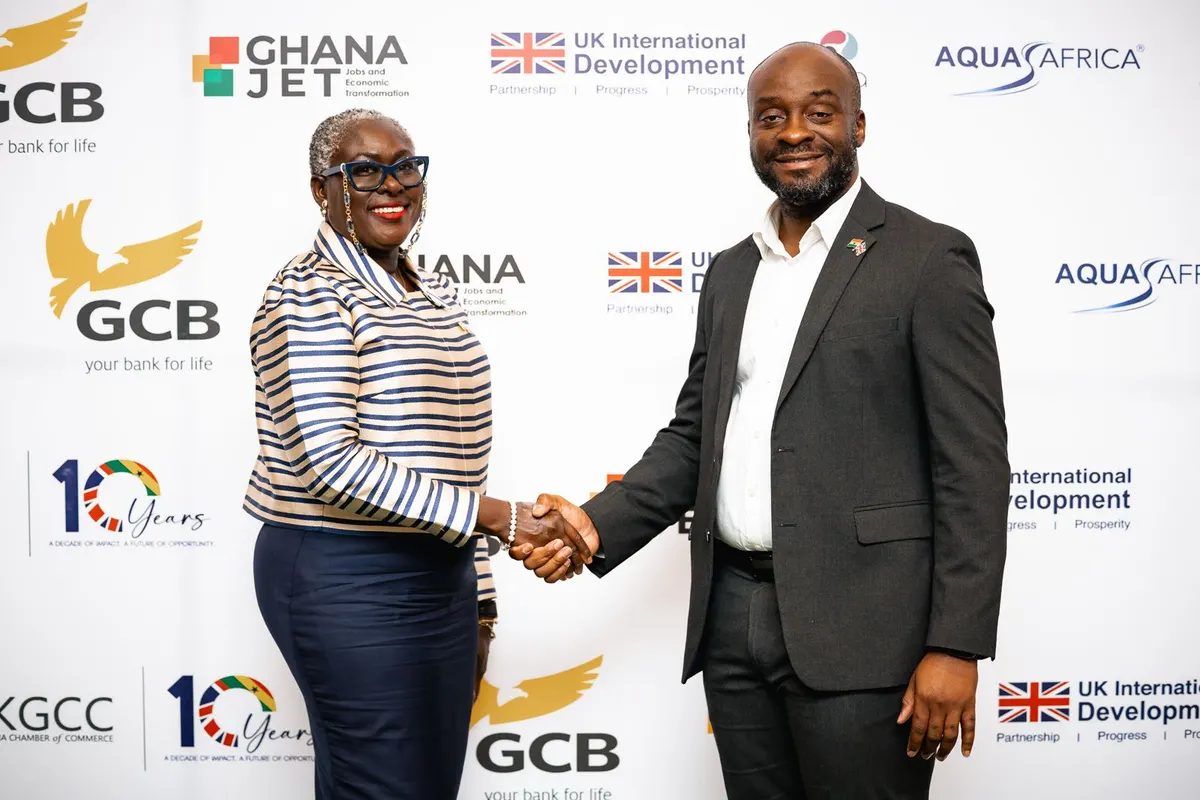
Adjoba Kyiamah, Executive Director of the UK-Ghana Chamber of Commerce, said the centre was intended to provide businesses with practical assistance rather than another platform for broad discussions about trade.
“The Trade Resource Centre represents our commitment to moving beyond conversations about trade and providing businesses with practical support to succeed,” she said.
“Whether a Ghanaian exporter is looking to access the UK market or a UK company is seeking opportunities in Ghana, the Centre will provide the guidance, connections and market intelligence needed to make those journeys easier and more successful.”
The centre was launched as one of the principal outcomes of the 2026 UK-Ghana Trade and Investment Summit, held under the theme A Decade of Trust, A Future Always On: Scaling the UK-Ghana Growth Partnership.
Its immediate focus will be helping companies take advantage of the UK-Ghana Trade Partnership Agreement.
The agreement provides preferential market access, but tariff preferences alone do not make a company ready to export.
Ghanaian producers must still satisfy British product standards, packaging and labelling requirements, rules of origin, documentation procedures and delivery schedules. They also need sufficient production capacity to supply buyers consistently.
For smaller businesses, each requirement can become a separate barrier. A company may produce a commercially viable product but lack the technical knowledge to certify it, the financing to increase production or the networks required to reach distributors.
The centre will provide export-ready Ghanaian firms with market-specific guidance, referrals to technical specialists and connections to British buyers and commercial networks.
It will also work with partner organisations to identify businesses capable of exporting and facilitate matchmaking between sellers, buyers and investors.
British businesses interested in operating in Ghana or sourcing Ghanaian products will receive industry information, partner referrals and connections to relevant commercial networks.
The test will be whether those interventions produce contracts, shipments and repeat orders rather than meetings that generate interest without commercial follow-through.
Eugene Sangmortey, Team Lead of the UK-Ghana Jobs and Economic Transformation Programme, said the initiative formed part of a broader attempt to strengthen Ghana’s export competitiveness and create employment through private-sector expansion.
“The UK remains an important trade partner for Ghana,” he said.
“Leveraging the TPA to deepen access to the UK market for Ghanaian manufacturers and exporters is crucial to business growth, trade diversification, job creation and economic transformation.”
Mr Sangmortey described the centre as a practical mechanism for helping exporters overcome information constraints, improve their readiness and connect with viable market opportunities.
It would, he said, “drive growth, unlock investment and create quality jobs”.
The distinction between preferential access and actual market utilisation has become increasingly important. At the March 2026 meeting of the UK-Ghana Trade Partnership Agreement Committee, the two governments identified business awareness, rules of origin, preference-utilisation data and market-access barriers among the areas requiring further work.
Without sufficient awareness and technical capacity, businesses may continue paying tariffs they could legally avoid or fail to enter the market altogether.
Reliable utilisation data will also be necessary to judge whether the agreement is benefiting a broad range of Ghanaian exporters or mainly supporting a small number of established commodity producers.
The UK exported goods and services worth approximately £865mn to Ghana during the four quarters to the end of 2025. Products shipped to Ghana include textile fibres, meat and meat preparations, consumer manufactures, cleansing products and refined petroleum.
For Ghana, the strategic objective is not merely to expand the total value of trade, but to increase the share of processed and manufactured products in its exports.
That requires a stronger pipeline of businesses capable of satisfying international buyers consistently.
Mr Sangmortey said technical assistance provided through the JET Programme had supported the approval of industrial policy frameworks covering automotive-component manufacturing, textiles and garments, and pharmaceuticals.
These sectors could provide opportunities for value-added exports and employment if the policies lead to productive investment.
The Trade Resource Centre will collaborate with the Ghana Export Promotion Authority, UK trade officials in Accra, sector associations and finance providers to give businesses more co-ordinated support.
Finance will be particularly important. Exporters often need working capital to purchase raw materials, meet large orders and wait through the period between production and payment.
Market intelligence and buyer introductions will have limited impact if companies cannot finance production or meet the volumes and timelines required under export contracts.
The centre also supports the UK-Ghana Growth Partnership covering 2026 to 2028.
The partnership focuses on attracting private investment, making it easier for Ghanaian companies to trade, supporting infrastructure and industrial development, and expanding education and skills co-operation. It builds on deals worth up to £215mn signed during the Ghana Investment Summit in London.
For Ghana, the economic case is clear. Expanding non-traditional exports would generate foreign exchange, reduce reliance on a narrow group of commodities and create jobs in manufacturing, agribusiness and services.
But the centre’s impact should ultimately be measured by commercial outcomes: the number of firms assisted, products certified, buyer relationships created, export contracts signed and repeat shipments completed.
Its launch provides an institutional bridge between the two markets. Whether Ghanaian businesses successfully cross that bridge will depend on the quality of its support — and whether domestic firms possess the capital, capacity and consistency required to compete in the UK.

