

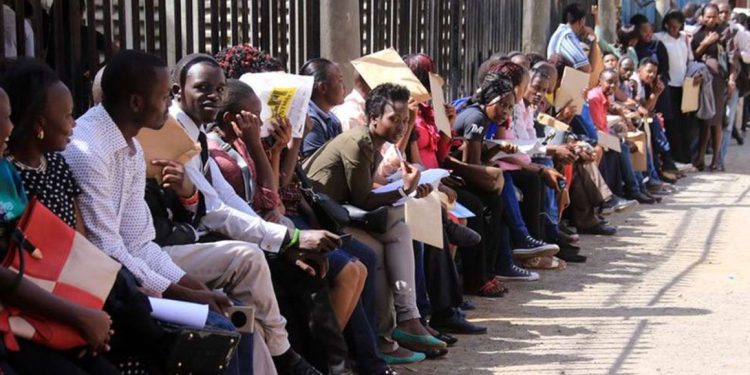

Unemployment Tops National Concerns, IEA Survey Finds
Unemployment has emerged as the most pressing issue facing Ghana, with nearly half of respondents identifying joblessness as the country’s single biggest challenge, according to a new nationwide survey by the Institute of Economic Affairs (IEA).
The opinion poll, conducted in December 2025, sampled more than 1,000 respondents across all regions of the country and found that concerns about employment significantly outweigh other national issues.
According to the survey, 46 per cent of respondents cited unemployment as the most important issue confronting Ghana today. Illegal mining, widely referred to as galamsey, ranked second, with 30 per cent identifying it as the country’s most pressing challenge.
The prominence of illegal mining reflects growing public concern over environmental degradation, water pollution and the long-term sustainability of Ghana’s natural resources.
“Forty-six per cent and 30 per cent of respondents indicated that unemployment and illegal mining, respectively, top the list of the most important issues facing the country today,” the IEA stated in its report.
By contrast, corruption — which has featured prominently in national discourse in recent years — was cited by just 9 per cent of respondents. The general state of the economy was mentioned by 8 per cent, while housing and transportation attracted relatively minimal concern, at 2.6 per cent and 1.5 per cent, respectively.
The findings suggest that although governance and macroeconomic conditions remain relevant to public debate, they are secondary to the more immediate challenges of securing employment and safeguarding the environment.
The IEA noted that policy interventions focused on job creation and the regulation of illegal mining activities are likely to gain strong public support, particularly if they deliver visible and measurable outcomes.
The survey was conducted one year after President John Dramani Mahama assumed office on January 7, 2025.
Despite the heightened concern over unemployment and environmental issues, the poll found that President Mahama continues to enjoy strong public backing, with 68 per cent of respondents approving of his job performance.
The think tank emphasised that the government’s response to these priority concerns will play a critical role in shaping public perceptions of governance and leadership going forward.

