

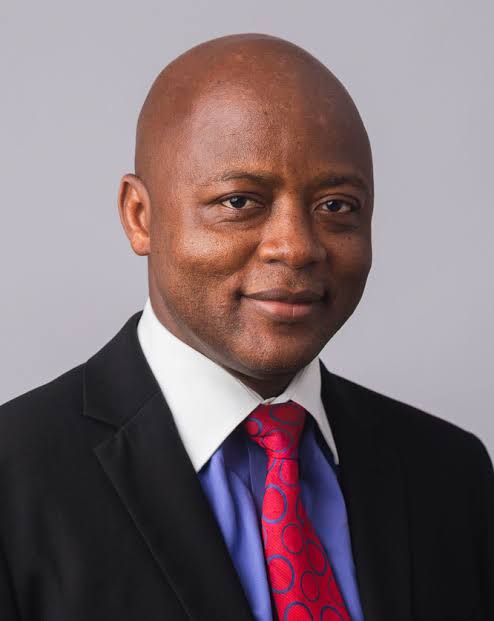

- Harvard-Trained Lawyer Aziz-Bamba Appointed Acting Director-General of Value for Money Office
President John Dramani Mahama has appointed Dr Abdul-Baasit Aziz-Bamba as Acting Director-General of the Value for Money Office, as the government moves to operationalise a new institution tasked with strengthening scrutiny of public expenditure.
The appointment was announced by the Presidency on Tuesday, September 8, 2026. It places a Harvard-trained lawyer and University of Ghana academic at the helm of an office expected to play a central role in assessing whether public spending delivers measurable benefits.
According to the Presidency, the appointment was made in accordance with Article 195(1) of the Constitution and Section 14(1) of the Value for Money Office Act, 2026 (Act 1172). Dr Aziz-Bamba will serve in an acting capacity pending the constitutionally required advice of the Governing Board, given in consultation with the Public Services Commission. The arrangement means his substantive appointment remains subject to the process prescribed under the legal framework establishing the office.
Until his appointment, Dr Aziz-Bamba served as a Senior Lecturer at the University of Ghana School of Law. The Presidency described him as a Harvard-trained lawyer, a background that places legal and institutional expertise at the centre of the new office’s leadership. His immediate task will be to help build an institution whose effectiveness is likely to depend as much on technical competence and independence as on its statutory mandate.
The Value for Money Office has been established to ensure that public expenditure delivers identifiable public benefits and that government spending is subjected to stronger scrutiny. The Presidency said the office is intended to help curb waste and ensure that every cedi of public expenditure serves the public good. Its creation reflects a broader attempt to shift fiscal accountability beyond whether money was legally appropriated towards whether it was spent efficiently and produced the intended economic or social outcome.
That distinction is significant for Ghana’s public financial-management system. Conventional expenditure controls can establish whether funds were authorised and whether procurement rules were followed, but a value-for-money framework asks a harder question: whether the state received an appropriate return for what it spent. In practical terms, that could place greater emphasis on cost, quality, delivery timelines, project outcomes and whether alternative approaches could have delivered better results.
The timing is also important because Ghana continues to operate under tight fiscal constraints, making the quality of expenditure as important as the amount of revenue government is able to raise. In such an environment, weak procurement, cost overruns, duplicated projects and poorly designed programmes impose a heavier burden because they consume scarce fiscal resources without generating equivalent public value.
An effective Value for Money Office could therefore become an important part of fiscal discipline if it is able to intervene early enough to prevent waste rather than merely document it after the fact.
The office’s mandate could also have implications for major infrastructure and public investment projects. Large government contracts frequently involve complex questions around pricing, scope changes, financing terms and long-term maintenance costs, all of which can affect whether taxpayers ultimately receive fair value. A rigorous value-for-money assessment could help establish whether projects are economically justified before commitments become irreversible.
Its credibility, however, will depend on the institutional safeguards surrounding its work. An office charged with questioning expenditure decisions must be able to operate with sufficient professional independence, access relevant financial and contractual information and publish findings capable of withstanding technical and political scrutiny. Without those conditions, the institution could risk becoming another layer of bureaucracy rather than a meaningful accountability mechanism.
Dr Aziz-Bamba’s legal background could be particularly relevant where value-for-money assessments intersect with procurement law, contractual obligations and administrative decision-making.
The challenge will be to combine legal compliance with economic and operational analysis, since expenditure can be procedurally lawful while still delivering poor value. The office will therefore need expertise extending beyond law into public finance, procurement, engineering, economics and project evaluation.
The Presidency said the appointment marks an important step towards operationalising the office and strengthening scrutiny of public spending. It also linked the office’s mandate to reducing waste and ensuring that expenditure delivers tangible benefits to Ghanaians. That framing places significant expectations on the institution at a time when taxpayers are increasingly demanding clearer evidence of what public spending produces.
The harder task will be translating the office’s mandate into measurable results. Success should ultimately be assessed by how much waste is prevented, how many poorly structured contracts are corrected, whether procurement costs become more competitive and whether public projects deliver stronger outcomes relative to expenditure. Merely reviewing spending without affecting the quality of decisions would fall short of the institution’s stated purpose.
Dr Aziz-Bamba therefore assumes leadership of an office whose relevance will depend less on the number of reports it produces than on whether it can influence how government plans, approves and executes expenditure.
If the institution is able to embed value-for-money analysis into major spending decisions, it could strengthen Ghana’s fiscal governance and improve the return taxpayers receive from public resources. The appointment is the first step; the more consequential test will be whether the new office can convert scrutiny into better spending decisions across government.

