


- VAT Removal Weakens Competitiveness of Made-in-Ghana Vehicles
Ghana’s vehicle assembly industry is warning that the removal of a key tax incentive is weakening local production, raising prices and undermining the country’s ambition to become a competitive automotive manufacturing hub in West Africa.
Assemblers operating under the Ghana Automotive Development Policy say the withdrawal of the Value Added Tax exemption on locally assembled vehicles has made their products less competitive against imported alternatives, slowing demand and forcing companies to moderate production plans.
The concern comes at a delicate time for an industry that has attracted global brands, created skilled jobs and positioned Ghana as an emerging destination for vehicle assembly. Industry players say the reversal of the VAT incentive risks weakening investor confidence and eroding gains made since the policy framework was introduced.
The Ghana Automotive Development Policy was designed to support local assembly through targeted incentives, including reduced import duties on components and favourable tax treatment for vehicles assembled in Ghana. The policy sought to encourage manufacturers to set up plants locally, deepen skills transfer, create jobs and gradually build a domestic automotive value chain.
But assemblers say the recent removal of the VAT exemption has increased the final cost of locally assembled vehicles, making it harder for consumers and businesses to choose Ghana-made vehicles over imports.
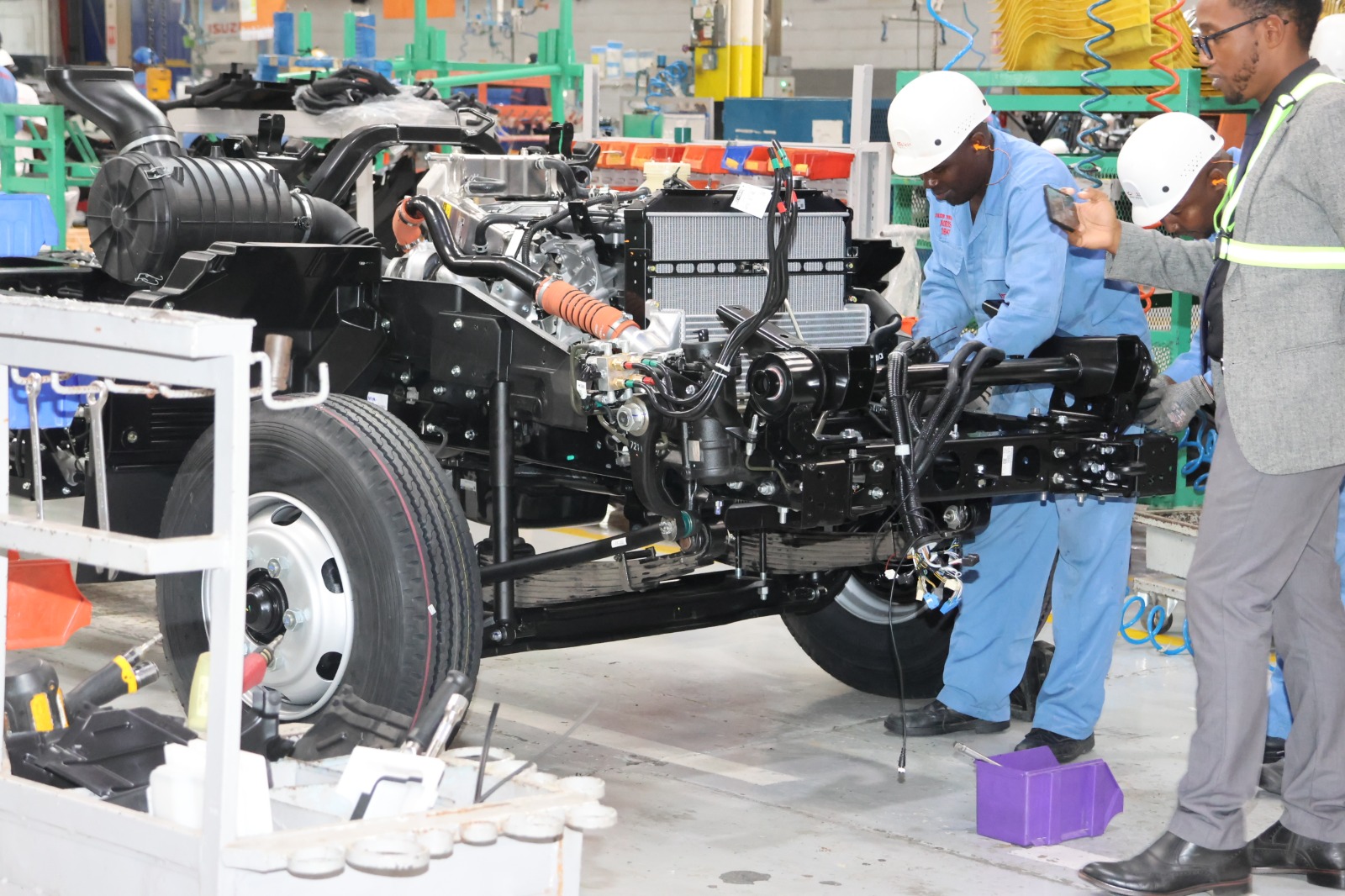
At the Tema assembly plant operated by Japan Motors, which assembles brands including Nissan, Foton, Peugeot and Geely, management said expansion plans have slowed because of the tax change.
Emmanuel Jason-Solomon Penneh, Vehicle Assembly Plant Manager, said the company had hoped to exceed last year’s production output of nearly 1,500 vehicles, but higher prices have weakened demand.
“Removing the VAT exemption has reduced local production and made our prices less competitive,” he said.
He noted that the plant currently produces about 138 vehicles a month, a level industry operators believe could rise significantly if demand is supported by a more predictable incentive regime.
The industry’s argument is straightforward. Local assembly plants need scale to survive. Without enough demand, plants operate below capacity, unit costs remain high and the case for further investment becomes weaker.
For a young industry, incentives are not merely tax giveaways. They are part of the policy scaffolding required to help local manufacturing compete against fully built imported vehicles, many of which come from mature production systems with stronger supply chains and lower per-unit costs.
Assemblers argue that restoring the VAT exemption would improve affordability, increase sales, boost plant utilisation and create a stronger base for skills development and supplier participation.
A functioning automotive industry can support jobs in engineering, logistics, component supply, maintenance, distribution, finance and after-sales services. It can also help Ghana reduce its dependence on imported finished vehicles while building industrial capabilities that can feed into wider manufacturing.
That is why the sector has become an important test of Ghana’s industrial policy credibility.
For years, policymakers have spoken about moving the economy beyond raw commodity dependence into manufacturing and value addition. Vehicle assembly is one of the few sectors where that ambition has attracted visible private investment from global brands and local partners.
The question now is whether the policy environment can sustain that investment.
Industry operators say taxation is only one of several challenges. Manufacturers also point to logistical bottlenecks at the ports, particularly delays in clearing imported parts and components.
Officials at Toyota Tsusho Manufacturing Company Limited said prolonged clearance times remain a major operational challenge, affecting inventory planning and disrupting production schedules.
For assembly plants, delays in component clearance can have serious consequences. Manufacturing depends on timing, sequencing and predictable supply. When parts are stuck at the port, production lines can slow down or stop, increasing costs and reducing efficiency.
These operational pressures are particularly difficult in a market where demand is already sensitive to price increases.
The developments highlight the policy dilemma facing government. On one hand, the state is under pressure to mobilise revenue and broaden the tax base. On the other hand, industrialisation requires targeted support, especially in sectors where local producers face intense competition from imports.
The challenge is to design incentives that support production without creating permanent fiscal leakages.
For vehicle assemblers, the VAT exemption should be viewed as an investment in industrial capacity, not a loss to the treasury. Their case is that a stronger local industry will eventually generate more revenue through jobs, corporate taxes, income taxes, supplier development and higher economic activity.
Government, however, must ensure that any restored incentive delivers measurable outcomes.
A revised framework could link tax benefits to production volumes, local employment, skills transfer, after-sales support, local sourcing targets and investment commitments. That would help ensure that incentives reward genuine manufacturing activity rather than simple assembly without wider economic benefits.
Public procurement can play a role if state agencies prioritise locally assembled vehicles where quality, price and service conditions are competitive. Financing arrangements could also help households, businesses and transport operators purchase locally assembled vehicles over longer repayment periods.
Without such support, Ghana’s automotive policy could lose momentum.
The country has already taken important steps by attracting assemblers and setting up a framework for the industry. But early-stage manufacturing requires consistency. Frequent policy changes create uncertainty, and uncertainty discourages investors from expanding capacity.
The warning from vehicle assemblers should therefore be treated seriously.
Ghana cannot build an automotive industry if locally assembled vehicles are priced out of the market. It also cannot attract long-term investment if manufacturers believe incentives can be withdrawn before the industry reaches scale.
Government must protect revenue, but it must also recognise that industrial policy needs patience, consistency and targeted support.
Restoring the VAT exemption, while tying it to clear performance benchmarks, could help revive demand and reassure investors.
For Ghana’s auto industry, the issue is no longer only about tax. It is about whether the country is prepared to back its manufacturing ambitions with the policy discipline needed to make them work.

