

- Weak Tobacco Tax Design Fuels Consumption as Ghana’s Health Costs Near GH¢1bn
Ghana’s tobacco control strategy is being weakened by structural flaws in tax policy that continue to keep cigarettes relatively affordable, even as the country faces rising health costs, productivity losses and a growing burden from non-communicable diseases.
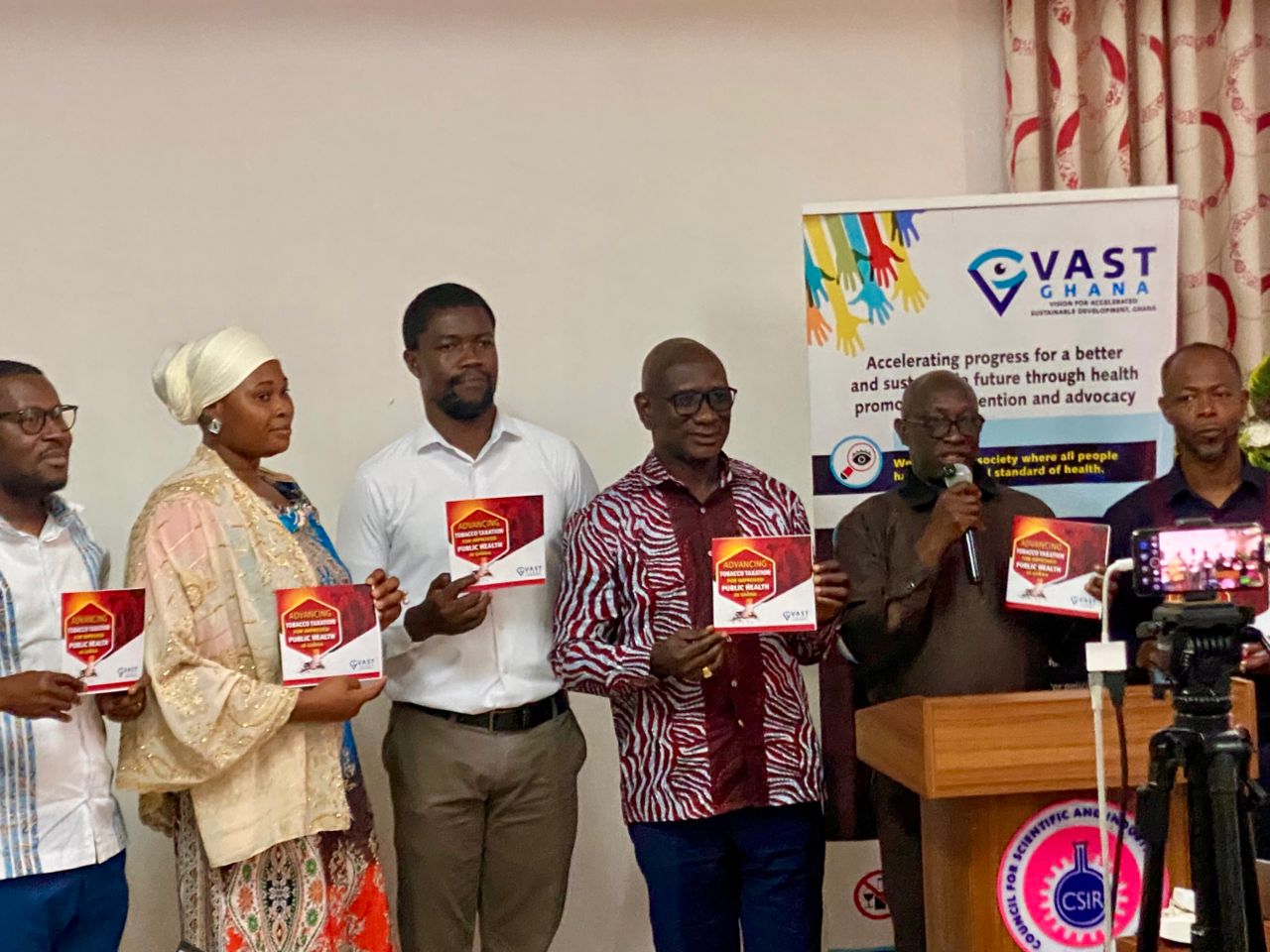
At a Stakeholders Strategic Meeting on Advancing Tobacco Taxation in Ghana, Michael Kofi Boachie, PhD, of PRICELESS SA at the School of Public Health, University of the Witwatersrand in Johannesburg, warned that Ghana risks reversing public health gains unless tobacco taxes are made stronger, more consistent and responsive to inflation and income growth.
“Tobacco taxation works but only when it is strong, consistent, and designed to outpace income growth and inflation,” he said.
Data presented at the meeting showed that tobacco use continues to impose a rising economic burden on Ghana through increased cases of non-communicable diseases, higher healthcare spending and significant productivity losses.
At the centre of the challenge is affordability. Despite tax increases in recent years, Ghana scored 0.00 on affordability change, meaning cigarettes are becoming more affordable over time. As incomes rise and taxes remain either static or weakly adjusted, tobacco products effectively become cheaper in real terms, undermining the deterrent effect of taxation.
For policymakers, the implication is stark: Ghana may be taxing tobacco, but not yet taxing it in a way that meaningfully suppresses consumption over time.
Comparative regional data presented by Dr Boachie showed that Ghana’s score for tobacco taxation stands at 1.63, well below countries such as Mauritius and Seychelles, which scored 3.13. The gap reflects weaker performance in pricing, tax share and overall tax policy effectiveness.
The weakness is significant because empirical evidence suggests that tobacco demand in Ghana is price responsive. Elasticity estimates presented at the meeting ranged from -0.35 to -0.52, meaning a 10 per cent increase in cigarette prices could reduce consumption by up to 5 per cent.
“Young populations show reductions of up to 7 per cent which is critical for preventing long-term addiction,” Dr Boachie noted.
Global evidence reinforces the case for stronger taxation. According to data cited at the meeting, a meta-analysis of 86 studies found an average price elasticity of -0.48, confirming that tobacco taxation remains one of the most effective instruments for reducing consumption and protecting public health.
Crucially, the effect is not merely punitive. It is also progressive. Lower-income groups, who are often most vulnerable to the health and financial effects of tobacco use, tend to be more responsive to price increases. This means stronger tobacco taxes can help reduce consumption faster among poorer households, producing long-term gains through lower medical expenses, improved health outcomes and higher disposable income.
Simulation models specific to Ghana suggest that stronger tobacco taxation could significantly reduce smoking prevalence, prevent more than 20,000 premature deaths, and generate substantial savings in healthcare and productivity losses.
“These are not just health gains; they are economic gains that affect national development and human capital,” Dr Boachie said.
Yet Ghana’s current tobacco tax structure remains below global best practice. Total tobacco taxes account for about 47 per cent of retail price, far below the 75 per cent
That gap leaves Ghana exposed to a policy trap in which economic growth, rising incomes and weakly indexed taxes gradually make cigarettes more affordable, even when nominal taxes increase. Without inflation-adjusted excise rates and stronger price policies, tobacco control risks being overtaken by the very income growth that should support public welfare.
Health-policy advocates are therefore urging government to redesign the tobacco tax regime to make it less vulnerable to inflation, income growth and industry pricing tactics. Key reforms include indexing excise taxes to inflation and income growth, increasing the total tax share toward international best practice, strengthening the specific excise component, and improving enforcement to prevent illicit trade.
The economic argument is becoming harder to ignore. Ghana is already under fiscal pressure from healthcare demands, youth unemployment, infrastructure financing needs and domestic revenue constraints. A stronger tobacco tax regime offers government a rare policy instrument that can raise revenue while reducing future public health costs.
But the window for action may be narrowing. If cigarettes remain affordable, consumption could persist, addiction among young people could deepen, and the future burden of tobacco-related disease could rise further.
For Ghana, the tobacco tax debate is no longer only about smokers or public health campaigners. It is increasingly about fiscal discipline, human capital protection and the long-term cost of weak policy design.

