

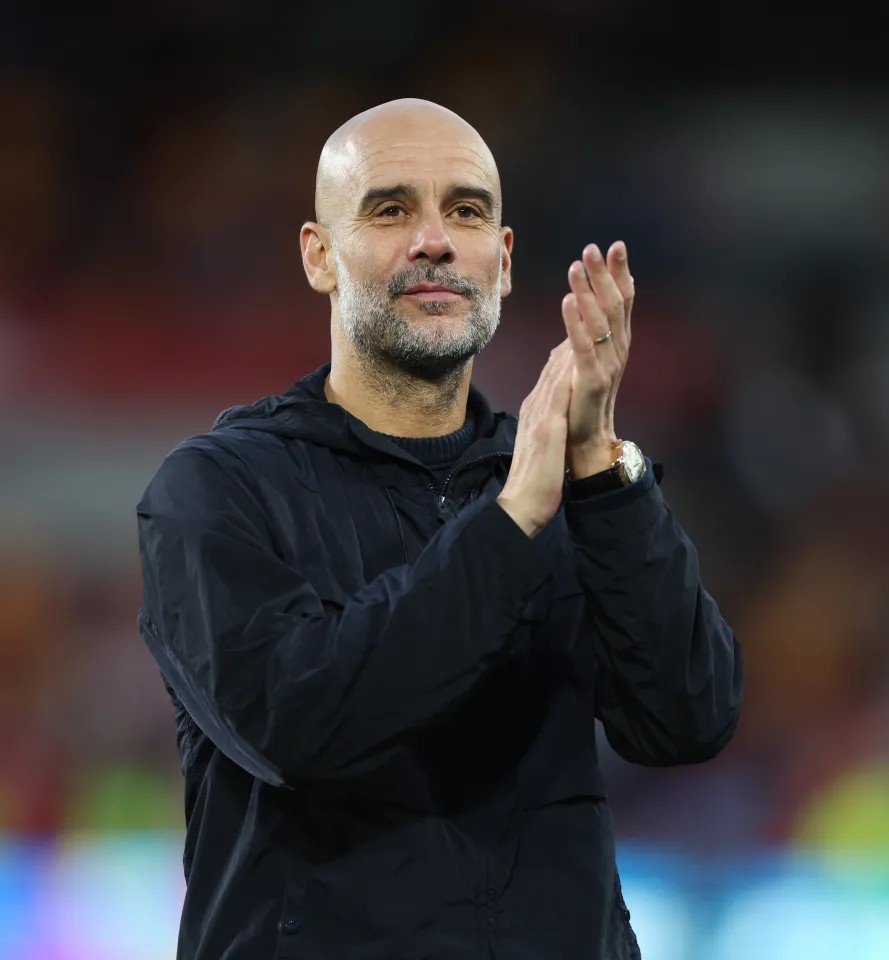

- When the Maestro Bows Out: Guardiola and the End of City’s Golden Symphony
The final notes of one of football’s most extraordinary modern eras may be beginning to fade, with Manchester City preparing for the possible departure of Pep Guardiola after a decade that transformed the club from a domestic powerhouse into one of the defining football dynasties of the age.
City have not formally announced Guardiola’s exit, and the Catalan has publicly insisted that no final decision has been made. But reports in England say the club are preparing for his departure after Sunday’s final Premier League match against Aston Villa, with former assistant Enzo Maresca among the names linked with succeeding him.
If this is indeed farewell, Guardiola will leave the Etihad Stadium not merely as a serial trophy winner, but as the architect of a footballing revolution that reshaped the rhythm, structure and ambition of English football.
When Guardiola arrived in Manchester in 2016 after celebrated spells with Barcelona and Bayern Munich, the expectations were immense. City had already become a major force in English football, but they were still searching for the kind of European authority and stylistic identity that could place them among the game’s most enduring institutions. Guardiola gave them both.
Across 10 seasons, he built a team that did not simply win. It overwhelmed, controlled, suffocated and mesmerised. Manchester City under Guardiola became a machine of technical beauty and competitive brutality a side that treated possession not as decoration, but as domination.
The numbers tell one part of the story. Guardiola has won 17 major trophies and 20 trophies in all during his Manchester City reign, including six Premier League titles and the UEFA Champions League, which arrived in 2023 as part of the club’s historic treble.
That treble placed City alongside Manchester United as the only English clubs to complete the Premier League, FA Cup and Champions League sweep. It was more than a season of success; it was a symbolic shift in Manchester’s football geography.
His football became a language. Goalkeepers were no longer just shot-stoppers but first playmakers. Centre-backs became midfield conductors. Full-backs stepped inside to control space. Midfielders drifted between lines with the precision of chess pieces. Possession was not passive; it was a weapon.
At his best, Guardiola made football feel choreographed without stripping it of imagination. His teams attacked with order, pressed with aggression and defended by refusing to give the ball back.
He constantly reinvented before the rest of the league could catch up. One version of City conquered England without a traditional striker. Another turned defenders into midfielders and midfielders into false forwards. In Guardiola’s hands, tactical evolution became performance art.
His influence has also extended beyond the touchline. Mikel Arteta, Enzo Maresca and others who worked under him have carried elements of his ideas into their own managerial careers, while former players such as Vincent Kompany have also absorbed parts of the Guardiola method.
Every great era requires a rival, and Guardiola’s defining English rivalry came against Jürgen Klopp’s Liverpool. Their title races stretched the Premier League’s competitive ceiling, producing football of such intensity that even second place could feel historically excellent.
Beyond the pitch, Guardiola remained an animated and often outspoken figure — emotional, demanding, politically aware and fiercely protective of his players. Yet on the grass, he always returned to the principles shaped by Johan Cruyff: the ball as control, space as power, courage as method.
Cruyff planted the seed. Guardiola made it bloom across Europe.
Now, if Sunday against Aston Villa becomes the final curtain, Manchester City will be saying goodbye to more than a manager. They will be saying goodbye to the man who gave the club its most complete football identity. The question for City is no longer whether Guardiola changed them. He did. Completely.
The question is whether any successor can preserve the standards he made normal. For English football, his exit would mark the end of an age in which one manager forced an entire league to think differently about space, pressing, build-up play and control.
And when the maestro finally walks away from the Etihad stage, he will leave behind not silence, but an echo, one that may shape football long after his final whistle in Manchester.

