


- World Cup Eludes Ronaldo, But Portuguese Icon’s Legacy Remains Untouchable
Cristiano Ronaldo’s dream of lifting the FIFA World Cup has officially come to an end, but football observers insist the absence of the sport’s biggest prize does little to diminish the remarkable legacy of one of the greatest players ever to grace the game.
Portugal’s dramatic 1-0 defeat to Spain in the Round of 16 on Monday marked the final World Cup appearance of the 41-year-old superstar, bringing the curtain down on a journey that spanned six tournaments and two decades.
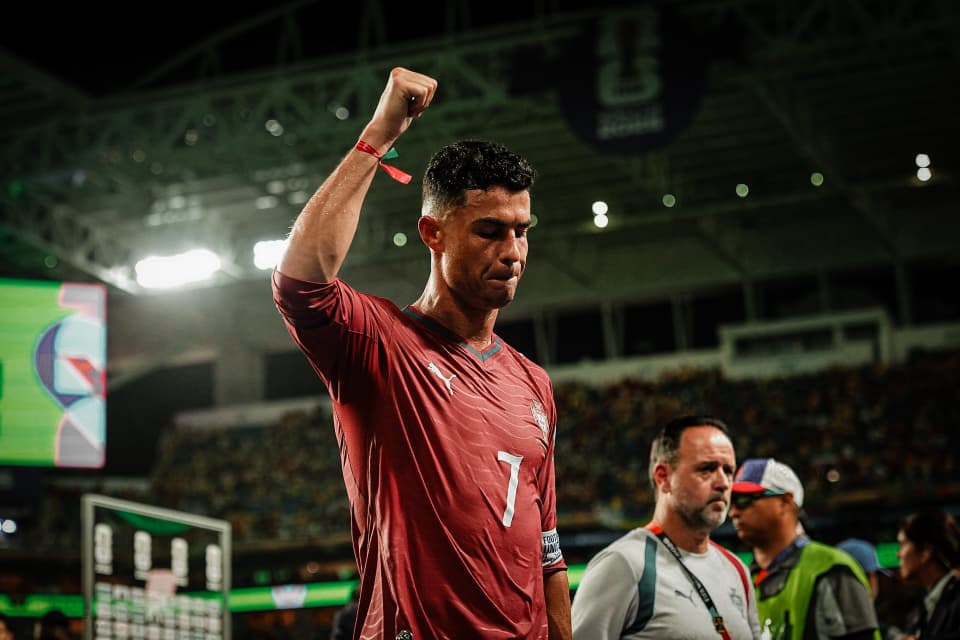
As the final whistle sounded in Arlington, Ronaldo stood motionless with his hands on his hips before applauding the crowd through visible emotion, knowing his final opportunity to conquer football’s grandest stage had slipped away.
The defeat was another painful chapter in a World Cup career that produced unforgettable moments but ultimately fell short of the ultimate prize.
A World Cup career filled with highs and heartbreak. Ronaldo’s World Cup journey began in 2006 when, as a 21-year-old, he helped Portugal reach the semi-finals in Germany—the nation’s best finish during his time with the national team.
That tournament showcased his immense potential as he scored against Iran and calmly converted the decisive penalty in the quarter-final shootout victory over England. However, Portugal were eventually eliminated by France in the semi-finals.
Four years later in South Africa, expectations were sky-high following Ronaldo’s emergence as one of the world’s finest players. Instead, Portugal were knocked out by eventual champions Spain in the Round of 16, with Ronaldo scoring just once during the tournament.
The disappointment continued in Brazil in 2014. Hampered by injury after an exhausting club season with Real Madrid, Ronaldo struggled to inspire Portugal, who exited in the group stage despite his late winner against Ghana.
The 2018 World Cup in Russia appeared to offer renewed hope. Ronaldo announced himself with a spectacular hat-trick against Spain before adding the winner against Morocco. However, Portugal’s campaign ended in another Round of 16 defeat, this time against Uruguay.
At the 2022 tournament in Qatar, Ronaldo found himself facing increasing competition for a starting place. He scored once from the penalty spot but was dropped for Portugal’s knockout victory over Switzerland before returning as a substitute in the heartbreaking quarter-final defeat to Morocco.
His final World Cup in 2026 provided flashes of vintage brilliance. Ronaldo scored three goals, including his first-ever goal in a World Cup knockout match—a penalty against Croatia—and became the first player to score in six different World Cups.
Yet Portugal’s campaign ended once again before the quarter-finals following Spain’s late winner.
Although the World Cup trophy eluded him, Ronaldo leaves the tournament with an impressive record of 11 World Cup goals, placing him among the competition’s highest scorers.
More importantly, his overall career statistics remain unmatched in many areas of world football.
Ronaldo is the highest goalscorer in the history of men’s international football with 146 goals and also holds the record for the most international appearances. At club level, he remains the all-time leading scorer for Real Madrid and the UEFA Champions League’s record goalscorer.
Across a career spanning Sporting CP, Manchester United, Real Madrid, Juventus, Al-Nassr and Portugal, he has accumulated more than 830 club goals while winning league titles in England, Spain and Italy, five UEFA Champions League crowns, five Ballon d’Or awards and numerous domestic and international honours.
World Cup did not define Ronaldo
Throughout his career, comparisons between Ronaldo and Argentina captain Lionel Messi often centred on the World Cup.
While Messi fulfilled his dream by leading Argentina to the title in 2022, many believe Ronaldo’s inability to achieve the same should not overshadow everything else he accomplished.
Football’s biggest tournament is often regarded as the pinnacle of the sport, but its four-year cycle means even the greatest players have only a handful of opportunities to compete for the trophy. Injuries, timing, teammates and difficult draws all influence success as much as individual brilliance.
For Ronaldo, Portugal’s strongest generation arguably emerged just as he was entering the latter stages of his career, limiting his chances of lifting the famous trophy.
Unlike some of his previous international tournaments, Ronaldo appeared determined to enjoy every moment of his final World Cup.
He remained an inspirational figure within Roberto Martínez’s squad, celebrated passionately with teammates after Portugal’s victory over Croatia and embraced supporters throughout the tournament.
Before facing Spain, Ronaldo admitted he wanted to savour every experience because he knew it would be his final World Cup.
“The day will come,” he had said before the match, referring to retirement. “Whatever happens, I leave with a clear conscience because I have given everything to football.”
Portugal’s exit may have ended Ronaldo’s World Cup story without the fairytale ending he desired, but it does not alter his place among football’s immortals.
His World Cup dream may have remained unfulfilled, yet the records, trophies, unforgettable performances and extraordinary longevity ensure Cristiano Ronaldo’s name will forever remain one of the defining figures in the history of the beautiful game.

