

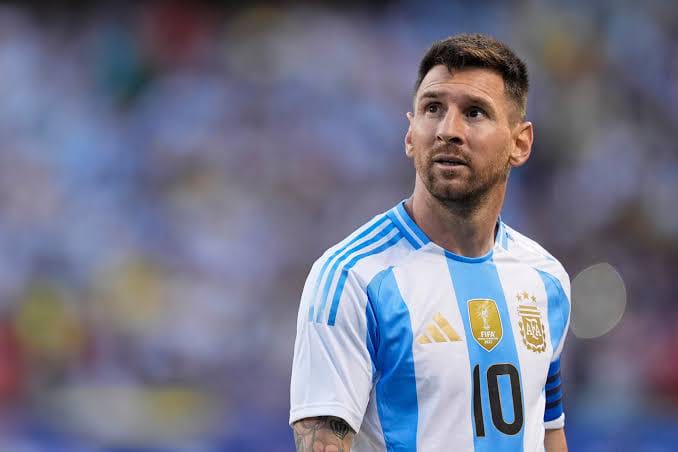

- Messi, Jairzinho Headline World Cup’s Greatest Golden Boot Near Misses as 2026 Scoring Race Heats Up
As the race for the Golden Boot at the 2026 FIFA World Cup gathers momentum, football fans are once again being reminded that scoring goals alone does not always guarantee the tournament’s most coveted individual prize.
With Argentina captain Lionel Messi and France superstar Kylian Mbappé leading the scoring charts on six goals apiece heading into the latter stages of the tournament, history suggests the battle for the Golden Boot could yet produce another dramatic twist.
The World Cup has witnessed several remarkable instances where prolific strikers finished among the tournament’s top scorers but still walked away without the Golden Boot, often because another player produced an extraordinary late surge or edged them on assists.
Perhaps no player better embodies that heartbreak than Messi himself. During the 2022 World Cup in Qatar, the Argentine icon scored seven goals and appeared destined to win the Golden Boot while simultaneously guiding his country to the final. However, Mbappé’s sensational hat-trick in the championship match lifted the French forward to eight goals, snatching the award despite France falling short in the title decider.
Messi nevertheless enjoyed the greater reward, lifting the World Cup trophy and being named the tournament’s best player after inspiring Argentina to their third global crown.
Before Messi, Brazilian legend Jairzinho had experienced a similar fate. The electrifying winger scored seven goals during Brazil’s memorable triumph at the 1970 World Cup, finding the net in every match. Yet even that incredible feat was eclipsed by West Germany striker Gerd Müller, who struck 10 times, including two hat-tricks, to secure the Golden Boot.
Goal-fests that denied football’s greatest stars
The high-scoring tournaments of the 1950s produced several outstanding individual campaigns that still failed to earn football’s top scoring honour.
At the 1954 World Cup, Switzerland’s Josef Hügi, West Germany’s Max Morlock and Austria’s Erich Probst each scored six goals. Yet they were all comfortably outscored by Hungary’s legendary striker Sándor Kocsis, who finished with a remarkable 11 goals.
Four years later, Brazilian teenage sensation Pelé and West Germany’s Helmut Rahn both managed six goals, but neither could get close to France’s phenomenal Just Fontaine, whose record haul of 13 goals in a single World Cup remains unmatched.
Among the tournament’s unluckiest forwards is Dutch striker Rob Rensenbrink. In the 1978 final, his stoppage-time effort struck the post with the score level. Had the shot gone in, the Netherlands would likely have won the World Cup, while Rensenbrink would also have overtaken Argentina’s Mario Kempes for the Golden Boot.
Assists decide ties
Modern World Cups have also shown that assists can prove just as decisive as goals when players finish level.
At the 2010 tournament, Uruguay’s Diego Forlán, the Netherlands’ Wesley Sneijder and Spain’s David Villa all scored five goals, matching Germany’s Thomas Müller. Müller claimed the Golden Boot thanks to a superior assist tally.
The same tie-breaking rule has shaped the women’s competition. In 2019, American stars Alex Morgan and Megan Rapinoe, alongside England’s Ellen White, each scored six goals. Rapinoe ultimately secured the Golden Boot after registering more assists than her rivals.
Earlier tournaments also saw Germany’s Heidi Mohr score seven goals in 1991 without finishing as the leading scorer, while Abby Wambach and Norway’s Ragnhild Gulbrandsen both missed out in 2007 despite netting six times.
Pointless World Cup campaigns
The expanded 2026 World Cup also added new names to another unwanted list—teams leaving the tournament without earning a single point.
Tournament newcomers Jordan and Uzbekistan both exited after losing all three group matches, joining countries such as China, Togo, the United Arab Emirates and Indonesia among nations that have failed to collect a point in a World Cup campaign.
Haiti, Iraq and Panama have now endured two consecutive pointless World Cup appearances, each losing all six matches they have played across two tournaments.
El Salvador continues to hold the unfortunate record. The Central American nation lost all six of its World Cup matches across the 1970 and 1982 editions, including a historic 10-1 defeat to Hungary, and owns the worst overall goal difference of any team in World Cup history.
Historic first victories
The tournament also revived memories of some of the most emphatic first victories ever recorded at the World Cup.
Canada celebrated their maiden World Cup win in style by defeating Qatar 6-0 during the 2026 tournament, but history shows even larger debut triumphs.
Italy announced themselves on the global stage with a 7-1 victory over the United States in their opening match at the 1934 World Cup, while Turkey crushed South Korea 7-0 for their first World Cup victory in 1954.
Russia also enjoyed a memorable breakthrough in 1994, thrashing Cameroon 6-1 as striker Oleg Salenko scored an astonishing five goals in a single match.
All eyes on the 2026 Golden Boot race
With the knockout stages now intensifying, the race for the Golden Boot remains finely balanced. Messi and Mbappé have established themselves as the leading contenders, but history has repeatedly shown that fortunes can change dramatically over the final rounds of the World Cup.
Whether the tournament crowns a new scoring king or produces yet another memorable near miss, the race for football’s most prestigious individual scoring honour promises to remain one of the defining stories of the 2026 FIFA World Cup.

