


- USAID Shutdown Could Push 5.7 Million Africans Into Poverty
The President of Ghana has warned that the shutdown of the United States Agency for International Development risks pushing about 5.7 million Africans into poverty by the end of 2026, as donor-backed health and social protection programmes unravel across the continent.
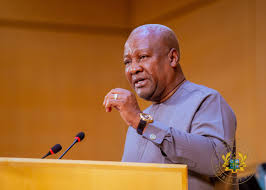
Speaking at the 79th World Health Assembly in Geneva, Switzerland, President Mahama said the suspension of major US aid interventions had created a serious threat to Africa’s fragile health systems, economic resilience and broader development agenda.
He said the consequences would go beyond health delivery, warning that reduced aid flows could deepen inequality, weaken household welfare and worsen socio-economic conditions across low-income communities.
“It is estimated that the direct consequences of this aid suspension could push about 5.7 million Africans into poverty by the end of 2026,” President Mahama stated.
His warning comes amid growing concern that the closure of USAID-backed programmes will leave major funding gaps in countries that have relied on donor support for healthcare, agriculture, education, governance and social protection for decades.
The President said programmes linked to the US President’s Emergency Plan for AIDS Relief had been particularly affected, creating uncertainty for millions of vulnerable people who depend on donor-supported treatment and care systems.
“In South Africa alone, about 1.4 million HIV patients are facing uncertainty due to disruptions in treatment support,” he said.
The concern is not limited to HIV treatment. President Mahama also warned that continued reductions in global development assistance could contribute to nearly nine million preventable deaths globally by 2030, particularly in regions where health infrastructure is already under pressure.
For Africa, the warning is especially significant because many countries still depend on external financing for critical disease control, maternal and child health, nutrition, vaccine delivery and rural health programmes.
In Ghana’s case, President Mahama disclosed that the country had lost about US$78 million in health funding following the closure of US aid programmes. He said the affected funding had supported malaria programmes, maternal and child health, nutrition, HIV/AIDS interventions, testing and the delivery of antiretroviral drugs.
That loss highlights the wider vulnerability facing African health systems. For years, donor financing has helped close gaps in public health delivery, especially where domestic budgets have been constrained by debt service, weak revenue mobilisation and competing expenditure demands.
But the retreat of large-scale external aid is now forcing African governments to confront a difficult question: how quickly can they replace donor money with sustainable domestic financing?
President Mahama’s remarks suggest that the answer cannot simply be to mourn the loss of aid. At the same World Health Assembly, he argued that countries must build systems where health is not treated as a byproduct of charity but as the outcome of sovereign capability.
That position captures the tension facing African policymakers.
On one hand, the sudden withdrawal of major donor support can create immediate disruption, especially for people living with HIV, pregnant women, children, rural communities and low-income households that depend on publicly supported health services.
On the other hand, the crisis exposes a long-standing structural weakness: essential health programmes remain too exposed to donor priorities, foreign political cycles and external budget decisions.
For governments, the policy implication is clear. Health financing must become more predictable, domestically anchored and protected from fiscal shocks.
That will require stronger revenue mobilisation, better targeting of public expenditure, improved health insurance systems, investment in local pharmaceutical capacity, stronger procurement systems and greater accountability in the use of health funds.
The challenge, however, is that the aid cuts are arriving at a difficult moment.
Several African economies are still recovering from the combined impact of the COVID-19 pandemic, debt distress, currency depreciation, food inflation and tighter global financing conditions. Many governments are under pressure to reduce deficits while still funding education, infrastructure, energy, security and social protection.
In such an environment, replacing donor-funded health programmes will not be easy.
Development economists have cautioned that the withdrawal of large-scale aid support could expose deep structural weaknesses in African economies where critical public services remain heavily dependent on external grants and technical assistance.
The shutdown of USAID operations, expected to formally take effect from July 2025, would mark the end of more than six decades of US-backed development assistance in many countries. Its implications are therefore not only financial but institutional.
USAID-funded programmes often supported logistics, data systems, training, disease surveillance, community health interventions and supply chains. Losing that support could weaken the invisible infrastructure behind frontline health delivery.
For Africa, the risk is that reduced aid may not immediately appear as a fiscal crisis, but as a quiet deterioration in public health outcomes: missed treatments, delayed diagnostics, weakened disease surveillance, higher maternal risks, more untreated infections and rising preventable deaths.
President Mahama therefore called for stronger global cooperation and sustainable financing mechanisms to protect vulnerable populations, arguing that Africa cannot afford a prolonged retreat in international development support while poverty, food insecurity and healthcare challenges remain elevated.

