

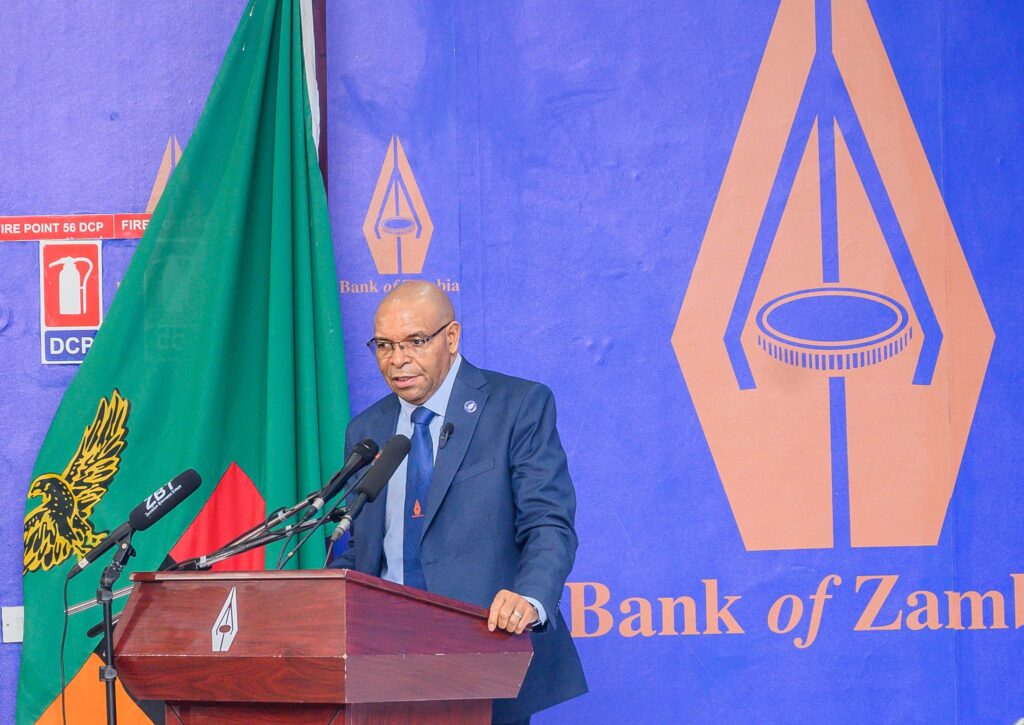

- Zambia Cuts Policy Rate for Third Consecutive Time as Inflation Eases
Zambia’s central bank has cut its benchmark interest rate for the third consecutive time, signalling growing confidence that inflationary pressures are easing in one of Southern Africa’s key copper-producing economies. The Bank of Zambia reduced its main monetary policy rate by 25 basis points to 13.25%, from 13.5%, in a move that surprised analysts who had largely expected policymakers to keep rates unchanged.
Governor Denny Kalyalya said the decision reflected slowing inflation, relative stability in the Zambian kwacha, and expectations of a strong maize harvest, which authorities believe could help contain food prices in the months ahead.
Annual inflation slowed to 6.8% in April, from 7.1% previously, keeping it within the central bank’s 6% to 8% target band for a second consecutive month.
The rate cut marks another step in Zambia’s cautious shift from monetary tightening to policy support after an extended period of elevated borrowing costs aimed at stabilising prices and protecting the local currency. The decision also suggests that policymakers see enough room to support economic activity without immediately risking renewed inflationary pressure.
For Zambia, the easing cycle comes at a delicate moment. The economy has benefited from improving inflation dynamics and stronger external buffers but remains exposed to global shocks, particularly through fuel, fertiliser, food and commodity markets.
The central bank warned that geopolitical tensions in the Middle East continue to pose upside risks to inflation, especially if global fuel and food prices rise further. Mr Kalyalya described the latest adjustment as “cautious”, reflecting uncertainty over how the conflict could affect commodity markets and domestic prices.
The Zambian government has also moved to cushion households and businesses from energy-price pressures, suspending selected fuel taxes and zero-rating value-added tax on fuel products through June.
The Bank of Zambia now expects inflation to average 6.8% in 2026 before easing further to 6.1% in 2027, supported by stronger agricultural output and improving foreign exchange reserves.
Foreign exchange reserves rose to approximately US$6.2 billion at the end of March, giving policymakers additional comfort as they manage the trade-off between supporting growth and preserving macroeconomic stability.
Zambia’s rate cut places it among a smaller group of emerging-market economies easing monetary policy at a time when many central banks remain cautious because of persistent global inflation risks and geopolitical instability.
The country’s improving inflation profile is also important for credit conditions. Lower policy rates could gradually reduce borrowing costs for businesses and households, although transmission may depend on banking-sector liquidity, risk appetite and the pace at which commercial lenders adjust pricing.
For investors, the decision signals that Zambia’s disinflation path is becoming more credible. But the central bank’s cautious tone also suggests that policy easing will remain data-dependent, especially if external pressures intensify.
The wider economic test will be whether lower inflation, a stable currency and improved agricultural output can translate into stronger private-sector activity, investment and job creation.
Zambia’s economy remains heavily linked to copper, and the performance of the mining sector will continue to shape fiscal revenues, foreign exchange flows and investor confidence. But food-price stability is equally important, particularly in an economy where household welfare and inflation expectations remain sensitive to agricultural output.
The third consecutive rate cut therefore reflects a central bank trying to carefully rebalance policy: easing enough to support growth, but not so aggressively that it undermines hard-won price stability.

