

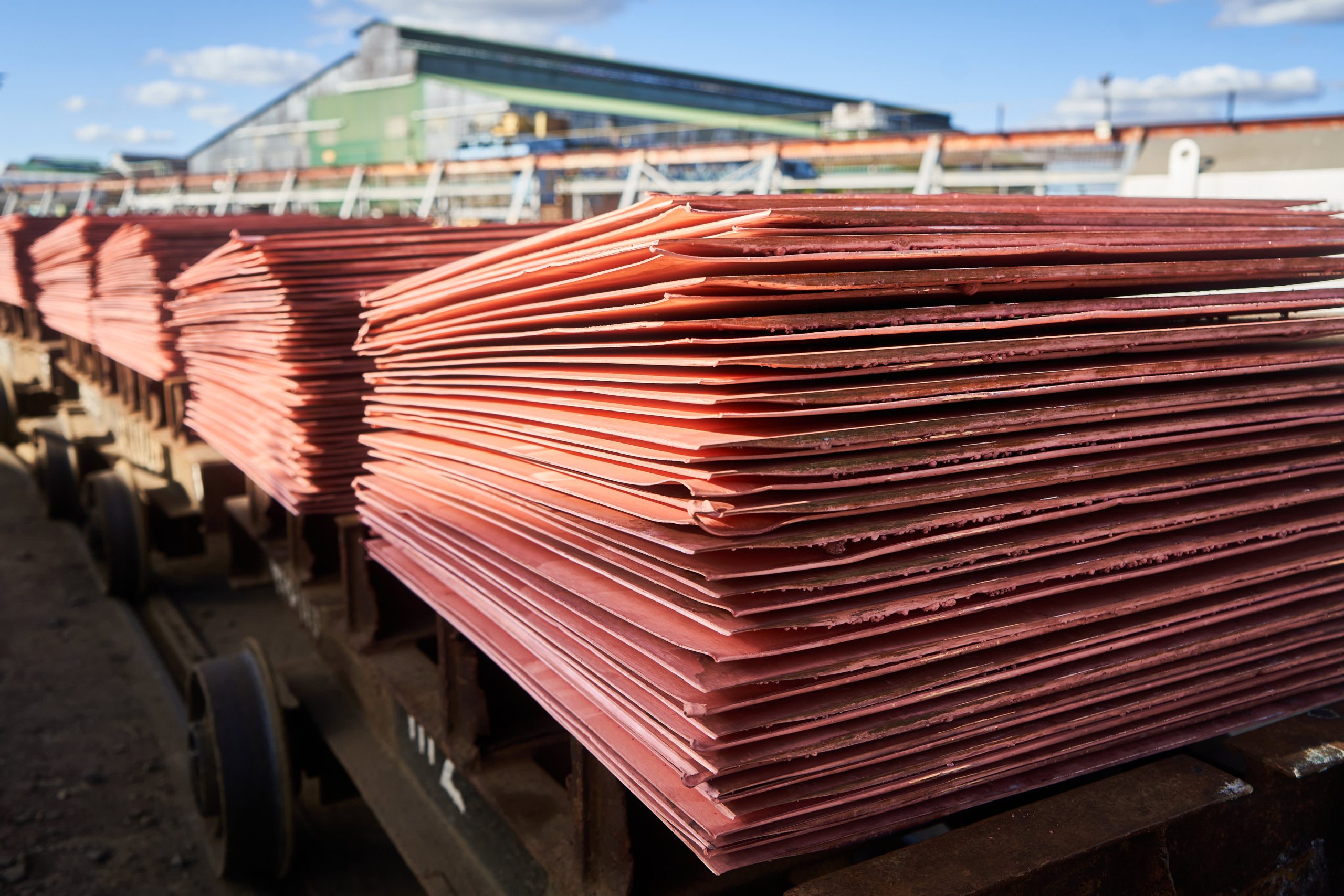

- Zambia’s Copper Future Draws Wall Street as CopperTech Targets US$423.50 million IPO
Vedanta-backed CopperTech Metals is turning to Wall Street to help finance a major expansion of Zambia’s Konkola Copper Mines, in a move that could accelerate the country’s push to become one of the world’s most important copper producers in the energy transition era.
CopperTech Metals, a United States-domiciled copper and cobalt producer created by Vedanta Resources, is targeting a valuation of up to US$3.57 billion in a planned initial public offering in New York. The company plans to offer 23.50 million shares at between US$16 and US$18 each, potentially raising about US$423.50 million.
Of the expected net proceeds, about US$372.00 million is earmarked for the development of the company’s Zambian copper mining complex, according to the Business Insider Africa report.
The listing is expected on the New York Stock Exchange under the ticker symbol “CUX”, positioning CopperTech to tap investor appetite for critical minerals at a time when copper demand is being driven by artificial intelligence infrastructure, grid expansion, electric vehicles, renewable energy and defence-related industrial demand.
The IPO is not merely a corporate financing exercise. It is a test of Zambia’s copper strategy, Vedanta’s rehabilitation plan for Konkola and global capital markets’ willingness to fund African critical minerals assets through public equity.
CopperTech operates Konkola Copper Mines in Zambia’s Copperbelt, one of the country’s most important copper assets. Vedanta owns 79.00% of the operation, while Zambia’s state investment vehicle ZCCM Investment Holdings holds the remaining stake.
The proposed listing comes after a turbulent period for Konkola. Vedanta regained control of the asset after Zambia’s previous administration seized the mines in 2019, accusing the company of failing to invest enough to expand production. The dispute triggered years of legal and operational uncertainty before the company returned to control of the asset.
Now, the investment case is being recast around expansion, copper demand and Zambia’s ambition to raise national output.
Zambia, Africa’s second-largest copper producer after the Democratic Republic of Congo, wants to lift copper output to 3.00 million metric tonnes by 2031, from 890,346 tonnes last year. Konkola is expected to be central to that ambition.
CopperTech and Vedanta intend to invest about US$2.70 billion over the next five years to expand production at Konkola. Reuters reports that the project aims to raise output to about 300,000 tonnes by 2031, from 80,215 tonnes last year.
That growth target matters for Zambia.
Copper remains the backbone of the country’s export earnings, fiscal revenue and industrial development strategy. As the global race for critical minerals intensifies, Zambia is seeking to convert geological advantage into jobs, tax revenue, infrastructure investment and stronger state participation.
But the challenge is capital.
Deep copper mining is expensive. Reviving and expanding old assets requires large upfront investment in shafts, processing infrastructure, power, water systems, tailings facilities, underground development and environmental controls.
This is why CopperTech’s Wall Street listing could be strategically important.
ZCCM Investment Holdings has said the IPO could help speed up Konkola’s US$2.70 billion expansion project. Its board chairman, Phesto Musonda, told investors that a listing could cut the project’s ramp-up time by three years.
For Zambia, a faster ramp-up could mean earlier production gains, stronger export receipts and improved confidence in the mining sector.
For Vedanta, the IPO offers a way to raise capital while retaining control of a prized asset at a time when copper is becoming one of the most strategically important metals in the world.
For investors, the offer provides exposure to one of Africa’s major copper jurisdictions through a New York-listed vehicle, rather than a direct private mining investment in Zambia.
That structure may appeal to investors seeking critical minerals exposure with clearer public market disclosure, liquidity and governance requirements.
However, the bet carries risks.
Konkola’s history is complicated. The asset has already been caught in political tension, state intervention and years of underinvestment. Investors will therefore need confidence that Zambia’s regulatory environment is stable, that Vedanta’s ownership structure is durable and that the expansion plan is technically and financially credible.
Zambia has been trying to balance two competing objectives: attracting foreign capital and increasing national benefit from its mineral wealth.
Across Africa, governments are becoming more assertive in mining. Countries want higher local participation, stronger tax take, more domestic processing and better community benefits. At the same time, large-scale mining projects require patient capital and technical capability that many states cannot provide alone.
Zambia’s approach has so far been more partnership-driven than coercive. The country has repeatedly signalled that it wants more value from mining without resorting to forced nationalisation.
That stance is important because capital-intensive projects such as Konkola require investor confidence over decades, not months.
The IPO will also unfold against a global backdrop of intense competition for copper.
Copper is central to electrification. It is needed for transmission lines, data centres, electric vehicles, renewable energy systems, industrial machinery and defence manufacturing. With supply growth constrained in several jurisdictions, high-grade African copper assets are attracting renewed attention.
That gives Zambia leverage, but also responsibility.
If the country gets its mining policy right, it can become one of the leading beneficiaries of the global energy transition. If it mishandles investor relations, fiscal terms or regulatory certainty, capital could shift elsewhere.
The CopperTech listing therefore carries implications beyond Vedanta.
It will be watched by mining investors, African governments, development financiers and critical minerals strategists. A successful IPO could strengthen Zambia’s profile as a destination for global mining capital. A weak listing, or a troubled post-listing performance, could raise fresh questions about risk appetite for African copper assets.
There is also the question of what Zambia gets beyond production volumes.
Higher output is important, but it is not enough. The country must ensure that expansion translates into tax revenue, supplier development, local jobs, skills transfer, environmental safeguards and infrastructure investment.
A US$2.70 billion mine expansion should not only raise copper tonnes. It should deepen Zambia’s industrial base.
That is where policy discipline becomes critical.
Zambia must avoid the old resource economy trap: exporting raw minerals while importing finished value. Copper mining should be linked to local procurement, energy infrastructure, smelting, refining, logistics and manufacturing wherever economically viable.
The CopperTech IPO shows that global markets are ready to attach high value to African mineral assets when they align with the energy transition narrative. The question is whether African host countries can convert that valuation into durable domestic development.
For Vedanta, the listing is also a credibility test.
The company has invested more than US$3.00 billion in Konkola since first acquiring a majority stake in 2004, according to Reuters. It now needs to convince investors that the next phase will deliver operational improvements after years of dispute and underperformance.
CopperTech’s reported net sales rose sharply to US$1.33 billion for the year ended March 31, 2026, from US$398.00 million a year earlier, strengthening the case for investor interest.
But public markets will demand execution.
Investors will track whether the company can meet production targets, control costs, manage regulatory risk and deliver the promised expansion without repeating past tensions.
For Zambia, the opportunity is large.
If CopperTech succeeds, Konkola could become a stronger pillar of the country’s copper output plan and help position Zambia more firmly in the global critical minerals race.
But the country must ensure that foreign capital, Wall Street valuation and local development objectives move together.
The lesson for African mining economies is clear: the energy transition is creating a new scramble for critical minerals, but the winners will not simply be countries with deposits. They will be countries with credible rules, stable partnerships, transparent state participation and a clear plan to turn mineral wealth into national development.
CopperTech’s IPO may be launched in New York, but its real test will be underground in Zambia’s Copperbelt.
That is where the promise of US$372.00 million in fresh development capital must become copper output, worker incomes, public revenue and long-term industrial value.

