


- Guyana’s Economy Expands More Than 19.00% as Oil Output Tops 900,000 Barrels Daily
Guyana’s economy expanded by more than 19% in 2025 as rapidly rising oil production and broad-based non-oil activity sustained one of the world’s fastest growth rates, according to preliminary findings from the International Monetary Fund.
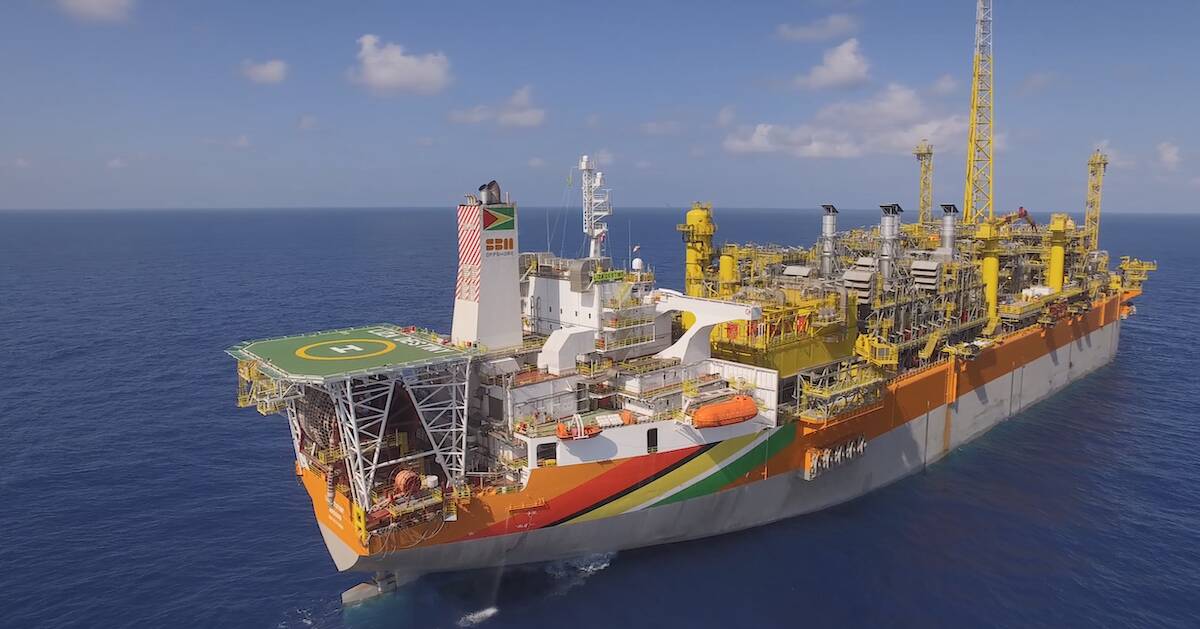
Oil output surpassed 900,000 barrels per day by the end of 2025, representing an annual increase of approximately 35%, with similar production levels maintained during the first half of 2026.
The non-oil economy expanded by about 14%, led by construction, while agriculture, mining and manufacturing also recorded meaningful growth. Unemployment declined to 6.20% by the end of 2025, reflecting the strength of economic activity and labour demand.
The IMF assessment followed its 2026 Article IV mission, conducted virtually and in Georgetown from July 20 to July 31. The findings remain preliminary and will form the basis of a report to be considered by the Fund’s Executive Board.
Guyana’s recent expansion follows average growth of nearly 40% during 2023 and 2024, driven principally by the development of offshore petroleum resources.
Average inflation was contained at 3.30% in 2025 but began to rise by the middle of 2026 as higher global food and energy prices increased domestic costs.
The fiscal deficit narrowed by almost two percentage points to 5.50% of GDP in 2025. Oil revenue more than offset declining non-oil revenue, although the non-oil primary deficit remained large at approximately one-third of non-oil GDP.
The IMF said public investment and private credit had supported the economy, with household and business lending expanding across productive sectors. Strong import demand linked to private investment, however, kept the foreign-exchange market tight.
Guyana’s external position strengthened as rising oil exports and lower oil-related service imports improved foreign-currency inflows.
The Fund said the outlook remained highly favourable, with oil output expected to increase as new fields come onstream and existing projects mature.
The non-oil economy is projected to grow by an average of about 7.00% annually over the next five years, supported by public investment in infrastructure, health, education and other development priorities.
Higher oil prices would further improve export earnings and government revenue. As oil companies complete cost recovery, a larger proportion of petroleum income is also expected to flow into Guyana’s Natural Resource Fund.
The IMF nevertheless warned that rapid growth creates significant policy risks.
Persistently high oil prices and strong public spending could produce overheating, wage pressures and real exchange-rate appreciation, weakening the competitiveness of agriculture, manufacturing and other non-oil industries.
Further oil discoveries would strengthen growth prospects, but greater dependence on petroleum would also increase the economy’s exposure to volatile commodity prices.
The Fund advised the government to save a larger share of additional oil income when prices remain high, taking account of the economy’s limited capacity to absorb rapid increases in expenditure without generating inflation and implementation problems.
The fiscal deficit is expected to widen in 2026 because of social transfers and electricity subsidies before improving in 2027.
The IMF urged the authorities to strengthen the targeting of subsidies and gradually phase out broad price-support measures, which can weaken market signals and create long-term fiscal costs.
Despite the large public investment programme, Guyana maintains one of the lowest debt-to-GDP ratios in the Western Hemisphere, and the risk of debt distress remains low.
The Fund proposed using the non-oil primary balance as the government’s principal operational fiscal target, gradually strengthening it over the next decade to balance current development spending against the interests of future generations.
The banking sector remains well capitalised and liquid, with improving asset quality. Stress tests indicate that banks are resilient under reasonable adverse scenarios.
However, rapid growth in the housing market requires closer monitoring, while the authorities were encouraged to develop a comprehensive macroprudential framework, improve corporate and household balance-sheet data and strengthen cybersecurity standards.
The IMF also called for stronger governance in the petroleum sector, including timely resolution of outstanding cost-oil audits, improved public-enterprise reporting and stronger procurement compliance.
Guyana’s economic transformation remains overwhelmingly positive, but the scale and speed of the oil boom present an unusual policy test.
The country must expand infrastructure and public services while avoiding waste, inflation, excessive import dependence and the weakening of non-oil industries.
The IMF’s assessment suggests that the central challenge is no longer generating growth. It is managing extraordinary oil wealth in a manner that preserves stability, builds a competitive non-oil economy and converts temporary petroleum income into lasting national development.

