


- 2027 Budget Must Spell Out Business Model for Women’s Development Bank — Economist
Ghana’s proposed Women’s Development Bank is emerging as a test of whether government can translate its gender-equity ambitions into a financially credible institution rather than another state-backed lending scheme.
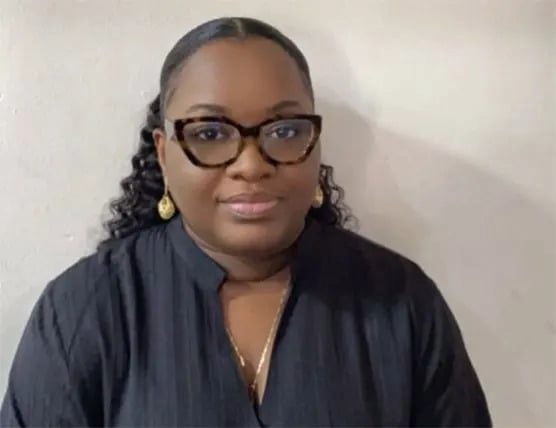
Dr Gloria Afful-Mensah, Senior Lecturer at the University of Ghana’s Department of Economics, says the 2027 Budget should provide far greater clarity on how the bank will operate, who it will serve and how it will fit into the existing financial system.
“It is important that in the 2027 budget we get a more detailed update on where we are with regards to the Women’s Development Bank,” she said.
The government has reportedly applied to the Bank of Ghana for a licence to establish the institution, whose proposed mandate includes low-interest loans and tailored financial services for women-owned and women-led businesses.
The broader ambition is to economically empower at least one million Ghanaian women, but the more difficult policy question is whether a new bank can address the structural reasons women struggle to access capital. The risk is that it reproduces weaknesses associated with previous state-backed credit initiatives rather than solving them.
That means the real policy lies in the operating architecture rather than the name of the institution. Eligibility rules, collateral requirements, risk assessment, interest rates, governance, funding sources, repayment mechanisms and the ability to reach informal businesses will determine whether the bank is commercially useful.
A budget announcement that simply allocates capital without explaining those mechanics would risk turning the initiative into a political commitment rather than a durable financial intermediary.
Afful-Mensah is also concerned about duplication. “You also don’t want to see duplicity in terms of what the various gender desks in the banks are doing and what the Women’s Development Bank is intended to do,” she said.
Her argument is that the new institution should occupy a clearly defined market gap rather than compete with commercial banks for the same relatively bankable female-owned businesses.
Its strongest comparative advantage may therefore lie in financing enterprises that commercial banks often consider too small, too informal or insufficiently collateralised.
That would make the bank an instrument for correcting a market failure rather than simply adding another institution to Ghana’s financial landscape. The distinction will be critical if government wants the initiative to widen access without creating unnecessary duplication.
The wider gender-economics debate also complicates the picture. Ghana recorded economic growth of about 6.80% in the first quarter of 2026, while the services sector expanded by more than 7.00%, but Afful-Mensah argues that aggregate growth figures do not automatically show who is benefiting.
Agriculture provides one example because women’s participation is uneven across subsectors, meaning growth driven by male-dominated activities may not translate proportionately into higher incomes for women.
“If we have growth in the agricultural sector that is propelled by male-dominated subsectors, it means that certain people are left behind and so it is important that we look at the drivers of growth from a gender perspective,” she said. That distinction matters because GDP measures the value of economic activity, not how opportunities and income are distributed. A country can therefore record strong growth while particular groups continue to face weak access to finance, stagnant incomes or limited opportunities.
The same concern applies to services. Afful-Mensah pointed to negative growth in areas such as education and health, where women have significant representation, despite overall services-sector expansion. “Even though the services sector is growing, certain people are left behind. Unfortunately, those sectors with negative growth rates are the sectors that women dominate,” she said.
For government, that means gender-responsive budgeting should move beyond programmes explicitly labelled for women. The 2027 Budget will need to show whether fiscal and financial policies are strengthening the sectors where women actually work, own businesses and earn incomes. The effectiveness of a Women’s Development Bank will therefore depend partly on whether the wider economy creates viable opportunities for the businesses it finances.
The proposed bank also intersects with government’s 24-hour economy agenda. Longer operating hours could create new opportunities for female traders, manufacturers, processors and service providers, but the gains may be limited if women continue to shoulder most unpaid household and care responsibilities.
“If you have a 24-hour market, if a woman is supposed to be there, what happens to the care work, the unpaid care work or domestic work?” Afful-Mensah asked.
That is not merely a social-policy concern because unpaid care work has a direct economic cost. It constrains the time women can devote to businesses, employment, training and investment, which in turn affects productivity and income.
A serious women-focused economic strategy therefore has to consider both access to finance and the time constraints that shape women’s ability to use that finance productively.
The 2027 Budget will consequently need to go well beyond announcing progress on licensing. It should disclose the bank’s capitalisation, ownership structure, governance arrangements, lending mandate, target beneficiaries and relationship with existing banks and state financing programmes. It should also explain how credit risk will be managed because low-interest loans without disciplined underwriting could eventually leave taxpayers absorbing losses.
A stronger model would combine affordable finance with business-development support, digital financial records, credit scoring, market access and financial literacy.
The institution should also be judged by measurable outcomes including the number of women receiving credit, repayment rates, business survival, jobs created, private capital mobilised and the geographical spread of financing.
Those metrics would provide a clearer test of whether the bank is creating economic value rather than merely disbursing public money.
Ghana’s challenge is therefore larger than establishing another financial institution. It is to build a mechanism capable of correcting a persistent financing gap for women without creating institutional duplication, weak underwriting or another channel for fiscal leakage.
As the source concludes, the question is no longer simply whether Ghana will establish a Women’s Development Bank, but whether it can become “the financial infrastructure that turns women’s economic participation into measurable, sustainable growth.”

