


2nd Dep. Governor hails USSD and mobile money as backbone of Africa’s financial inclusion push
Africa’s most significant gains in financial inclusion have been driven not by advanced fintech systems but by simple, widely accessible technologies such as USSD and mobile money platforms, a senior central bank official in Ghana has said.
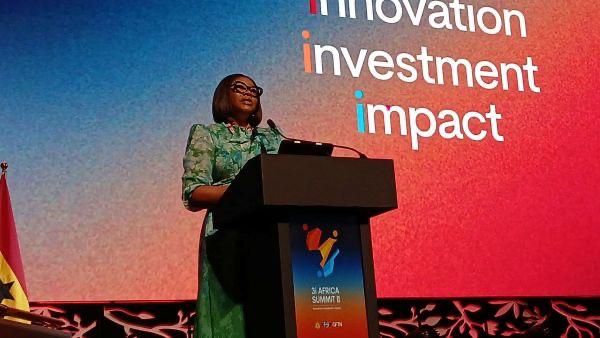
Speaking at the 3i Africa Summit 2026 in Accra, 2nd Deputy Governor of the Bank of Ghana, Matilda Asante-Asiedu of the Bank of Ghana said Africa’s digital finance revolution has been shaped by practical innovation rooted in existing infrastructure rather than imported, high-end systems.
She argued that USSD-based services, which allow users to perform financial transactions on basic mobile phones without internet access, have had a deeper impact on inclusion than many sophisticated digital banking platforms.
“For millions of people, that model has done more for financial inclusion than any sophisticated solution,” she said.
Citing World Bank FinDex data, she noted that Ghana’s financial inclusion rate stands at about 81 per cent, with mobile money and USSD services playing a central role in that expansion.
Asante-Asiedu said Ghana’s approach deliberately built on existing mobile networks and feature phones, enabling users to save, transfer money, pay for services and access insurance products without requiring smartphones or data connectivity.
She also highlighted the importance of mobile money agents often small kiosk operators and traders as a critical but sometimes overlooked layer of the financial system.
“The woman at the roadside or in the kiosk handling cash-in and cash-out is central to inclusion,” she said, adding that regulation must extend beyond digital platforms to the physical distribution networks that underpin them.
Interoperability between payment systems, she added, has also been a key milestone, helping to eliminate fragmentation between mobile money providers and improving user experience across networks.
Before interoperability, she said, transferring money across platforms was cumbersome and limited financial efficiency. The shift has since created a more connected digital payments ecosystem.
Asante-Asiedu urged policymakers across Africa to ground digital finance strategies in local realities, warning against replicating systems designed for more advanced markets without adaptation.
She said effective design requires understanding user constraints, leveraging existing infrastructure and ensuring that systems are inclusive from the outset.
“Designing for Africa means designing for inclusion from the start,” she said.
Ghana’s experience, she added, demonstrates how relatively simple technologies when supported by appropriate policy frameworks and infrastructure can deliver large-scale financial inclusion and offer a model for broader adoption across the continent.

