

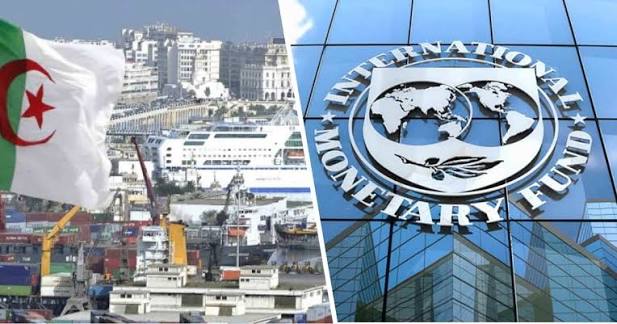

- IMF Sees Algeria Growth At 3.80% As Hydrocarbon Rebound Masks Fiscal Strain
Higher hydrocarbon prices are expected to give Algeria’s economy a temporary lift in 2026, but the International Monetary Fund has warned that widening fiscal imbalances, shrinking external buffers and continued dependence on oil revenues are leaving the country increasingly exposed to future shocks.
Following its annual Article IV consultation, the IMF projected Algeria’s economy to expand by 3.80% in 2026, broadly in line with the estimated 3.90% growth recorded last year, as stronger energy prices support export earnings and government revenues.
The outlook provides some near-term relief for one of North Africa’s major hydrocarbon producers. But the Fund cautioned that the apparent improvement masks deeper structural weaknesses that could undermine medium-term stability unless authorities move decisively on fiscal consolidation and economic diversification.
Algeria’s economy remains heavily tied to oil and gas, making public finances and external balances highly sensitive to swings in global energy prices. When prices rise, government revenues and foreign exchange earnings improve. When they fall, fiscal pressures, reserve losses and financing needs quickly intensify.
The Fund said Algeria’s fiscal position remains under significant strain despite some improvement in 2025. The budget deficit narrowed to 10.50% of GDP, supported by one-off dividends from state-owned enterprises and the central bank, as well as stronger non-hydrocarbon tax revenues.
However, the improvement did not fundamentally alter the pressure on the public finances. Sustained financing needs pushed public debt to 52.10% of GDP, highlighting the rising cost of maintaining high public expenditure in an economy where revenue remains concentrated in hydrocarbons.
The external position also weakened sharply last year. Large government investment programmes drove imports higher at a time when hydrocarbon exports softened, resulting in a wider current account deficit and a significant drawdown of international reserves.
Although higher oil prices are expected to narrow the current account deficit in 2026, the IMF warned that Algeria’s underlying resilience has weakened as fiscal and external buffers have steadily eroded.
That assessment points to a difficult policy dilemma. Algeria can benefit from stronger oil prices in the short term, but without deeper reform, the economy remains vulnerable to the next downturn in global energy markets.
The IMF has therefore urged authorities to adopt a more coherent macroeconomic policy mix built around fiscal consolidation, tighter monetary policy focused on price stability and greater exchange-rate flexibility.
The Fund also advised Algeria to end reliance on central bank financing of government deficits, warning that continued monetary financing could weaken inflation control, undermine policy credibility and complicate macroeconomic management.
For policymakers, the key challenge will be how to reduce fiscal vulnerabilities without undermining growth or social stability.
Algeria has traditionally relied on public spending, subsidies and state-led investment to support employment, household welfare and economic activity. But the IMF’s assessment suggests that this model is becoming harder to sustain as financing pressures rise and external buffers decline.
The Fund recommended broadening the non-oil tax base, reforming subsidies, improving the efficiency of public investment and strengthening financial sector oversight.
It also urged authorities to reduce the dominant role of state-owned enterprises and create more space for private-sector investment, arguing that Algeria’s long-term prosperity depends on building a more diversified and competitive economy.
Algeria needs stronger private-sector participation, a more predictable business environment, fewer trade barriers and deeper digitalisation to reduce informality and raise productivity.
For years, the country’s economic model has been shaped by the strength of the state and the centrality of hydrocarbons. That model has provided stability during periods of high oil prices, but it has also slowed the emergence of a more dynamic non-oil economy.
The IMF’s recommendations therefore point to a broader rebalancing: from state-led distribution of oil wealth towards a more diversified economy capable of generating private investment, jobs and exports beyond hydrocarbons.
The IMF welcomed Algeria’s recent removal from the international anti-money laundering and counter-terrorism financing grey list, describing it as an important milestone that could strengthen investor confidence.
It also praised ongoing efforts to diversify the economy into sectors such as mining and agriculture. Algeria’s strategic location, large domestic market and abundant energy resources position it to become a more influential supplier to both European and African markets.
That potential is significant. As Europe looks to diversify energy supply and Africa seeks deeper regional industrialisation, Algeria could play a larger role in energy, fertiliser, mining, agriculture and logistics.
To convert its advantages into sustainable growth, Algeria will need reforms that improve competitiveness, attract investment and reduce the economy’s exposure to oil-price volatility.
Higher hydrocarbon prices may buy time, but they do not remove the underlying risks.
That is the central message of the IMF’s latest assessment. Algeria’s near-term outlook has improved, but its fiscal and external vulnerabilities are deepening. Growth remains positive, but still too dependent on a commodity cycle the country does not control.
For Algeria, the policy window is clear. Stronger oil prices offer breathing space to reform from a position of relative stability. If that opportunity is missed, the next downturn could find the economy with weaker buffers, higher debt and fewer options.
The challenge now is whether Algeria can use the current hydrocarbon reprieve not to postpone reform, but to accelerate it.

