

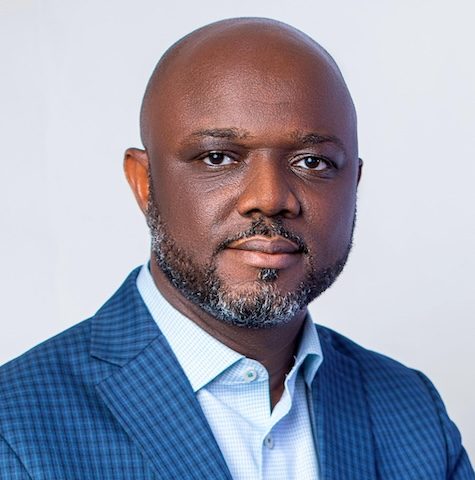

- Who Accounts for Interest on Frozen Billions? ACEP Boss Challenges EOCO And FIC Over Seized Funds
Benjamin Boakye, Executive Director of the Africa Centre for Energy Policy (ACEP), has raised serious concerns about the freezing of private bank accounts by Ghana’s investigative agencies, questioning the management of funds transferred into exhibit accounts and warning that proposed legislation expanding the powers of the Economic and Organised Crime Office (EOCO) could expose individuals and businesses to further restrictions on their economic rights.
In a strongly worded intervention on X, Mr Boakye challenged the practice of freezing accounts for extended periods without prosecuting the underlying criminal allegations, arguing that restrictions on access to personal and corporate funds could amount to punishment before a court has determined wrongdoing.
His concerns are directed particularly at EOCO and the Financial Intelligence Centre (FIC), whose powers to investigate suspected financial crime and restrict transactions are intended to protect assets potentially connected to unlawful activities.
However, Mr Boakye argues that the exercise of these powers requires more rigorous judicial supervision, transparent financial reporting and clearer mechanisms for holding individual investigators accountable when restrictions are unjustified.
The intervention follows a directive issued by Attorney-General and Minister for Justice Dr Dominic Ayine on November 2, 2026, requiring investigative agencies to comply strictly with constitutional safeguards governing arrests, detention, bail and investigative procedures.
Although Mr Boakye welcomed the directive, he argued that restrictions on economic rights deserve comparable attention.
“Security agencies, particularly EOCO and the FIC, freeze private accounts for months without proceeding to court on the substantive case, thereby curtailing the economic rights of individuals and businesses.”
His comments raise a broader question about Ghana’s criminal justice framework: whether the legal powers designed to preserve suspected proceeds of crime are being exercised with sufficient safeguards to protect legitimate businesses and individuals from disproportionate financial harm.
Mr Boakye’s central concern relates to what he describes as the transfer of already-frozen funds into accounts controlled by investigative agencies.
He questioned why money that remains frozen in a commercial bank, and therefore cannot ordinarily be withdrawn by the account holder, would need to be transferred into a separate exhibit account before the underlying criminal case is prosecuted.
“What is the purpose of moving the funds into these accounts when the funds are already frozen, under the control of the agencies, and visible to the account holders and their banks?”
The distinction is important because freezing an account and transferring its balance into another account are not necessarily equivalent financial actions.
An account freeze can preserve existing funds while leaving the money within the banking institution where it was originally deposited.
A transfer into an exhibit or custodial account can change the arrangements governing custody, access, interest and financial reporting.
Such transfers may be lawful where authorised by applicable legislation and judicial orders. Nevertheless, the necessity and proportionality of each transfer remain important questions, particularly where the underlying allegations have not been adjudicated.
Mr Boakye wants greater transparency over who controls the transferred funds, whether they generate interest and how any financial benefits are accounted for.
“Who accounts for the interest or other benefits that may accrue?”
He also questioned the rules governing exhibit accounts and whether adequate safeguards exist against the misuse of funds.
The ACEP Executive Director said he had not seen publicly available audits or a clear accounting of the amounts transferred into such accounts before their eventual release.
That observation raises a legitimate question about transparency, but it does not itself establish that funds have been misappropriated or that the accounts are unaudited. No independently verified aggregate balance, interest figure or evidence of private enrichment was provided in his statement.
The appropriate test would be an examination of the relevant court orders, account mandates, transaction records, interest treatment, reconciliation procedures and independent audit reports.
Mr Boakye’s intervention comes against the background of growing scrutiny of the investigative powers exercised by state agencies.
The Attorney-General’s Directive No. 001 of 2026 requires investigative officers to identify the legal authority supporting coercive action and ensure that investigative powers are exercised only to the extent necessary.
It also requires agencies to maintain registers of exhibits, warrants, court orders and freezing orders, while introducing quarterly compliance reports and disciplinary consequences for breaches.
The directive specifically warns against using criminal investigative powers to enforce ordinary contractual obligations or recover debts where no criminal offence has been established.
Its provisions therefore provide an important institutional context for Mr Boakye’s concerns, although the directive does not, by itself, resolve every question concerning the custody and accounting of frozen financial assets.
Ghana’s existing legal framework already provides mechanisms for freezing assets suspected to be connected to economic crimes.
Under the Economic and Organised Crime Office Act, 2010, Act 804, and its accompanying regulations, EOCO has powers to preserve suspected tainted property, subject to statutory procedures and judicial oversight.
The purpose is to prevent assets from being concealed, transferred or dissipated while investigations proceed.
Such powers are important for combating money laundering, fraud, corruption and other serious economic offences.
However, their legitimacy depends on compliance with statutory requirements and the ability of affected parties to challenge restrictions before the courts.
In March 2026, an Adentan High Court ordered the unfreezing of accounts belonging to Sesi-Edem Company Limited after finding that EOCO had acted outside its legal authority in the circumstances of that case.
The ruling demonstrates that freezing decisions are subject to judicial scrutiny and that investigative powers are not unlimited. It does not establish wrongdoing in every other EOCO investigation.
Mr Boakye also raised the prospect of financial liability arising from prolonged restrictions imposed on businesses.
For commercial enterprises, the inability to access working capital can disrupt payments to suppliers, salaries, loan servicing and contractual obligations.
Where a business depends on regular access to cash balances to finance daily operations, a prolonged freeze can create financial distress even before the substantive allegations are resolved.
These potential economic consequences make the timeliness of investigations and the availability of effective legal remedies particularly important.
Mr Boakye suggested that affected individuals and businesses should consider legal action against investigators who personally swear affidavits seeking restrictive orders, particularly where the evidence supporting those applications cannot be justified.
“My advice to private citizens and businesses is to spare the State and sue the individual who swears an affidavit before the court claiming to have evidence.”
However, personal liability is not automatic. Whether an officer can be sued successfully depends on the applicable legal protections, the nature of the alleged misconduct and the facts established before a court.
Similarly, compensation for financial losses would require a legally sustainable claim supported by evidence.
Mr Boakye’s most consequential warning concerns the proposed EOCO legislation before Parliament.
He argues that expanding investigative powers without first addressing weaknesses in transparency, accountability and judicial oversight could deepen existing problems.
The Economic and Organised Crime Office Bill has been among the legislative proposals under parliamentary consideration, although its eventual legal effect will depend on the provisions enacted.
“Without addressing these abuses, the new EOCO Bill could become a danger to society if additional powers are granted without addressing the transparency and accountability deficits in the current architecture.”
The warning presents Parliament with a policy challenge: how to strengthen the country’s capacity to investigate complex financial crime without granting powers that lack sufficient procedural safeguards.
Stronger enforcement powers can improve asset recovery and financial integrity, but ineffective oversight can also discourage investment and weaken confidence in the legal system.
For businesses, confidence depends partly on knowing that their property cannot be restricted indefinitely without lawful justification and access to judicial remedies.
For investigative agencies, the ability to preserve suspected criminal proceeds remains essential, particularly where delays could allow funds to be transferred beyond the jurisdiction.
Reconciling these objectives requires effective court supervision, clear custody rules and credible financial accountability.
Mr Boakye consequently placed significant responsibility on the judiciary.
He argued that courts should more rigorously examine the evidence presented by investigative agencies before granting orders that restrict economic activity.
He also urged judges to consider whether the proposed restrictions are necessary and proportionate to the suspected offence and whether less intrusive measures could achieve the same investigative objective.
The central issue is not whether Ghana’s investigative agencies should possess powers to freeze suspected criminal assets, but whether the exercise of those powers is consistently supported by evidence, proportionate to the risk and subject to transparent accountability.
Mr Boakye’s intervention moves the debate beyond arrest and detention to the financial consequences of criminal investigations.
It also places the management of exhibit accounts, treatment of accrued interest, liability for unlawful restrictions and quality of judicial scrutiny at the centre of the discussion.
Neither EOCO nor the FIC has been shown, on the evidence presented in his post, to have unlawfully appropriated interest or personally benefited from transferred funds. Those questions would require records and responses from the institutions concerned.
Nevertheless, the concerns point to an area where greater disclosure could strengthen public confidence without undermining legitimate investigations.
As Parliament considers changes to EOCO’s powers, the challenge will be ensuring that financial crime enforcement remains effective while respecting constitutional protections and the economic rights of persons who have not been convicted of wrongdoing.
For Mr Boakye, the Attorney-General’s directive provides a starting point, but enforcement ultimately rests with the courts and the institutions entrusted with exercising investigative authority.
The credibility of Ghana’s financial crime enforcement framework will depend not only on the assets it freezes or recovers, but also on whether those actions withstand legal scrutiny and preserve public confidence in the administration of justice.

