

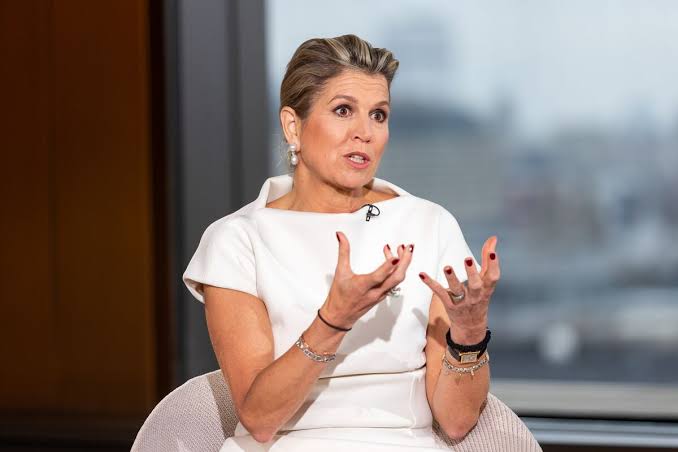

- Queen Máxima Visits the Central Bank to Discuss Savings, Responsible Credit and Digital Finance
Ghana’s financial inclusion record is creating a new policy challenge: ensuring that access to accounts and digital payments helps households, workers and small businesses manage money more securely.
That question will be central to discussions when Her Majesty Queen Máxima of the Netherlands visits the Bank of Ghana on 4 and 5 November as the United Nations Secretary-General’s Special Advocate for Financial Health.
She is scheduled to meet Governor Dr Johnson Pandit Asiama and co-host a roundtable with senior figures from across the financial sector.
The visit puts financial health on the agenda at a time when Ghana has made substantial progress in bringing adults into the formal financial system. The Bank of Ghana says 81 per cent of adults hold a financial account, citing the World Bank’s Global Findex Database 2025.
It also points to the country’s digital payments infrastructure and fintech ecosystem as notable achievements.
Yet account ownership is only one measure of inclusion. A person may have an account and still struggle to save consistently, access suitable credit, protect against financial shocks or plan for retirement. The policy question is whether financial services are helping people meet those needs safely and sustainably.
The central bank’s statement describes financial health as the next stage of the country’s inclusion journey. “Strengthening financial health is the next stage of Ghana’s financial inclusion journey,” it says.
The distinction matters: widening access brings more people into the system; improving financial health concerns what they can do once they are there.
Queen Máxima’s bilateral meeting with Dr Asiama is expected to review Ghana’s progress in financial inclusion and digital finance, alongside policy and regulatory priorities for households, workers and small businesses.
The wider roundtable will bring together representatives of banks, electronic money issuers, payment service providers, insurers, pension providers, regulators and development partners.
That mix of participants reflects how financial resilience depends on more than banking. Savings products can help families build buffers, while responsible credit may help households and small firms manage expenditure or invest.
Insurance can protect against certain losses; pensions and investment products can support longer-term planning. Digital payment systems can make transactions more accessible, but they do not by themselves ensure that users have the knowledge, protections or products to make sound financial decisions.
The breadth of the agenda will also test whether financial institutions and regulators can approach financial health as a shared outcome. Banks and payment providers may focus on account use and transactions, while insurers and pension providers have different measures of participation.
The roundtable’s challenge will be to connect these parts of the market around the financial needs of users.
A key discussion area is how Ghana measures financial health. Without clear measures, it may be difficult to distinguish between access to a service and meaningful improvement in people’s financial circumstances.
Account ownership and digital payment use can indicate reach, but further indicators may be needed to assess saving habits, ability to handle unexpected costs, access to suitable insurance and confidence in managing debt.
The question is not only what to measure, but how to use that information. Evidence on how households and businesses use financial products could help policymakers identify gaps, assess whether products are appropriate and direct regulatory attention where consumer risks are greatest.
The Bank of Ghana’s statement does not set out specific indicators or new regulatory proposals; those are among the issues its roundtable is intended to discuss.
Responsible credit is likely to be particularly important to that conversation. Credit can help households smooth expenses and firms finance activity, but products that do not match a borrower’s capacity to repay can weaken financial resilience.
The roundtable’s focus on responsible lending places consumer protection alongside innovation and access, rather than treating the growth of financial services as an end in itself.
The visit also brings digital finance into focus. Ghana’s digital payments infrastructure has helped expand account access, while fintech providers have added new ways for people to transact and engage with financial services.
The next question is how to ensure innovation supports secure, useful and affordable services. That depends on the quality of products, clear information for customers and effective oversight as new services develop.
The roundtable is expected to consider innovation in savings, insurance, pensions and investment, as well as the role of workplaces in supporting employees.
Employers can be an important channel for financial education and access to benefits such as pensions, but workplace initiatives will need to respond to the different circumstances of employees. The statement gives no details of specific programmes under consideration.
Queen Máxima’s visit follows discussions with Finance Minister Dr Cassiel Ato Forson and Dr Asiama during the Spring Meetings of the International Monetary Fund and World Bank Group, where financial health featured as a priority for economic resilience and inclusive growth.
The Bank of Ghana says the visit comes at an important moment for Ghana, though it has not announced a new policy package tied to the engagement.
Its significance will therefore depend less on the visit itself than on whether the discussions produce sustained coordination and practical follow-through.
A roundtable can bring institutions together, but improving financial health requires products and protections that work for users over time, and evidence that allows authorities to judge whether those services are making a difference.
The central bank says it remains committed to a safe and inclusive financial system that supports the financial health of Ghanaians and economic growth.
The coming discussions offer an opportunity to define what that commitment means in practice: how inclusion will be measured, where financial services fall short, and how providers can help households, workers and businesses become more resilient.

