


- Gov’t Targets 80,000 Garment Jobs as Government Plans Factories in Four Regions
Ghana is targeting the creation of 80,000 direct jobs through the establishment of garment manufacturing factories across four regions, in an ambitious industrial expansion programme designed to increase non-traditional exports, attract international buyers and provide employment opportunities for young people and women.
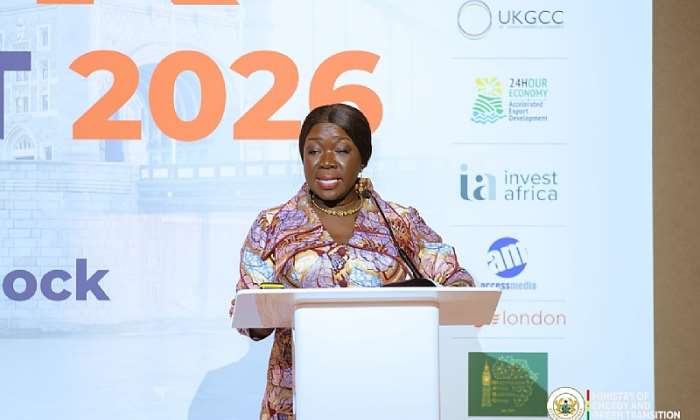
The Minister for Trade, Agribusiness and Industry, Elizabeth Ofosu-Adjare, announced the initiative during a bilateral engagement at the sixth German-African Business Summit in Accra, describing garment manufacturing as an important component of the government’s strategy to expand productive employment and strengthen Ghana’s participation in international manufacturing supply chains.
The proposed factories are expected to increase the country’s garment production capacity, allowing domestic manufacturers to compete for larger international orders while creating employment opportunities in regions outside the country’s traditional industrial centres.
However, the announcement also raises important questions about the financing, location and implementation timetable of the facilities, particularly as earlier government documents contained substantially lower employment projections for garment manufacturing investments.
The government’s 2026 Budget identified three garment factories in the Bono East, Central and Eastern regions, with an initial target of approximately 20,000 direct jobs.
The accompanying detailed budget documentation referred to a target of approximately 27,000 jobs.
The 2027 Budget subsequently disclosed that the government had engaged a transaction adviser for those three proposed factories, again citing approximately 27,000 direct employment opportunities.
The latest announcement of 80,000 jobs across four regions therefore represents a substantial expansion in the government’s stated ambitions, although the Minister’s remarks did not establish whether the target includes additional projects, revised production capacities or previously announced investments.
Speaking at the summit, Mrs Ofosu-Adjare said the government was implementing an approved sector policy intended to transform Ghana’s garment manufacturing industry.
“Under the approved sector policy, my ministry is driving the establishment of garment factories projected to create 80,000 direct jobs, most of them for young people and women.”
The Minister explained that expanding production capacity would enable Ghanaian businesses to secure larger international contracts and fulfil the quality and delivery requirements of overseas buyers.
She also cited the experience of North Shore, whose garment manufacturing operations she said had generated considerable employment within a relatively short period.
The Northshore Apparel Hub in Savelugu, Northern Region, was commissioned in August 2026 as part of the government’s 24-Hour Economy initiative.
The facility provides an example of how garment manufacturing can be developed outside Accra and Tema, creating opportunities for industrial employment in regions traditionally associated with agriculture and other economic activities.
However, the existence of a successfully commissioned facility does not automatically establish that the newly announced employment target is achievable.
The economic benefits will depend on whether the proposed factories secure sufficient investment, maintain competitive production costs and attract sustainable orders from domestic and international buyers.
Ghana’s renewed interest in garment manufacturing reflects the labour-intensive nature of the industry and its potential to generate employment for workers who may not possess advanced technical qualifications.
Compared with capital-intensive industries such as mining and petroleum production, garment manufacturing can create substantial numbers of direct jobs through sewing, cutting, finishing, packaging, quality assurance and distribution.
The industry also offers opportunities for related businesses involved in textiles, logistics, machinery maintenance, transport and other supporting services.
For policymakers, these characteristics make garments an attractive sector for addressing youth unemployment while expanding manufacturing output.
Yet experience across international garment-producing economies demonstrates that job creation depends on more than constructing factory buildings.
Manufacturers must secure consistent export orders, maintain reliable production schedules and meet demanding standards involving quality, labour conditions and delivery times.
Large international buyers frequently place orders based on the ability of suppliers to produce substantial quantities within relatively short periods.
Factories that cannot demonstrate reliable production capacity may struggle to compete, even where labour costs are comparatively attractive.
Mrs Ofosu-Adjare acknowledged the importance of these commercial requirements, stressing that Ghanaian manufacturers must improve their ability to satisfy international buyers.
“If you are able to meet buyers, and if you are able to secure larger export orders, it will go a long way to helping us.”
The statement illustrates a central challenge confronting Ghana’s garment industry: expanding productive capacity must be accompanied by access to commercially viable markets.
The country’s international competitiveness will depend on electricity reliability, labour productivity, access to raw materials, transport costs and the efficiency of port and customs operations.
These factors influence the final price at which garments manufactured in Ghana reach overseas consumers.
For global buyers, delivery reliability can be as important as production costs, particularly in an industry characterised by changing fashion trends and seasonal demand.
Ghana’s ability to integrate into international garment supply chains will therefore require coordinated improvements across manufacturing, infrastructure and trade facilitation.
The establishment of new factories could also create opportunities for domestic textile producers, provided manufacturers can secure fabrics and other inputs locally at competitive prices.
Without an effective domestic supply chain, expanding garment production could increase dependence on imported textiles and accessories, limiting the proportion of export earnings retained within Ghana.
Building stronger connections between textile manufacturing and garment production would therefore be important for maximising domestic value addition.
The initiative also provides an opportunity for Ghana to strengthen its participation in regional trade under the African Continental Free Trade Area.
While international export markets remain important, regional demand could support the development of African garment brands and provide additional outlets for locally manufactured clothing.
However, accessing those markets will require businesses to comply with applicable rules of origin, quality standards and customs requirements.
The government’s ability to attract private investors will be another determinant of the programme’s success.
The Trade Minister used the German-African Business Summit to outline efforts to address regulatory obstacles affecting businesses.
She disclosed that the Ministry had developed a proposed Business Regulatory Reform Bill intended to eliminate overlapping regulatory requirements and reduce delays.
The proposed legislation is expected to complement the Ghana Investment Promotion Authority Act, 2026, which the Minister said had simplified investment procedures.
She also highlighted anticipated support from the World Bank Group and International Finance Corporation to strengthen institutional capacity and implementation.
These reforms could support industrial investment if they reduce compliance costs, improve administrative efficiency and make regulatory requirements more predictable.
However, their effectiveness will depend on implementation and the extent to which businesses experience measurable reductions in the cost of operating in Ghana.
For prospective investors in garment manufacturing, policy predictability is particularly important because factories require substantial upfront expenditure on buildings, machinery, equipment and workforce development.
Investors must also assess whether operating conditions will allow facilities to remain competitive over several years.
The central economic question is whether Ghana can translate its proposed 80,000-job target into financially viable manufacturing operations supported by sustained demand.
The distinction between projected employment and jobs already created is particularly important.
The government’s announcement identifies an intended outcome, not evidence that 80,000 workers have been recruited or that all four factories have secured financing.
The latest statement also does not provide a comprehensive regional distribution of the new investments, individual factory employment targets or confirmed completion dates.
Greater transparency on these issues would help businesses, investors and the public assess the programme’s implementation.
For the government, establishing clear milestones could strengthen accountability and allow employment outcomes to be measured against actual factory operations.
For investors, more detailed project information would clarify financing requirements and commercial opportunities.
For Ghanaian workers, the more important measure will be whether the factories provide sustainable employment, adequate training and opportunities for career development.
The broader industrial significance of the programme extends beyond the projected employment figures.
A competitive garment industry could support export diversification, increase manufacturing activity and reduce Ghana’s dependence on traditional commodity earnings.
It could also provide opportunities for smaller businesses to participate in supply chains supporting large industrial facilities.
Nevertheless, the experience of garment-producing economies demonstrates that lasting success requires continuous investment in productivity, workforce skills, logistics and market access.
As Ghana seeks to expand its industrial partnerships with Germany and other international investors, the proposed garment factories offer an opportunity to demonstrate that industrial policy can translate into commercially sustainable production.
The immediate priority will be reconciling the latest employment targets with previously announced projects and establishing the financing and implementation arrangements necessary to deliver them.
The 80,000-job ambition is substantial. Its ultimate economic significance will depend on whether Ghana can build factories capable of winning orders, sustaining production and providing reliable employment long after their commissioning.

