

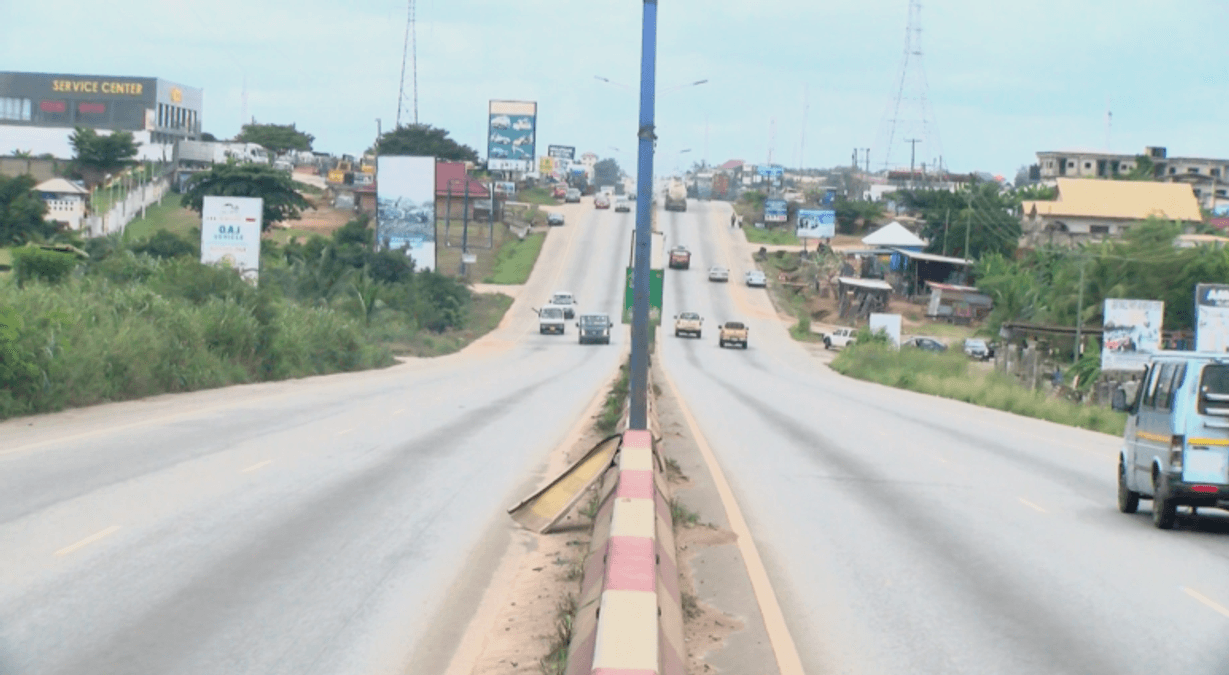

- Accra-Kumasi Expressway Funds Not Paid to Contractors – CAGD Clarifies
The Controller and Accountant-General’s Department has dismissed claims that government has already spent almost GH¢11.00 billion on the Accra-Kumasi Expressway project even though major construction works have not started.
In a clarification issued on July 16, 2026, the CAGD said the claim circulating on social media is based on a misunderstanding of government accounting procedures and the way transfers are recorded between public institutions.
The Department said funds earmarked for the Accra-Kumasi Expressway have not been paid to any contractor and have not been spent on construction works. Rather, the approved funds have been transferred from the Consolidated Fund into a dedicated Bank of Ghana account pending project execution.
“The CAGD wishes to emphasise that these funds have not been paid to any contractor or spent on construction works. They remain in the dedicated Bank of Ghana account pending project execution,” the statement said.
The clarification follows public claims suggesting that government had spent nearly GH¢11.00 billion on the flagship road project without visible construction activity on the ground.
According to the CAGD, the Accra-Kumasi Expressway is one of government’s major infrastructure projects and has been structured to avoid the funding delays, financing challenges and cost overruns that have affected similar projects in the past.
The Department said government, acting through the Ghana Infrastructure Investment Fund, established Accra-Kumasi Expressway Limited as a Special Purpose Vehicle to implement the project. The company is classified as a State-Owned Enterprise for funding and accounting purposes.
Following parliamentary approval of the concession, government earmarked proceeds from the Annual Budget Funding Amount and mineral royalties in the 2025 Budget to finance the project. The approved funds were then transferred from the Consolidated Fund into a dedicated Bank of Ghana account.
The accounting treatment, CAGD explained, is standard public-sector practice when funds are transferred from the central government accounting group to another government entity outside central government.
Under Ghana’s public financial management framework, such a transfer is recorded as grant expenditure in the books of central government and as grant revenue in the books of the receiving entity.
The Department said this does not mean the receiving entity has spent the money.
“This is a standard accounting treatment and does not mean the receiving entity has spent the funds,” the statement said.
The CAGD added that the same principle applies to transfers made to institutions such as the District Assemblies Common Fund, the Ghana Education Trust Fund and the National Health Insurance Authority.
“It is therefore incorrect to conclude that because the transfer appears as expenditure in the accounts of Central Government, the funds have already been spent on the construction of the Accra-Kumasi Expressway,” the Department stressed.
The clarification is significant because it draws a distinction between budgetary accounting and physical project expenditure. In public finance, funds may be appropriated and transferred to a designated entity for implementation, but actual spending occurs only when payments are made for works, goods or services.
The CAGD also clarified that the ongoing right-of-way clearing by the Ghana Armed Forces is a separate preparatory activity and is not being financed from the expressway funds currently held in the dedicated Bank of Ghana account.
The Accra-Kumasi Expressway is expected to be one of Ghana’s most consequential road infrastructure projects, given the economic importance of the corridor linking the national capital to the Ashanti Region and onward to the northern parts of the country.
The route carries heavy passenger, freight and commercial traffic and is central to domestic trade, logistics and regional connectivity. Any upgrade of the corridor is therefore likely to carry major economic implications for transport efficiency, travel time, road safety and private-sector productivity.
But large infrastructure projects also attract intense public scrutiny, particularly where significant funds are allocated before visible construction begins. The CAGD’s intervention appears aimed at preventing the accounting entry from being interpreted as evidence of actual project spending.
The Department assured the public that the accounting treatment applied to the Accra-Kumasi Expressway project is fully consistent with Ghana’s Public Financial Management framework and established government accounting standards.
For government, the controversy underlines the need for clearer public communication on major infrastructure financing. Where large transfers appear in national accounts as expenditure, citizens are likely to demand evidence of corresponding physical works unless the accounting treatment is properly explained.
For the Accra-Kumasi Expressway, the CAGD’s position is clear: the funds have been set aside, transferred into a dedicated account and recorded in accordance with public accounting rules, but they have not yet been spent on construction.
The real test will now be how quickly the project moves from accounting preparation and right-of-way activity to visible execution on the ground.

