

- ACEP urges climate pragmatism as Africa pushes to align development with decarbonisation
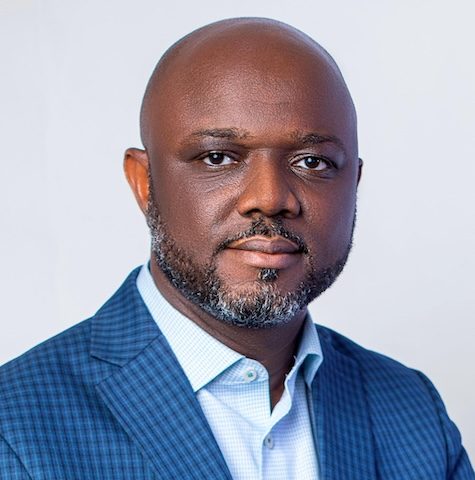
Africa’s climate challenge is not whether it can commit to global transition goals but whether those goals can be translated into workable development outcomes under conditions it did not create, according to Ben Boakye, Executive Director of the Africa Centre for Energy Policy.
Speaking at a policy roundtable held on the sidelines of the 2026 Spring Meetings in Washington, Boakye said the continent must resist being forced into a false trade-off between economic development and decarbonisation, arguing instead for a transition model grounded in institutional realism, energy access and industrial transformation.
“Africa’s challenge is not choosing between development and decarbonisation. It is delivering both, under conditions that are often not of our making,” he told participants at the event, which was hosted by ACEP in collaboration with the Natural Resources Defence Council and the African Minerals Development Centre.
His remarks addressed a growing unease across many African policy circles: that while climate ambition is rising globally, the systems needed to implement that ambition in developing economies remain weak, underfunded and often poorly aligned with domestic realities.
For Boakye, the real deficit is not one of rhetoric. “The real question is not ambition, but alignment,” he said. “Alignment between global climate goals and local realities. Between timelines and capabilities. Between transition pathways and the everyday energy needs of people.”
That framing reflects an increasingly important line of argument emerging from African energy and climate institutions: the success of the transition will depend less on the multiplication of pledges and more on whether policy frameworks can accommodate the continent’s development asymmetries, fiscal constraints, and unresolved energy poverty.
Boakye said ACEP’s intervention in the climate debate has therefore focused less on expanding the volume of commitments and more on improving the quality of policy action. “Our work, therefore, is less about adding to the volume of commitments and more about sharpening the quality of action,” he said.
That, he explained, begins with institutional capacity. “We invest in capacity because institutions, not intentions, deliver outcomes. Without the ability to design, negotiate, and implement, even the most ambitious targets remain theoretical,” he said.
The point is especially salient for African governments navigating a transition agenda while also managing debt distress, weak fiscal space, fragile power systems and pressure to expand access to affordable energy. In many capitals, the challenge is no longer simply how to sign on to climate targets, but how to sequence reforms in ways that preserve political legitimacy and economic stability.
Boakye also argued that the policy architecture guiding much of today’s transition agenda increasingly misaligns with present-day realities. “We push for policy retooling because many of the frameworks we rely on today were built for a different era,” he said. “They are often too rigid for the complexity of the transition we now face, and too disconnected from the fiscal and energy security pressures confronting governments.”
That critique goes beyond technical design. It speaks to a broader contest over who defines the terms of transition, who bears the adjustment burden, and whether Africa’s role in the global climate agenda will be shaped by domestic priorities or external expectations.
In Boakye’s telling, the transition debate itself needs reframing. “Because the story we tell shapes the choices we make,” he said. “If Africa is seen only through the lens of emissions, we miss the deeper reality of energy poverty, industrial ambition, and economic transformation.”
That is a pointed rebuke to climate frameworks that assess African economies primarily through their carbon profile, while giving less weight to the structural conditions that continue to limit energy access, manufacturing depth, and resilience. For many African policymakers, the issue is not whether to pursue a just transition, but whether that transition can be made functional in economies where basic development deficits remain acute.
Boakye put it plainly: “A just transition must first be a functional transition — one that works in practice, not just in principle.”
The message is likely to resonate across a continent that has increasingly sought to reposition itself in climate negotiations, not as a passive recipient of externally designed solutions, but as an actor demanding room to industrialise, electrify, and compete while still contributing to global climate objectives.
At the Washington convening, Boakye said the goal was not merely to exchange views, but to interrogate assumptions and move the conversation closer to implementation. “We are hoping this convening will help deepen climate action, drawing on the insights of our panel and the perspectives in this room,” he said. “Not just to exchange ideas, but to challenge assumptions, refine approaches, and move closer to solutions that can be implemented at scale.”
His closing line captured the central political question now confronting Africa’s climate future. “So this conversation is not about whether Africa will act. It is about how it acts, on whose terms, and with what outcomes.”

